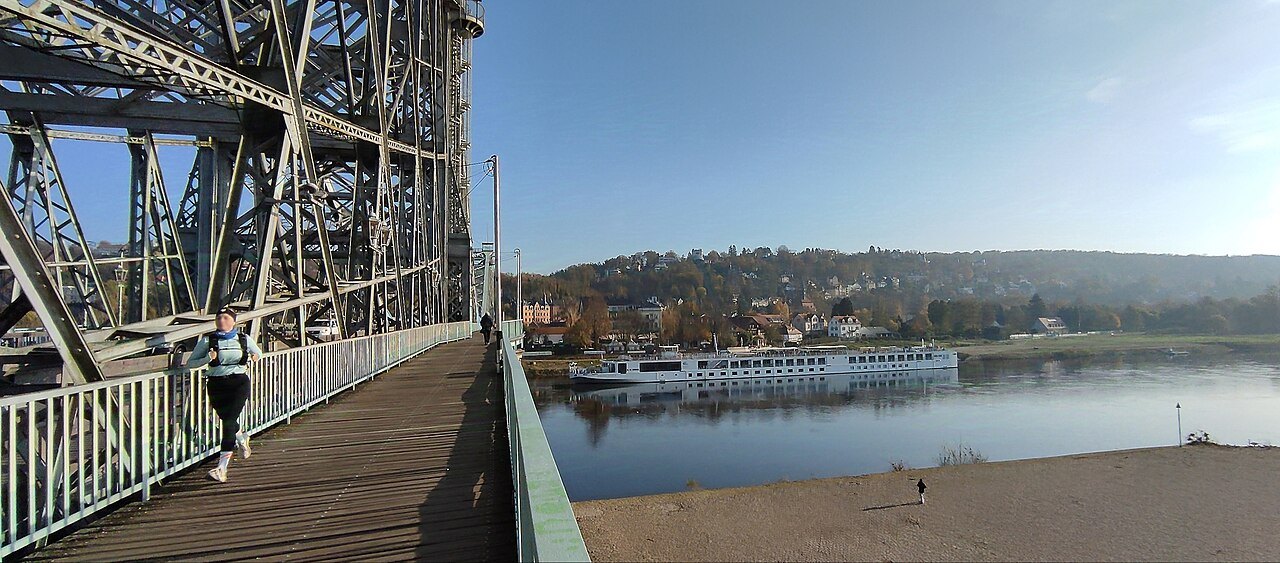
south bank
- Blasewitz and Schillerplatz
- the tram
north bank
- Loschwitz and Körnerplatz
- the Standseilbahn to Weißer Hirsch
- the Schwebebahn to Oberloschwitz
- 01A bridge with a nickname
- 02How it was built
- 03How it survived
- 04What you see from the deck
- 05The two hillside railways
- 06How to visit
01A bridge with a nickname
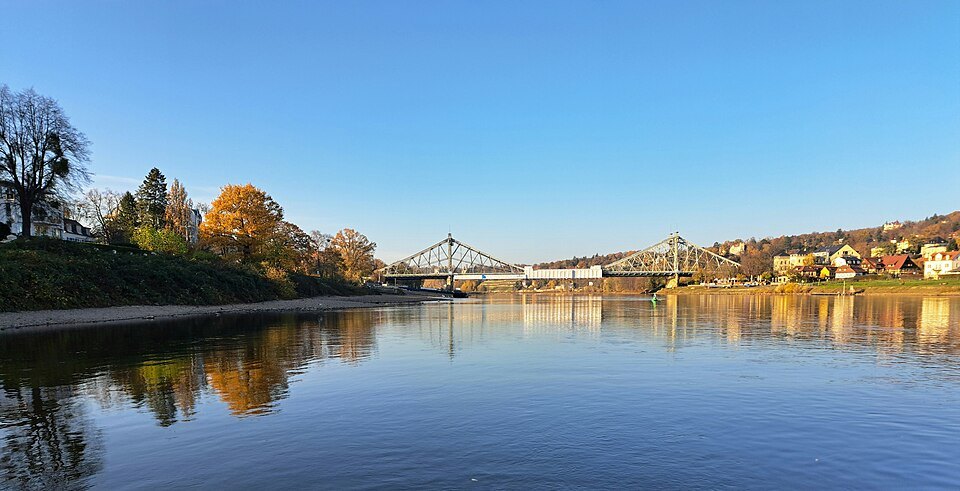
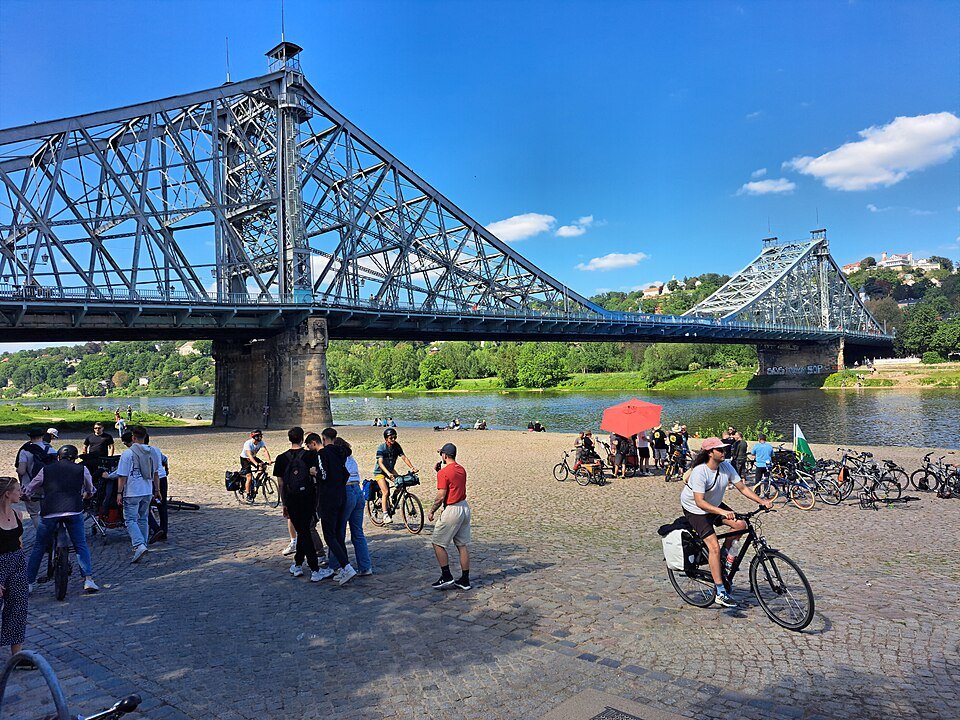
The Loschwitzer Brücke, known to nearly everyone as the Blaues Wunder or Blue Wonder, crosses the Elbe east of the center. On the south bank it lands at Blasewitz and Schillerplatz; on the north bank at Loschwitz, an old village of vineyards and villas on the valley slope.
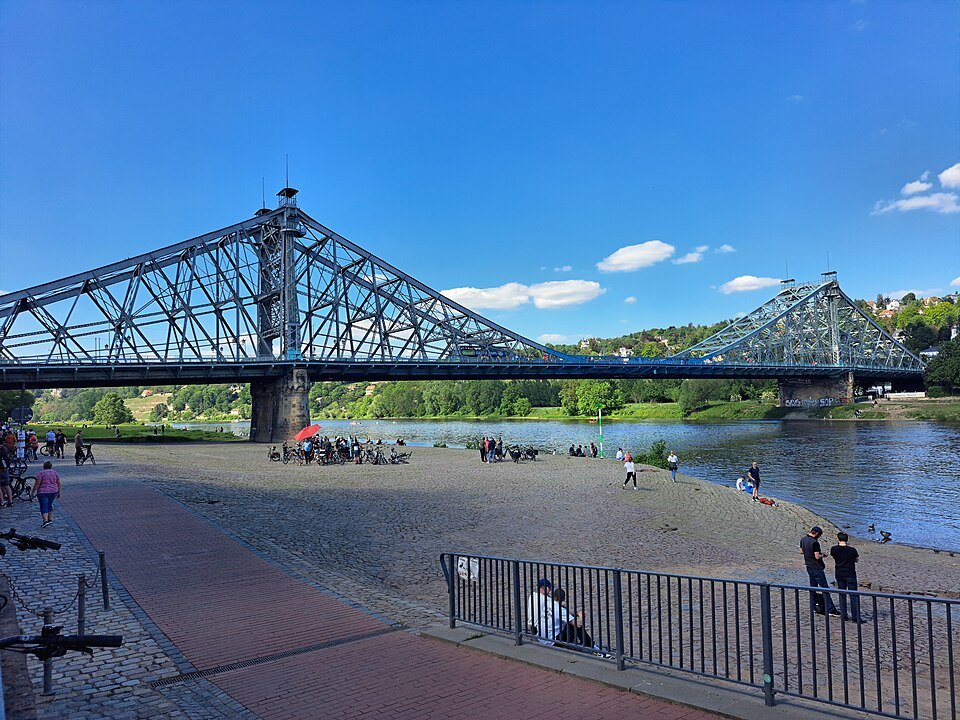
Visitors come for three things at once: an iron bridge that was an engineering statement in its day, a long view along the river in both directions, and two small historic railways that climb the hillside from the Loschwitz end. Together they make a half-day outing that feels a long way from the Altstadt, though it is a short tram ride away.
02How it was built
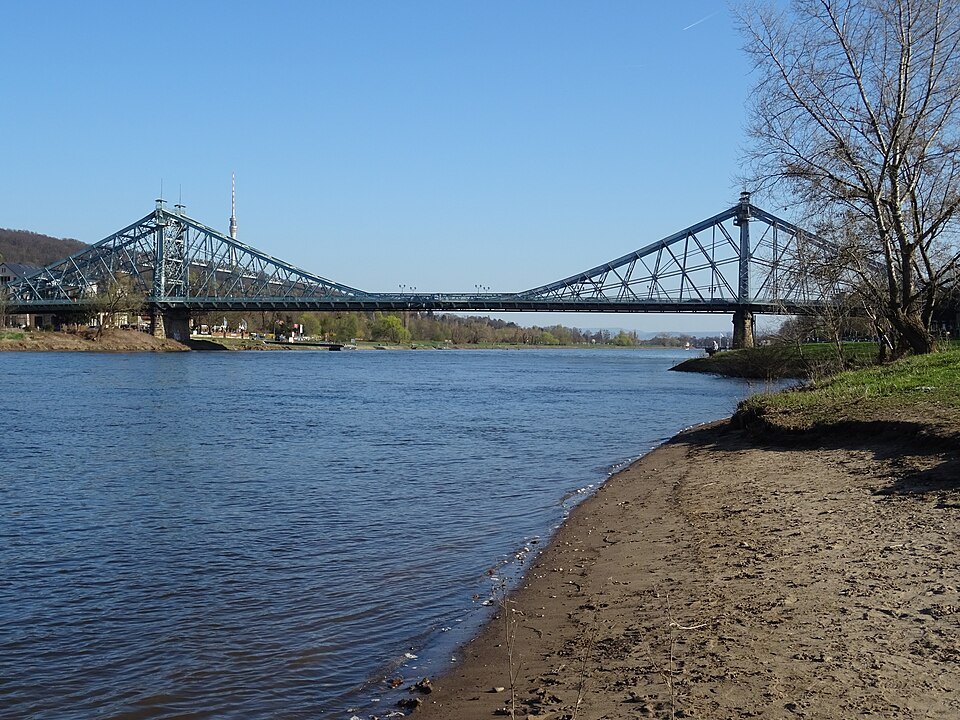
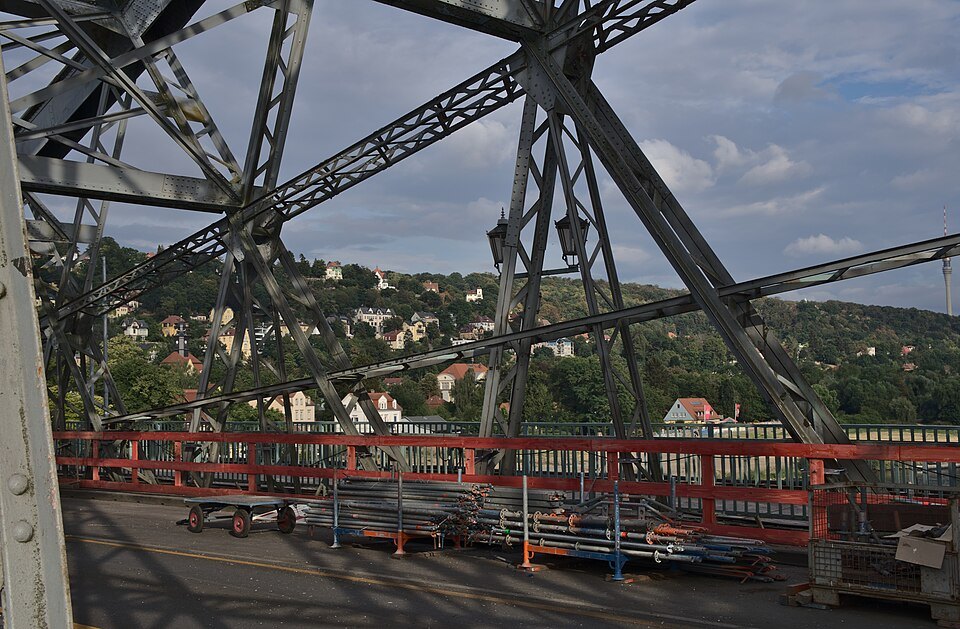
The bridge went up between 1891 and 1893, designed by the engineer Claus Koepcke with Hans Manfred Krüger. It was first named the König-Albert-Brücke after the reigning king of Saxony. Its total length is 280 meters and the main opening between the banks is about 147 meters — long enough that no pier had to stand in the river.
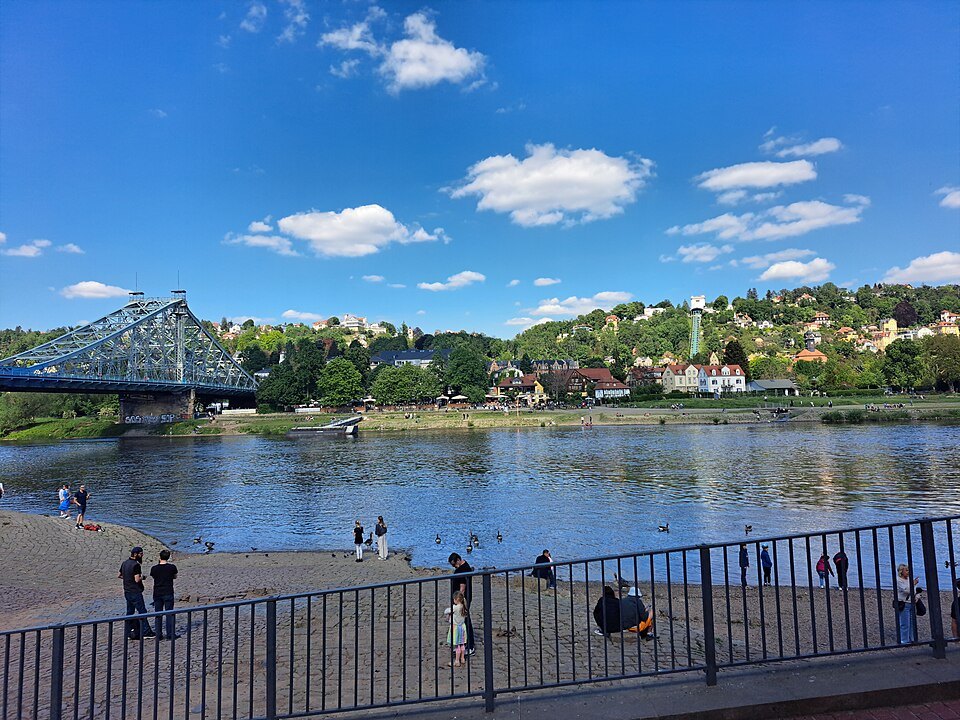
German sources describe the design as a stiffened suspension bridge: the iron structure, about 3,000 tonnes of it, hangs between supports on the banks rather than resting on the riverbed. Tolls were charged at first; they ended during the hyperinflation of 1923.
The nickname has two readings. The bridge was originally painted a sky blue, and it was seen as a technical wonder. But in German ein blaues Wunder erleben means to get a nasty surprise, and the name has always carried a little of that irony.
03How it survived
In May 1945, in the last days of the Second World War, an SS unit prepared to blow up the bridge. Local residents prevented it by cutting the detonator wires; German accounts name Paul Zickler and Erich Stöckel among them. The Blaues Wunder was one of only two Elbe bridges in Dresden to come through the war intact. Trams crossed it until 1985, when the suburban line from Loschwitz toward Pillnitz ended after 92 years of service. Cars, cyclists and pedestrians still share the deck.
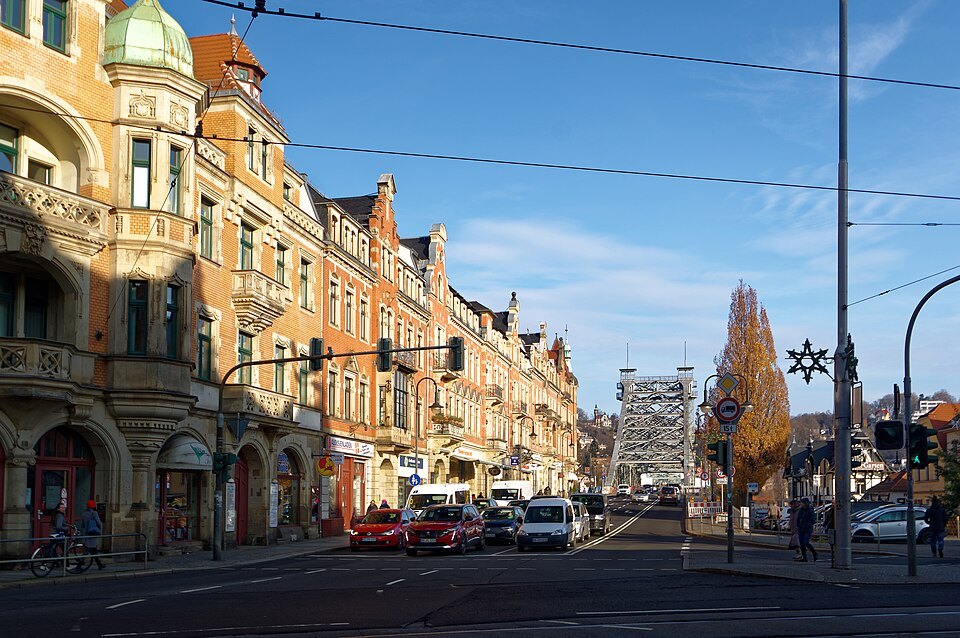
Note Since 2015 the city has been rehabilitating the structure in stages, a program planned to run for many years. Work phases can close lanes or the whole bridge to traffic for periods — check before relying on a bus across it.
04What you see from the deck
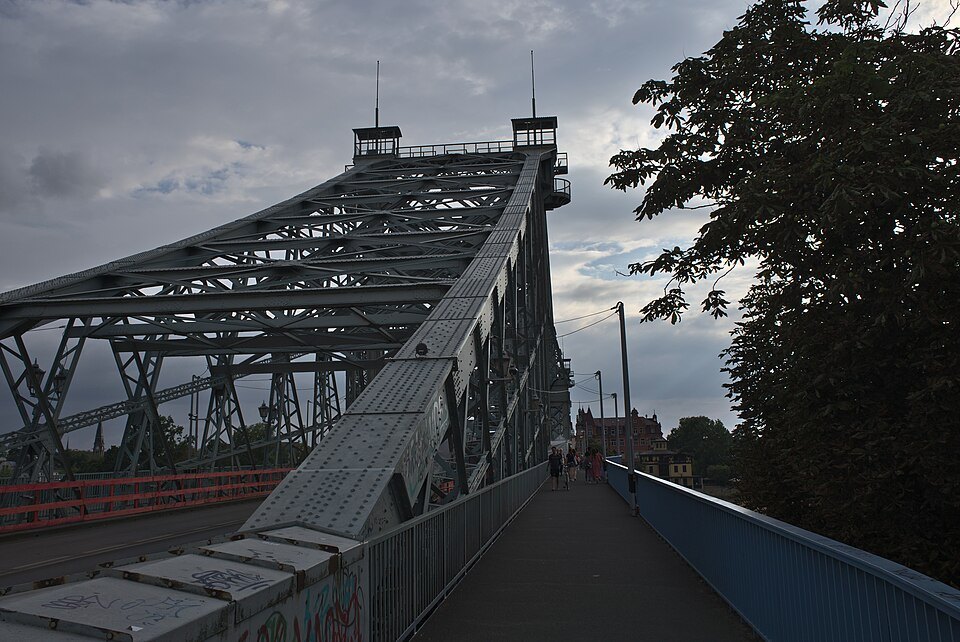
Walk across rather than ride. From the footway the lattice of riveted members rises overhead, and the river opens out upstream toward the vineyard slopes and downstream toward the city. The bridge sits in the stretch of the Elbe valley that was a UNESCO World Heritage Site from 2004 until the title was withdrawn in 2009 after a new bridge was built downstream.
At the Loschwitz end, Körnerplatz is a small square at the foot of the slope. On the Blasewitz side, Schillerplatz is the tram terminus and the easier place to arrive. Paddle steamers pass beneath the span, which is a good way to see its underside — see the Elbe.
05The two hillside railways
Near Körnerplatz, with their lower stations only about 150 meters apart, two railways climb the slope. The Standseilbahn, a funicular opened in 1895, runs 547 meters up to the villa suburb of Weißer Hirsch. It was steam-driven at first and electrified in the early twentieth century; on the way it passes through two short tunnels and over a 102-meter viaduct, climbing about 95 meters. The ride takes around five minutes, and during the 1945 air raids the cars were parked in the tunnels for safety while the lower station was destroyed.
The Schwebebahn, opened in 1901, is a suspended railway: its cars hang beneath a rail carried on slender supports, built on the monorail principle of the Cologne engineer Eugen Langen. It climbs about 84 meters over some 274 meters to Oberloschwitz, and it is described as the oldest suspended mountain railway of its type still running. Although it hangs, it works like a funicular, with the descending car helping to pull the other up. It has been a protected monument since 1975.
Note Both railways are run by the city transport company and close twice a year for inspection periods of one to two weeks — check the operator before you go. At the top of the Schwebebahn, a lift and stairs lead up the engine-house tower to a viewing platform over the valley and the bridge. See getting around.
06How to visit
Allow two to three hours for the bridge, one railway up and down, and a walk around Körnerplatz; longer if you ride both and walk between the upper stations, which are separated by the deep Loschwitzgrund valley. The Schwebebahn is not wheelchair accessible because of its monument status.
Arrive by tram at Schillerplatz and walk across, or come upriver by paddle steamer. The bridge also lies on the river route toward the palace and park at Pillnitz, so the two combine well in a single day on the east side of the city.