- 01Why the banks are green
- 02The view from the Neustadt bank
- 03The bridges
- 04The paddle steamers
- 05Crossing by ferry
01Why the banks are green
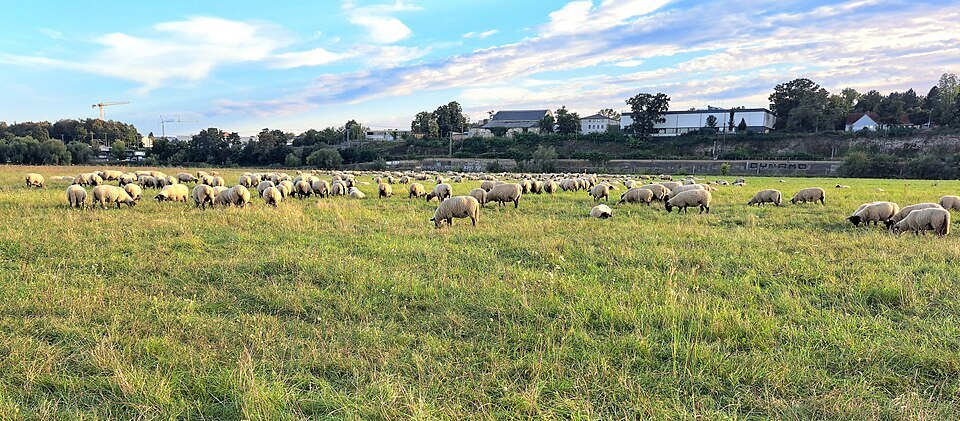
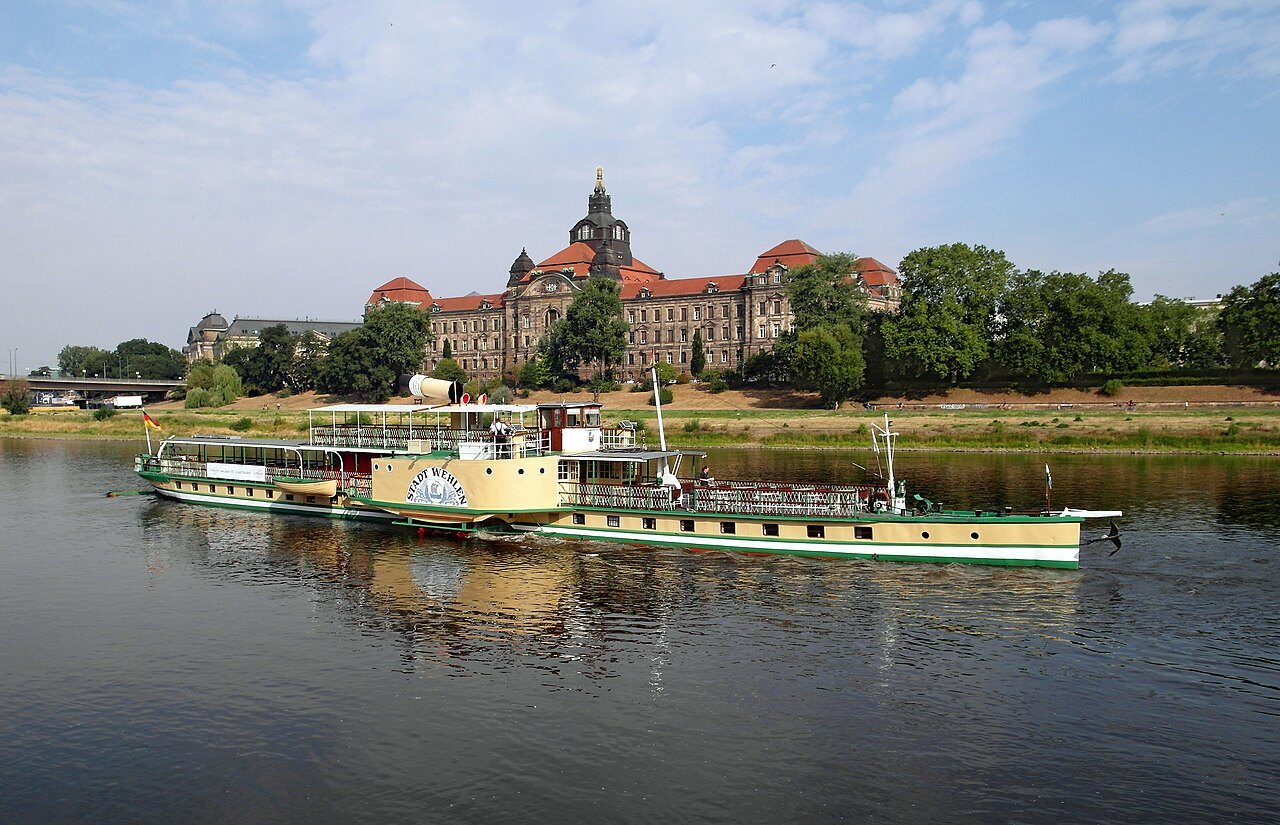
Dresden does not come down to the water in quays and warehouses. Along most of its length through the city the Elbe is edged by wide meadows, the Elbwiesen, left unbuilt because the river floods them. They are the city's park: walkers, cyclists, and in summer the open-air cinema on the Neustadt bank.
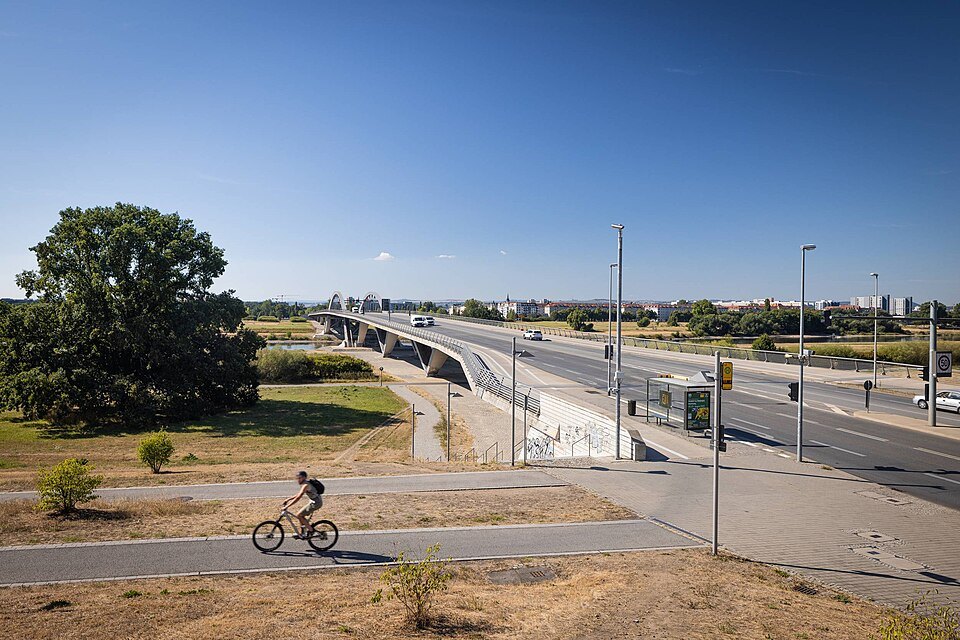
In 2004 UNESCO listed the Dresden Elbe Valley as a World Heritage Site. After the city built the Waldschlößchen Bridge across the meadows, it removed the listing in 2009 — one of the very few sites ever delisted.
02The view from the Neustadt bank
Stand on the meadows below the Neustadt, just downstream of the Augustus Bridge, and the whole Altstadt lines up across the water — the Hofkirche, the palace tower, the Semperoper and the Frauenkirche dome. The Venetian painter Bernardo Bellotto, who worked for the Saxon court and signed himself Canaletto, painted Dresden from this bank in the eighteenth century, and the spot is still called the Canaletto view.
03The bridges
Through the center, from downstream to upstream: the Marienbrücke, with the railway beside it; the Augustusbrücke from the Theaterplatz to the Golden Rider; then the gap where the Carolabrücke stood — part of it collapsed in September 2024 and the rest was demolished in 2025; the Albertbrücke; and the Waldschlößchenbrücke, opened in 2013. Further upriver comes the Blaues Wunder.
04The paddle steamers
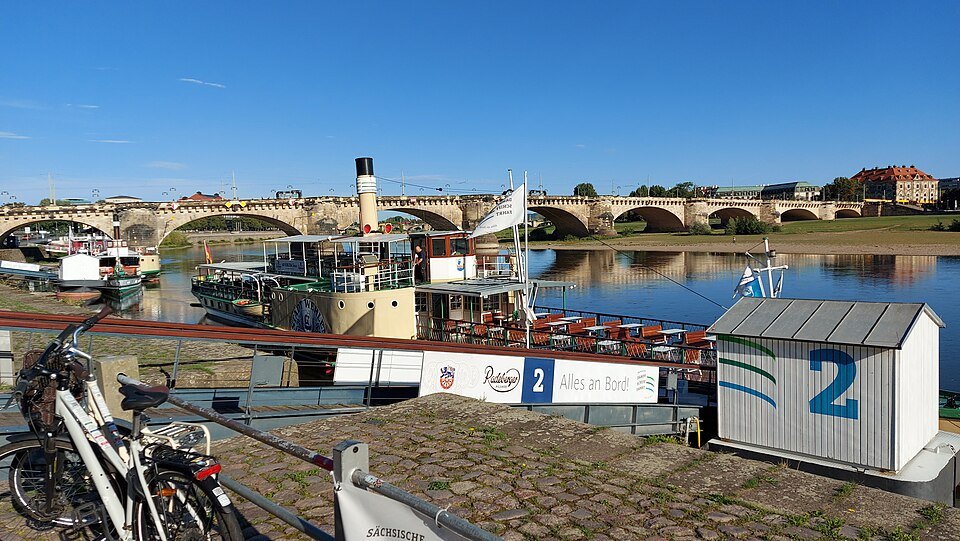
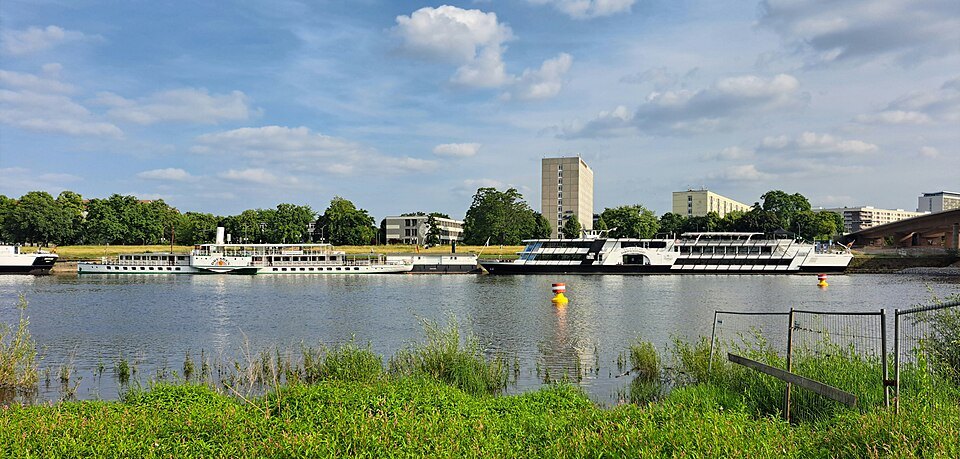
The white steamers that tie up below Brühl's Terrace belong to a fleet whose company dates from 1836 and which runs nine historic paddle steamers — it describes itself as the oldest and largest paddle-steamer fleet in the world. They sail upriver past the Blaues Wunder to Pillnitz and on into Saxon Switzerland, and downriver towards Meißen.
Note Low water in a dry summer and high water after heavy rain can both change or stop the sailings. Check with the operator on the day.
05Crossing by ferry
Three small city ferries cross inside Dresden, one of them to Pillnitz — see getting around.