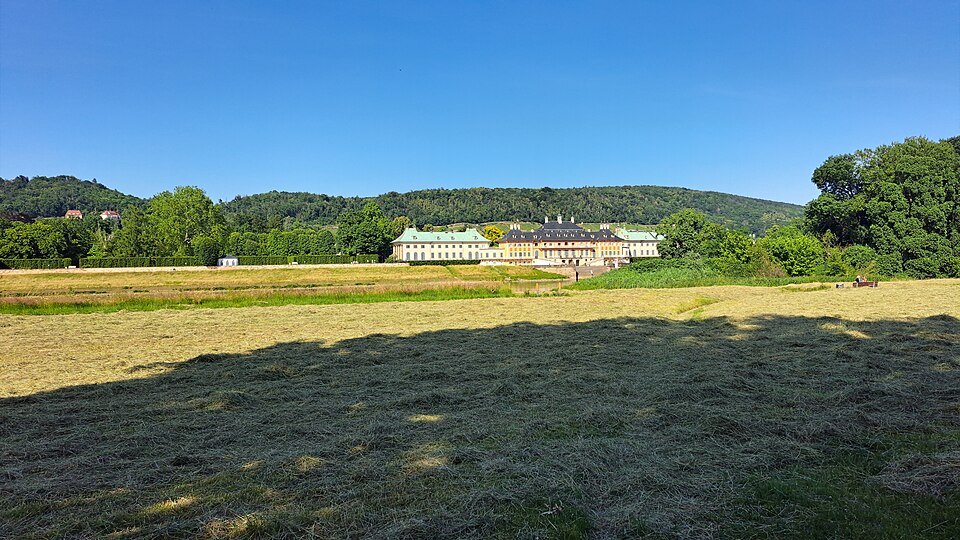
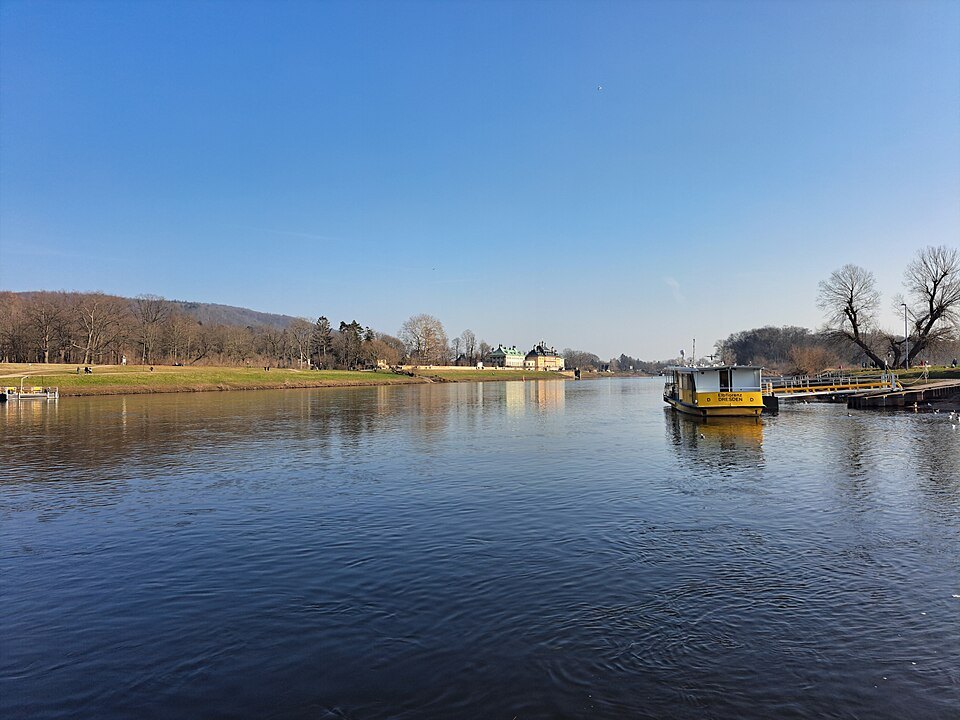
- the river and the water stairs
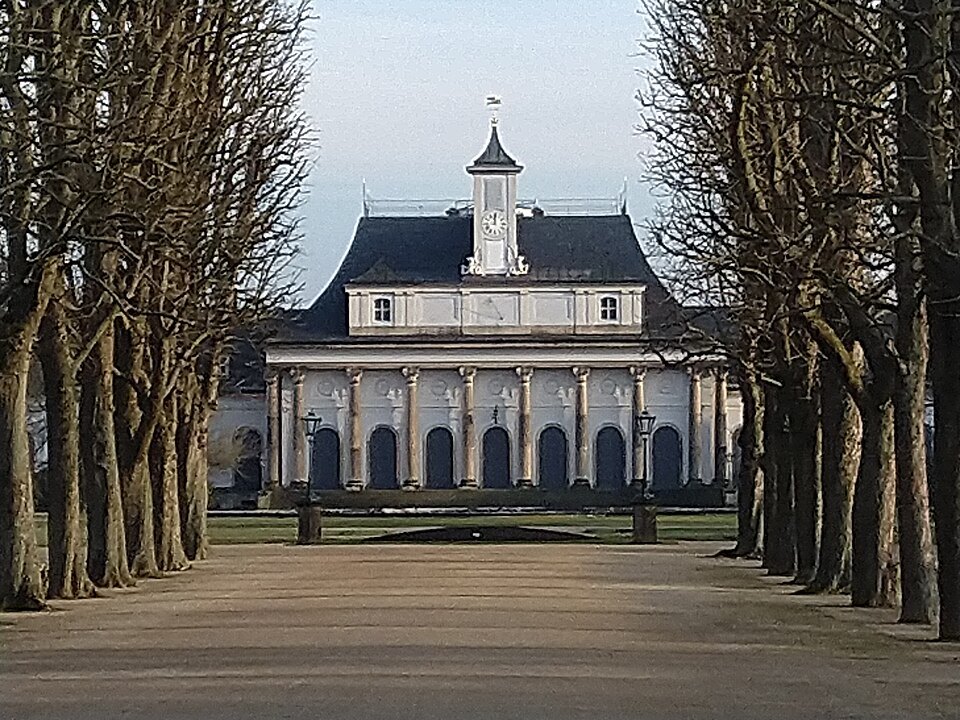
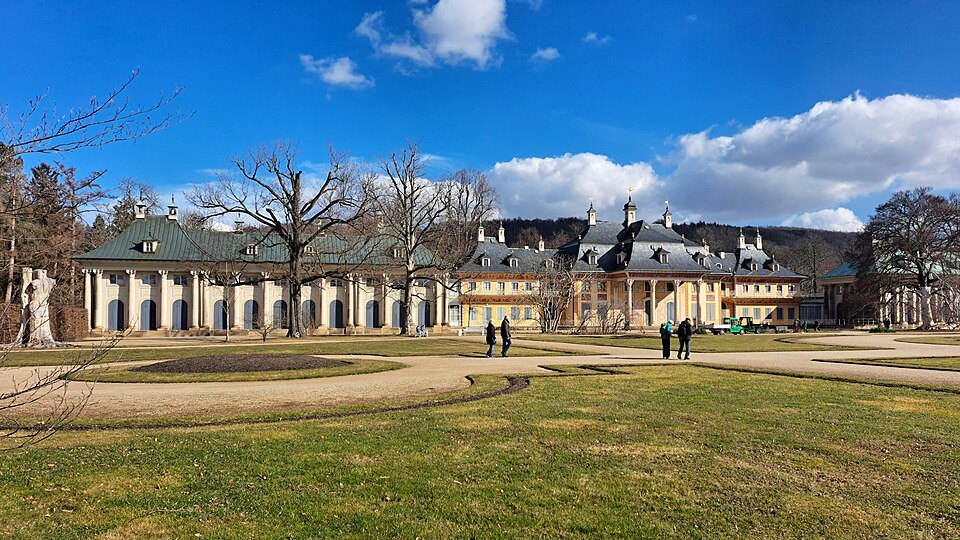
- the Wasserpalais
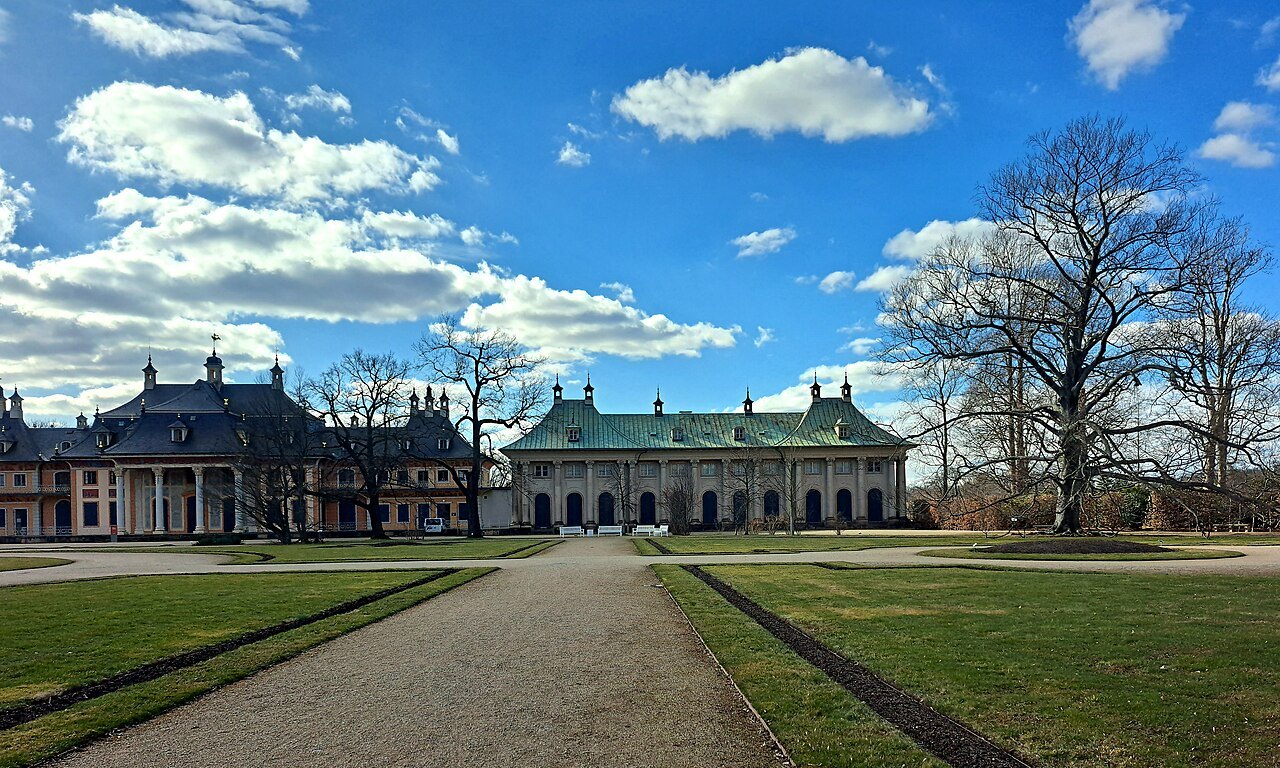
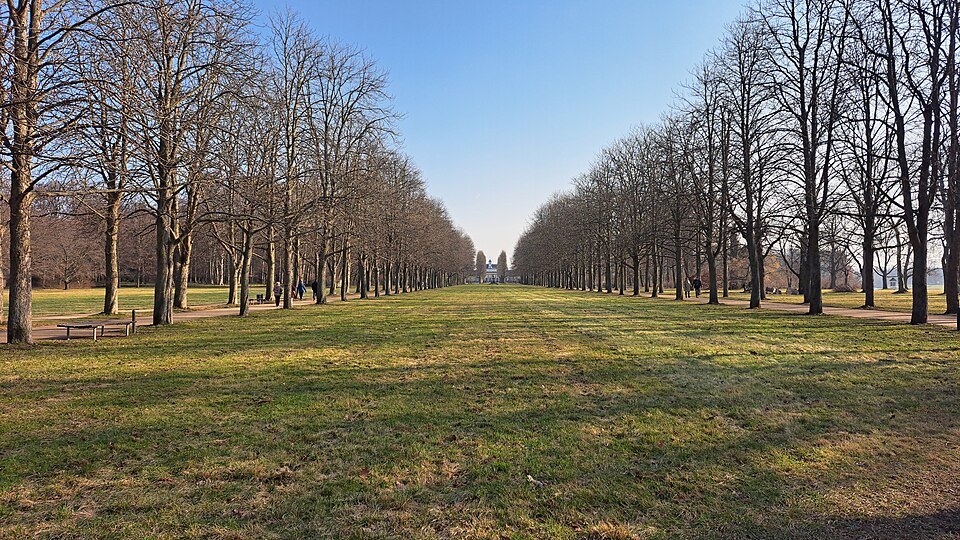
- the Lustgarten
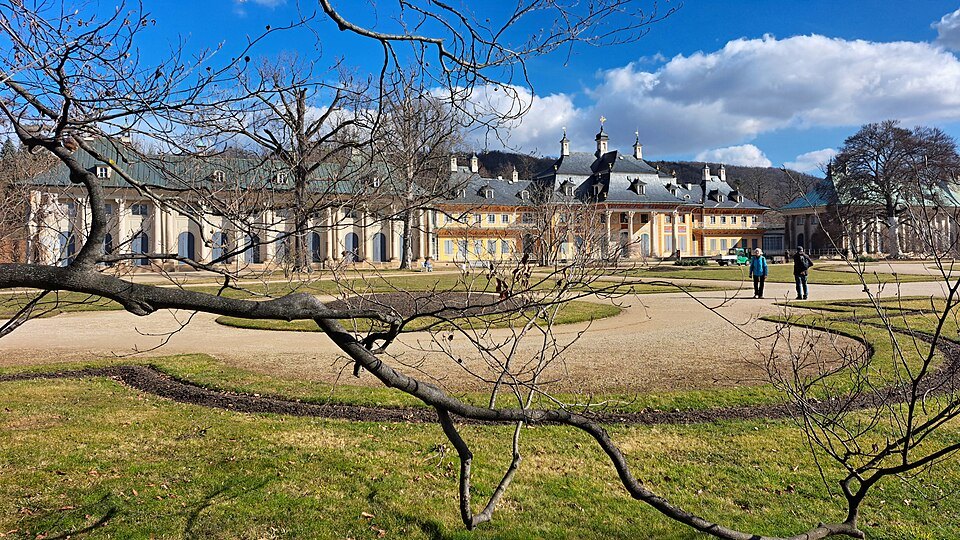
- the Bergpalais
- the Neues Palais
- the park and the camellia
- 01A palace built for the river
- 02From manor to pleasure palace
- 03Fire and the Neues Palais
- 04The water stairs and the garden
- 05The park
- 06How to visit
01A palace built for the river
Schloss Pillnitz was the summer residence of the Saxon electors and kings, on the right bank of the Elbe in the former village of Pillnitz, now part of the city of Dresden. It is not one building but an ensemble: three palaces around a formal garden, set inside a landscaped park of about 28 hectares.
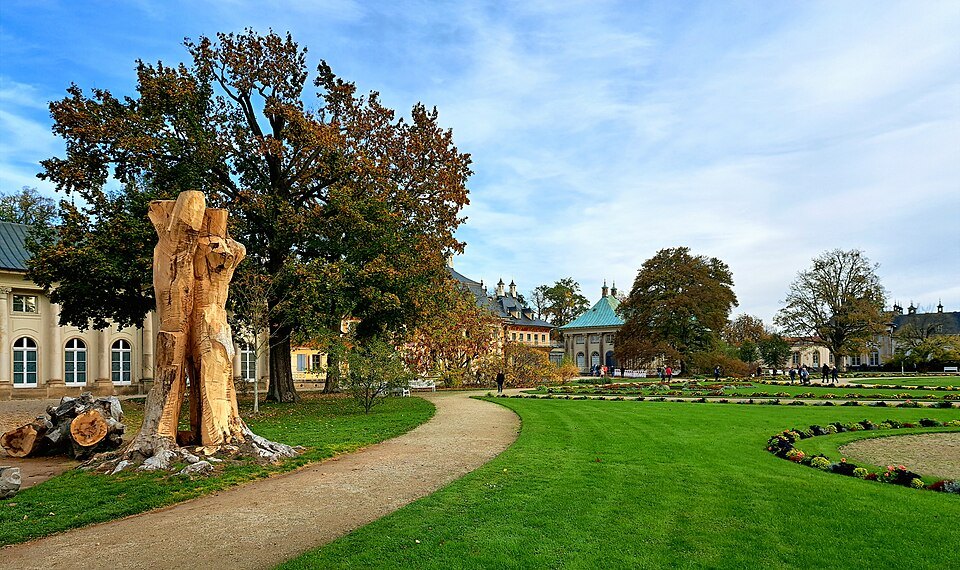
What makes it worth the trip upriver is the mood the court wanted. Augustus the Strong had it built as an oriental fantasy for festivities on the water, and the curved roofs, painted eaves and figures of the 1720s still carry that idea. Few places in Dresden show the baroque at play as clearly as this one.
02From manor to pleasure palace
Pillnitz is first recorded in 1335 as a manor. The Wettin rulers acquired it in 1694, and it passed soon after to Frederick Augustus, later Augustus the Strong. He gave it to his mistress, Countess Cosel, who lived there until 1715; hedge gardens were laid out in her time.
From 1720 Augustus had the complex rebuilt to plans by Matthäus Daniel Pöppelmann, with Zacharias Longuelune also involved. The Wasserpalais on the river and the Bergpalais facing it on the hillside side were finished over the following years, their roof shapes and ornament drawing on the fashion for East Asian design. Christian Traugott Weinlig added side wings between 1788 and 1791.
Court life here was theatrical. The garden served the wedding celebrations of the electoral prince in 1719, and a wedding in 1725 was celebrated for four weeks. There were swings, carousels and games in the garden, and in the Orangerie court ladies once rode at rings with lances. In 1791 Pillnitz gave its name to the Declaration of Pillnitz, agreed at a meeting of Austrian and Prussian leaders in support of the French monarchy during the Revolution.
03Fire and the Neues Palais
On 1 May 1818 the old Renaissance palace burned down. In its place the architect Christian Friedrich Schuricht designed the Neues Palais, built over the following decade and completed by about 1830. It closes the ensemble with a kitchen wing and a chapel wing around a large inner courtyard.
Inside are a domed hall with a coffered ceiling and Corinthian columns, the royal kitchen, and a Catholic chapel with paintings by the court painter Carl Christian Vogel von Vogelstein. The Neues Palais holds the palace museum. After 1945 the whole complex became a museum, and major restoration began in the 1990s.
04The water stairs and the garden
Start at the river. A broad flight of steps runs from the Wasserpalais down to the Elbe so that the court's gondolas could land directly at the palace; the water stairs were completed in 1724 to plans by Longuelune. Two sphinxes by François Coudray, dated 1725, watch from the pillars. The red Triton gondola of Frederick Augustus III is displayed in the park.
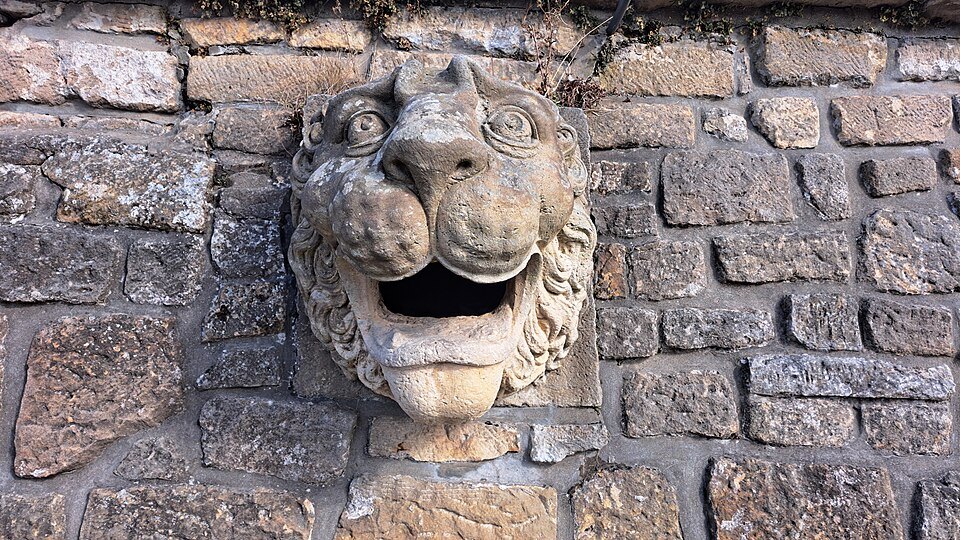
Turn inland and the Lustgarten, the geometric baroque garden, lies between the Wasserpalais and the Bergpalais. It was the court's festival ground. Look up at the roofs: the buildings are decorated with countless Chinese-looking figures, animals and fabulous creatures, and baroque paintings in chinoiserie style were uncovered on the Wasserpalais in the 1960s and restored.
05The park
Beyond the palaces the park is divided into garden areas of different character. The English Pavilion of 1780, a round temple modeled on Bramante's Tempietto, and the Chinese Pavilion of 1804, with eight painted landscapes inside, mark the English and Chinese gardens. The Chinese Pavilion has been described as the most significant enclosed replica of an East Asian building in Europe.
The Pillnitz camellia, a Camellia japonica planted in 1801, is among the oldest on the European continent. It stands close to nine meters tall and can carry tens of thousands of blossoms from late winter into spring. A glass house on rails is moved over it in the cold months.
The Palmenhaus, built between 1859 and 1861, is nearly 94 meters long and was the largest glasshouse in Germany when it was built and is one of the oldest steel-and-glass buildings surviving in Europe. The Orangerie stands on the site of Pöppelmann's ring-riding building.
06How to visit
Allow half a day. A single ticket covers the palace grounds and park, and the museums sit inside it; the arts and crafts museum of the Dresden State Art Collections founded in 1876 and holding more than 60,000 objects, uses rooms in the Wasserpalais and Bergpalais — its holdings include a throne of Augustus the Strong — and access to those rooms has varied with building work, so check the museum's page before you go. The camellia is at its best in its flowering season in early spring.
The slow way is the best: a paddle steamer from the Terrassenufer below the Brühl's Terrace, upriver past the Blaues Wunder to the landing by the palace. The quicker way is tram line 2 to Kleinzschachwitz and the small ferry across the river, which the transport company describes as the fastest connection from the center — see the Elbe.