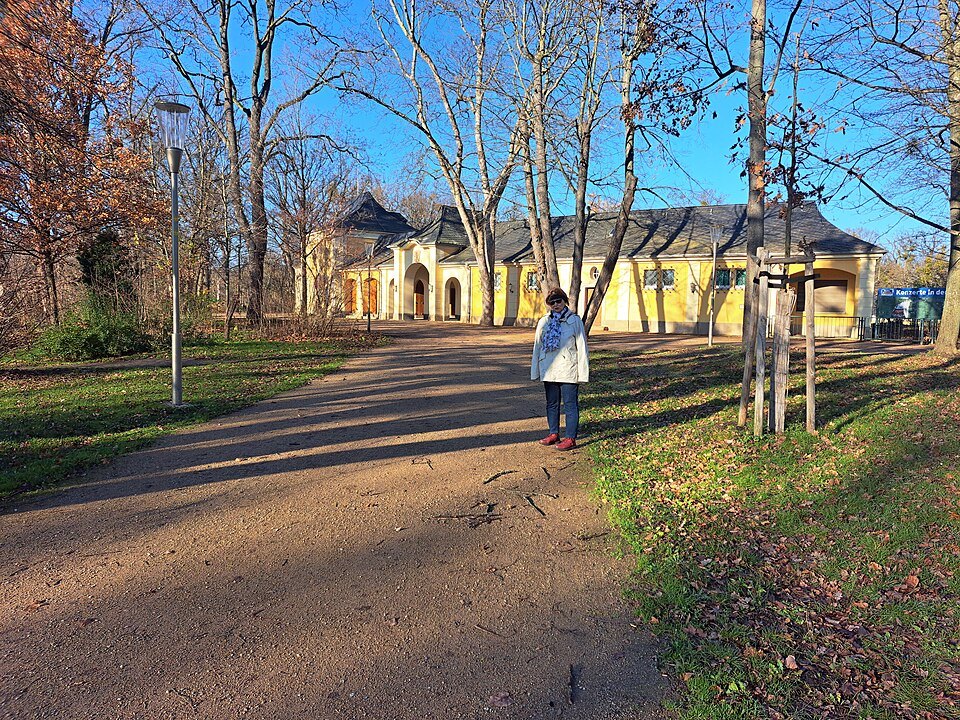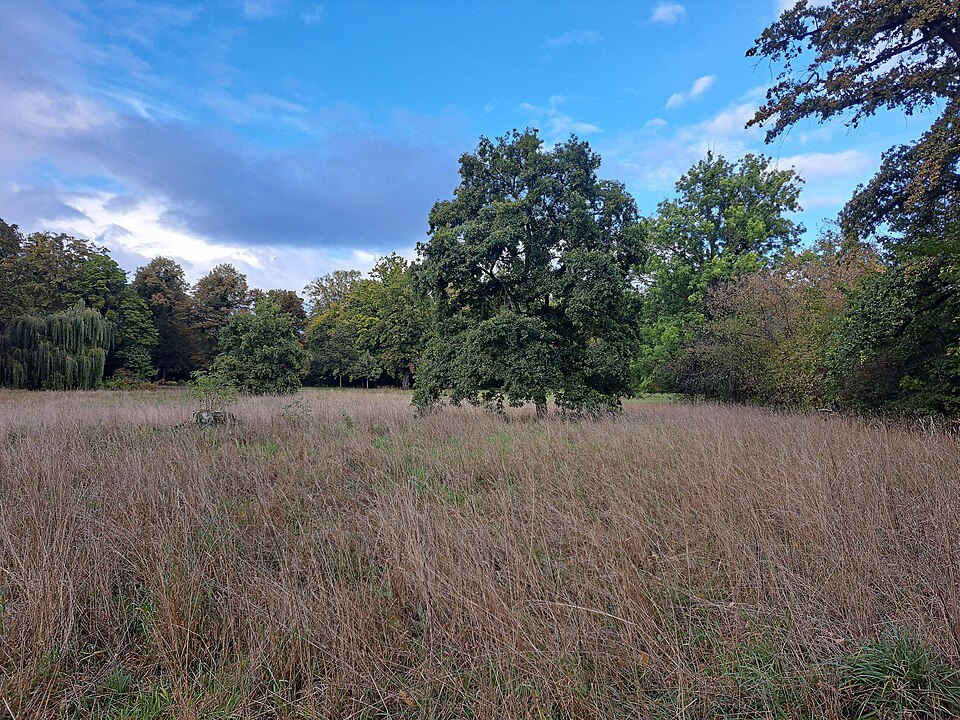
- the Hauptallee from the west
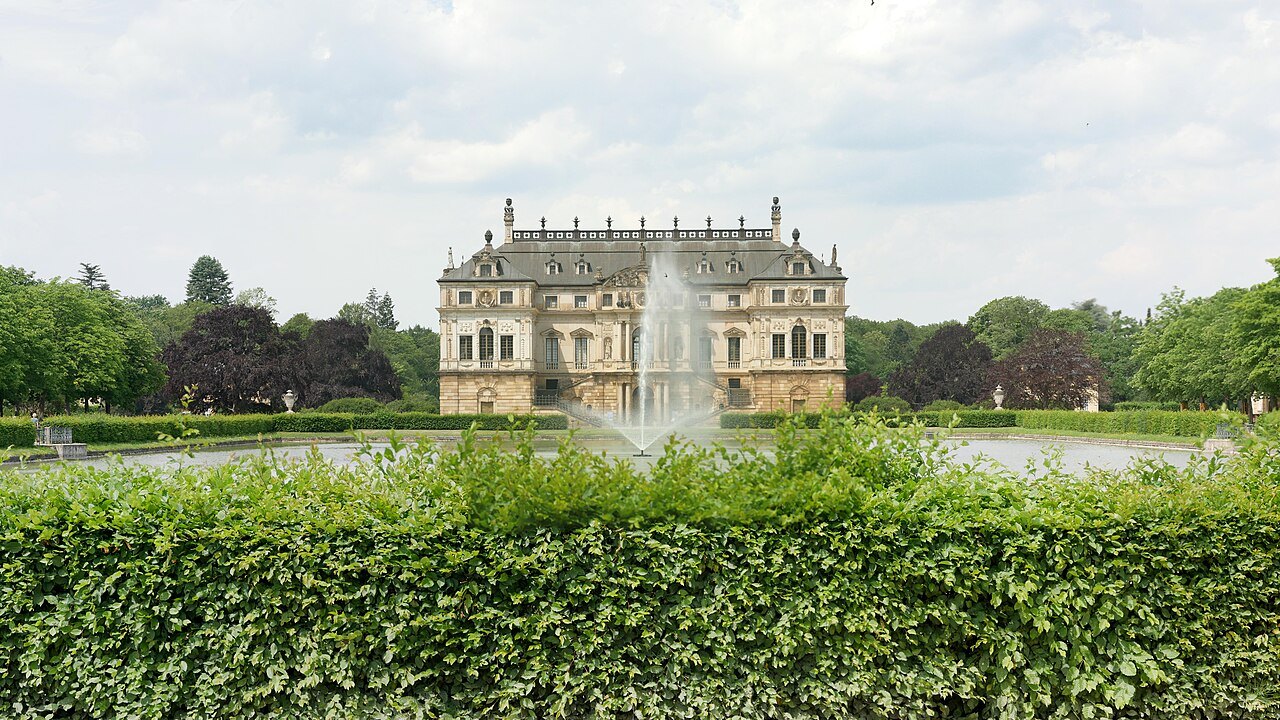
- the Palaisteich
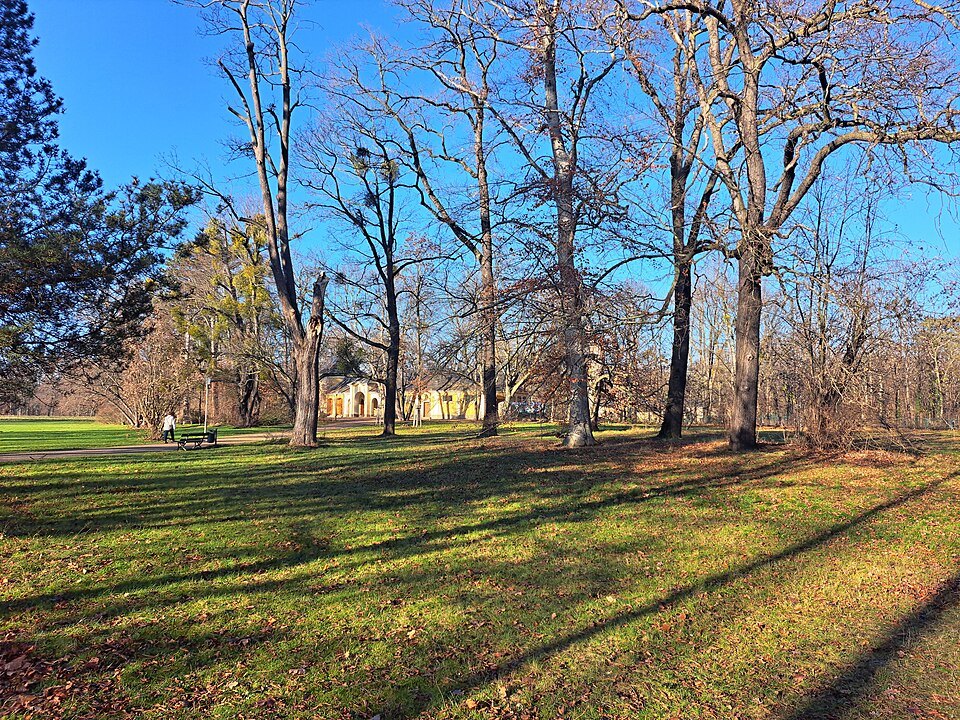
- the Palais at the center
- the avenues crossing
- the Carolasee
- 01The green heart of Dresden
- 02A court garden outside the walls
- 03War and after
- 04The Palais at the center
- 05Walking the avenues
- 06How to visit
01The green heart of Dresden
The Großer Garten, the Great Garden, is a baroque park of about 180 hectares just south-east of the Altstadt. It runs roughly 1,900 meters long and up to 950 meters wide, a near-rectangle of straight avenues, lawns and woodland with some 18,700 trees. German sources place it about a kilometer and a quarter east of the city center, and the city grew right around it in the nineteenth century.
For a visitor it does two jobs. It is a real piece of court history, with a pleasure palace at its center that predates almost everything else baroque in the city. And it is where Dresden goes for air: long walks, a lake with boats, a miniature railway, and a zoo on its edge.
02A court garden outside the walls
The park was laid out from 1676 on the orders of the Elector John George III, then outside the city fortifications. At its center the Palais was built between about 1678 and 1683, under Wolf Caspar von Klengel and Johann Georg Starcke; sources give its start as 1678 or 1679. It counts as one of the earliest baroque buildings in German-speaking lands and the beginning of Dresden's baroque.
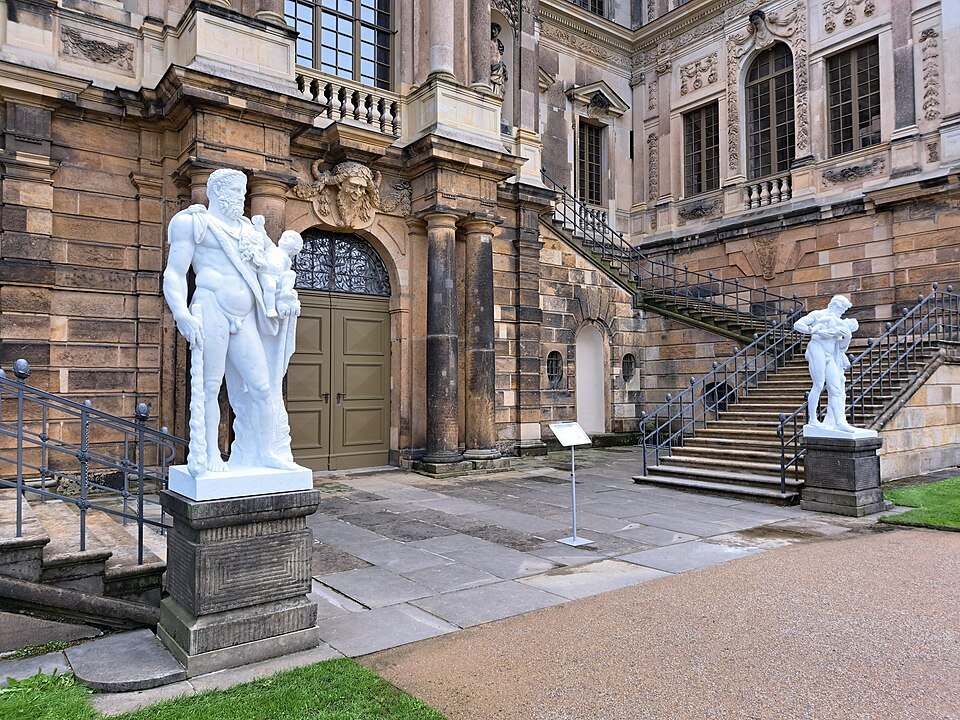
Eight small cavalier houses were added around it in 1693–94, and five of them survive. The Palaisteich, an artificial pond by the palace, was completed in 1715. The garden was once filled with about 160 sculptures; many were destroyed in the Seven Years' War. Marble vases by Antonio Corradini, first made for the garden of the Japanese Palace, were later moved here.
Augustus the Strong kept his collection of antique sculpture in the Palais from 1729 to 1747, the first major collection of ancient sculpture in Germany. Later the building housed horticultural exhibitions and the museum of the local antiquities society. The park has been a public garden since 1814. The Dresden Zoo opened beside it in 1861, making it the fourth-oldest zoo in Germany, and the Botanical Garden has been on the park's edge since 1893. In the same year the dairyman Paul Pfund opened a milk bar here so that walkers could buy a glass of milk; his tiled shop still stands in the Neustadt — see Pfunds Molkerei.
03War and after
The February 1945 air raids hit the park hard, leaving around 170 bomb craters. The Palais lost its roof and its interior decoration and was left a shell. Under the Nazi regime Jews had been banned from the park, and after the war parts of it were turned into vegetable plots.
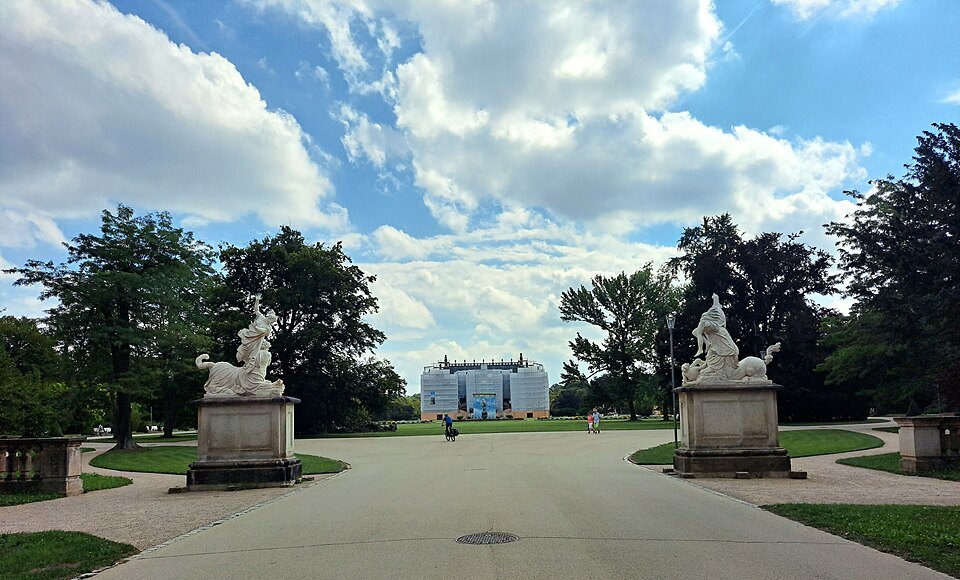
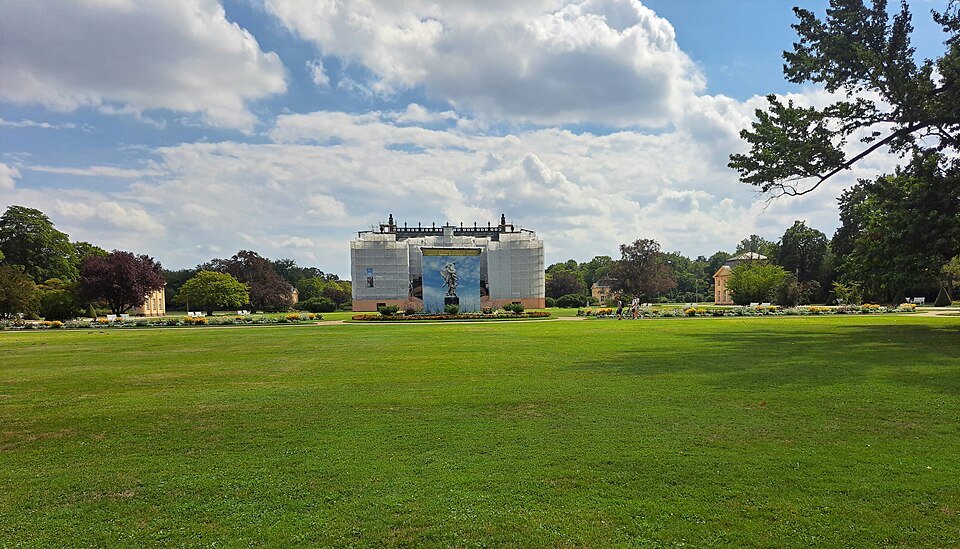
Restoration of the Palais began in 1946 and has continued in stages ever since. The exterior was largely restored by the 1990s, while much of the interior still shows its rebuilt or bare state. Since 1993 the park has been looked after by the state palaces and gardens agency of Saxony.
04The Palais at the center
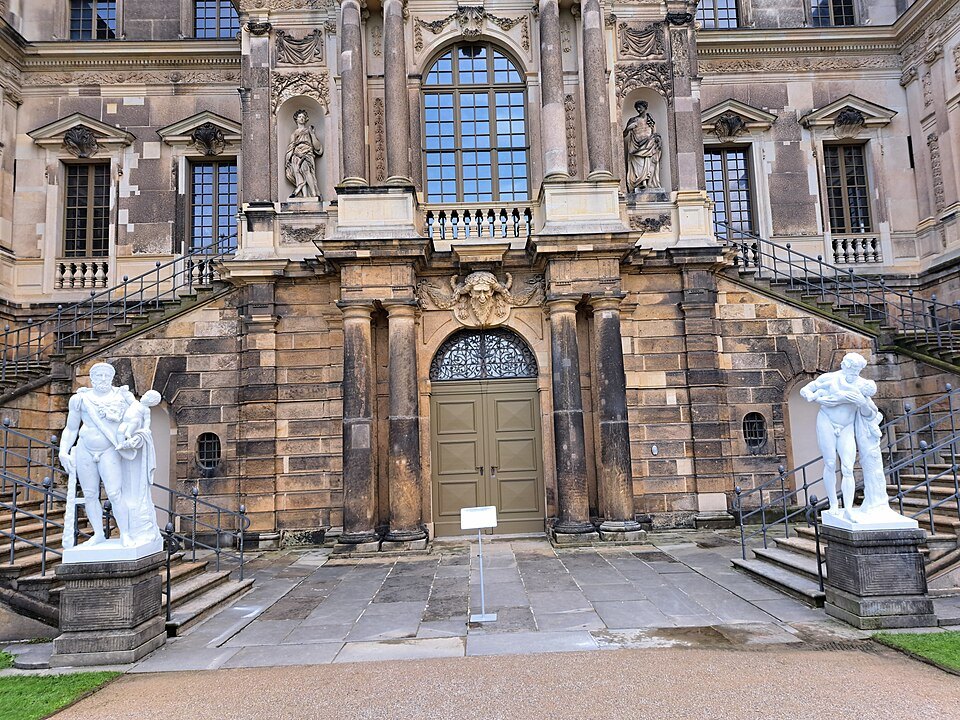
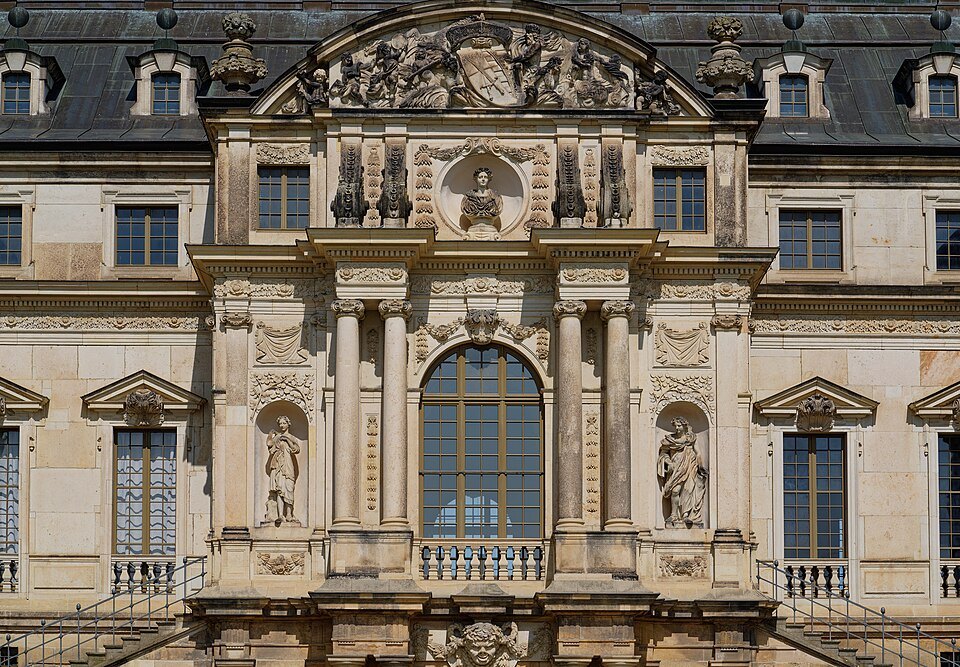
Where the main avenues meet stands the Palais: three stories on an H-shaped plan, drawing on Italian villas and French château design. Walk right around it. The facades carry rich sculpture, including busts of twelve Roman Caesars and four empresses.
Inside, a two-story festival hall once had stucco and allegorical ceiling paintings by Samuel Bottschildt and Heinrich Christoph Fehling. The building is used for concerts, events and exhibitions, among them a flower show held every two years; what can be seen inside depends on what is being staged, so check before counting on entry.
05Walking the avenues
Enter from the west and follow the Hauptallee, the main avenue, which runs the length of the park lined with sculpture and passes the Palaisteich before reaching the Palais. On the Herkulesallee stand four Hercules figures attributed to Balthasar Permoser.
In the south-eastern part lies the Carolasee, a lake of about 2.8 hectares dug from a gravel pit in 1881–82 and named for Queen Carola, the last queen of Saxony; boats have been rowed on it since its first season. Look out too for the Mosaikbrunnen, a 1926 fountain by Hans Poelzig, and the open-air stage built between 1954 and 1957 with room for 5,000 people.
The Parkeisenbahn, a narrow-gauge park railway opened in 1950, loops through the park on about five and a half kilometers of track in the warmer months. A glass-walled car factory completed in 2002 is the newest building in the grounds.
06How to visit
Entry to the park itself is free, and there is no single route: two hours covers the Hauptallee, the Palais and the Carolasee at an easy pace, and half a day allows for the Herkulesallee, the fountain and a ride on the park railway. Stay on the paths in dry summers, when the park management warns of falling branches. The gondola rides on the Carolasee and the park railway run seasonally.
The western edge is about half an hour's walk from the Frauenkirche, or a short tram ride. In spring and autumn it is the easiest large green space to reach from the Altstadt — see when to come.