- 01Coffee and the afternoon
- 02Eierschecke
- 03Dresdner Christstollen
- 04What Saxony cooks
- 05At the Striezelmarkt
- 06Wine and beer
01Coffee and the afternoon
Saxons have long been teased as Kaffeesachsen, coffee Saxons. The preference is recorded from the eighteenth century and was already a joke in the nineteenth. Saxony mattered to German coffee culture in several ways: coffee was served publicly in Leipzig in 1694, European porcelain was invented here and set on court and middle-class coffee tables, and the habit of afternoon coffee took hold.
The custom survives as Kaffee und Kuchen, coffee and cake in the afternoon, most of all on Sundays, birthdays and special occasions. The coffee is traditionally filter coffee rather than espresso. An old Saxon joke name, Blümchenkaffee, "little-flower coffee", mocks a brew thin enough to show the painted flowers at the bottom of a porcelain cup.
02Eierschecke
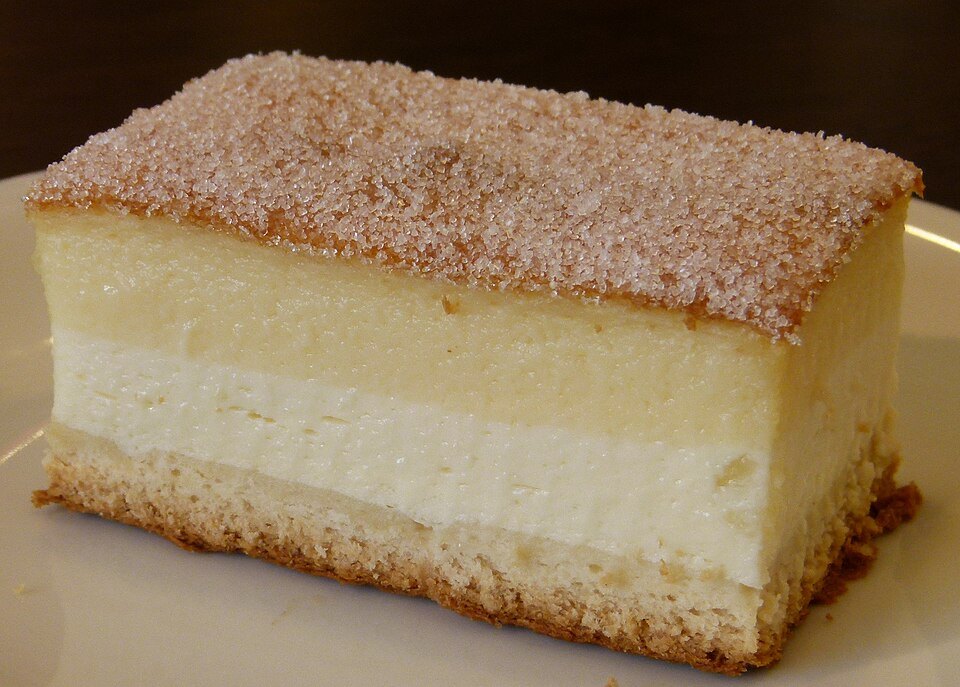
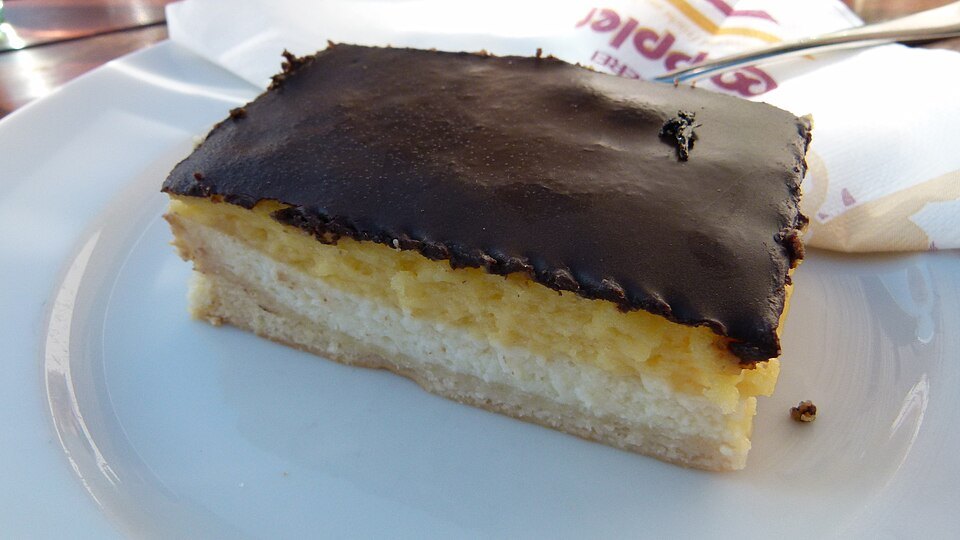
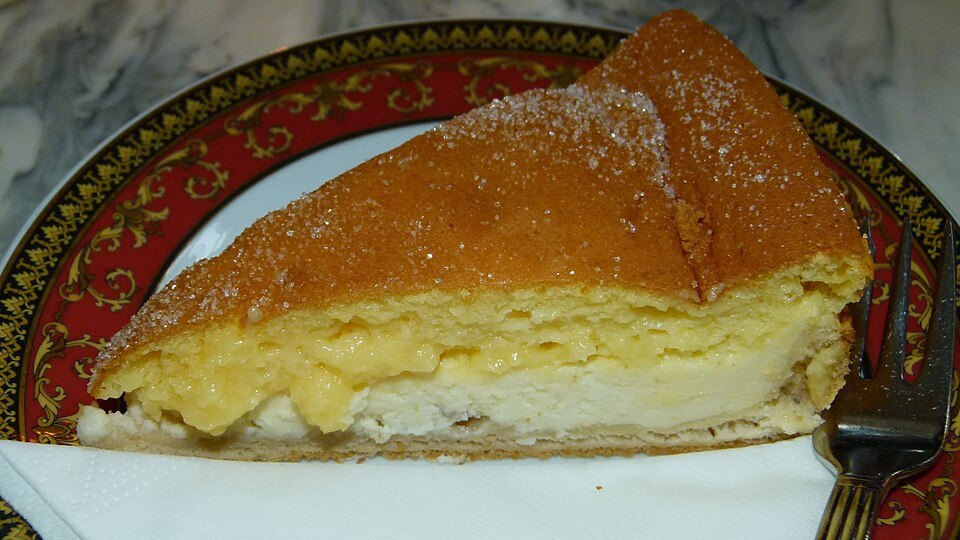
Dresden's own cake is the Eierschecke, a sheet cake cut into squares. It has three layers: a base of yeast or sponge dough with a little shortcrust, a middle of quark and vanilla custard, and a top of egg yolk beaten with butter and sugar, set with custard and lightened with whipped egg white. Bakers vary it with raisins, almonds, crumble or a chocolate coating.
The Dresden-born writer Erich Kästner complained that the rest of the globe had never heard of it, to humanity's loss. Do not confuse it with the much flatter Freiberger Eierschecke, made without quark and with raisins and flaked almonds, which is another town's recipe and has been trademark-protected since 2007.
03Dresdner Christstollen
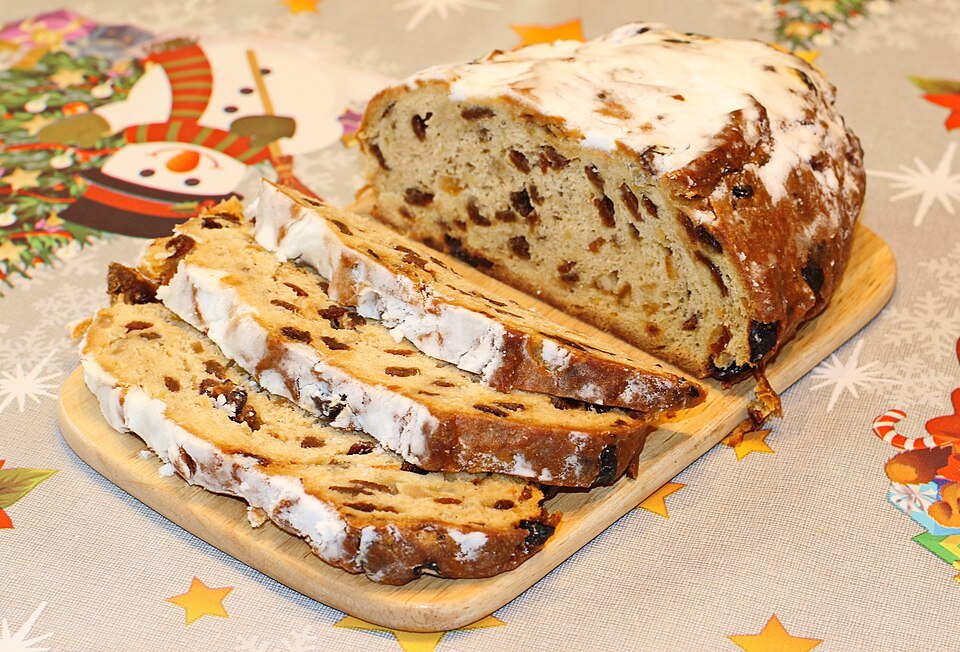
The Dresdner Christstollen is a rich butter-and-raisin loaf, heavy with dried fruit and thick with sugar. Dresden's bakers won a stollen monopoly from the elector in 1648, keeping outside bakers away during the Christmas market. Since 2010 the names Dresdner Stollen, Dresdner Christstollen and Dresdner Weihnachtsstollen are a protected geographical indication under European law: only bakers and confectioners from the Dresden area, a little over a hundred of them, may use them.
Genuine loaves carry the Stollen seal of the Schutzverband Dresdner Stollen, the protective association founded in 1991: an oval golden seal with the face of Augustus the Strong and a control number that traces the loaf to its bakery. At the start of each season in November, a jury of bakers and confectioners tests every member's stollen.
The Stollenfest, held since 1994 on the Saturday before the second Sunday of Advent, recalls a giant stollen that Augustus the Strong had baked for a military display in 1730. A stollen weighing tonnes rides on a wagon in a procession through the Altstadt, past the palace and the Hofkirche, and is cut ceremonially at the Christmas market.
04What Saxony cooks
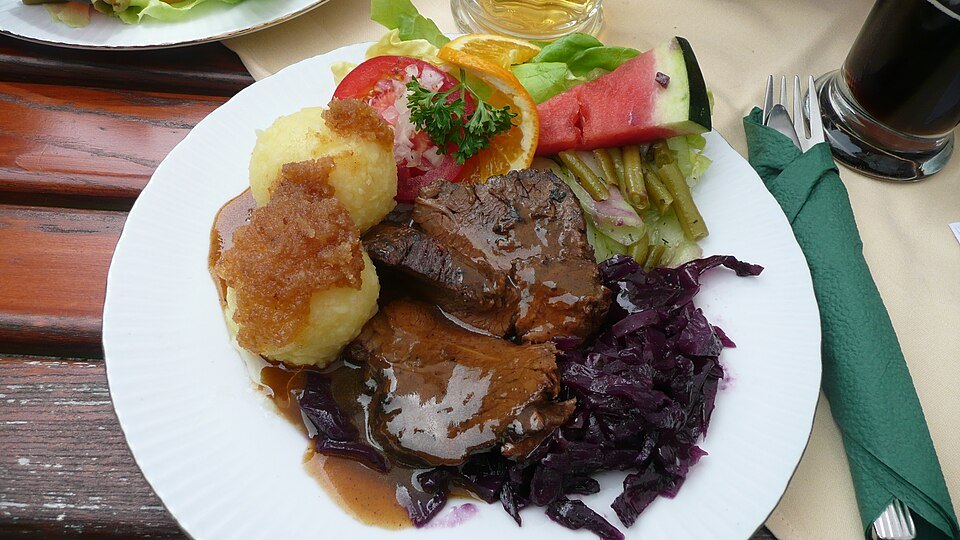
Saxon cooking is hearty, with a wide choice of sauces for main dishes and dumplings served as often as potatoes, noodles or rice. Sauerbraten, beef marinated for days before it is braised, appears in many German regions; the Saxon version is often finished with raisins and a gingerbread-like sauce cake for a sweet-sour gravy, and comes with red cabbage and potato dumplings.
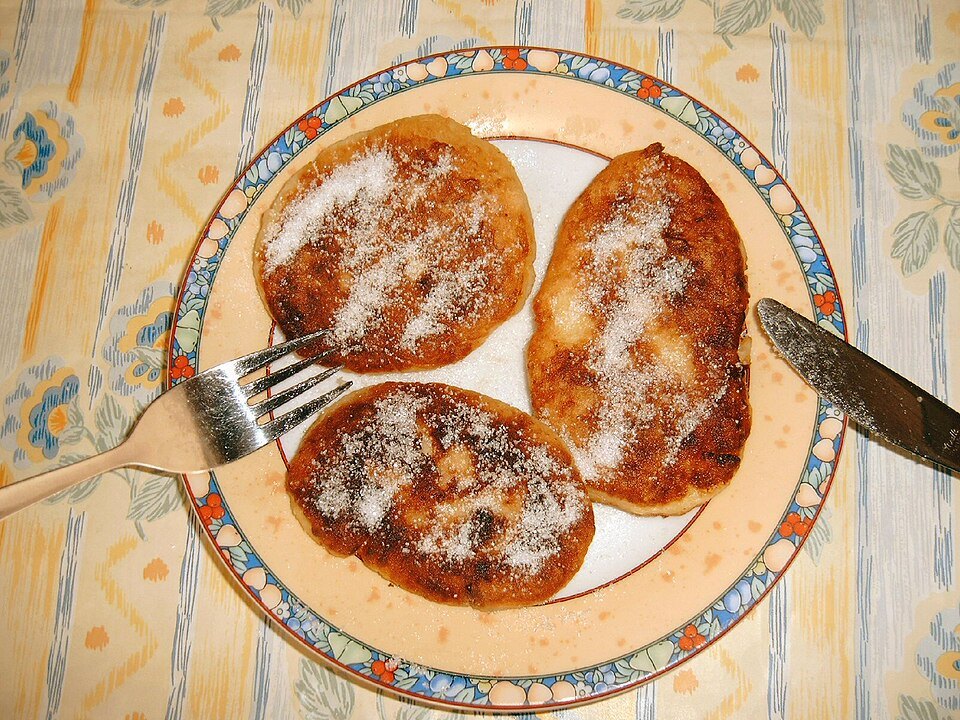
Quarkkäulchen are small flat cakes of grated boiled potato and quark, flavored with sugar, cinnamon and lemon and fried golden. They are eaten warm with apple sauce or stewed fruit, as a dessert, or cold with coffee. Potato soup, often with sausages in it, belongs to the plainer side of the Saxon kitchen that grew up in the poorer uplands.
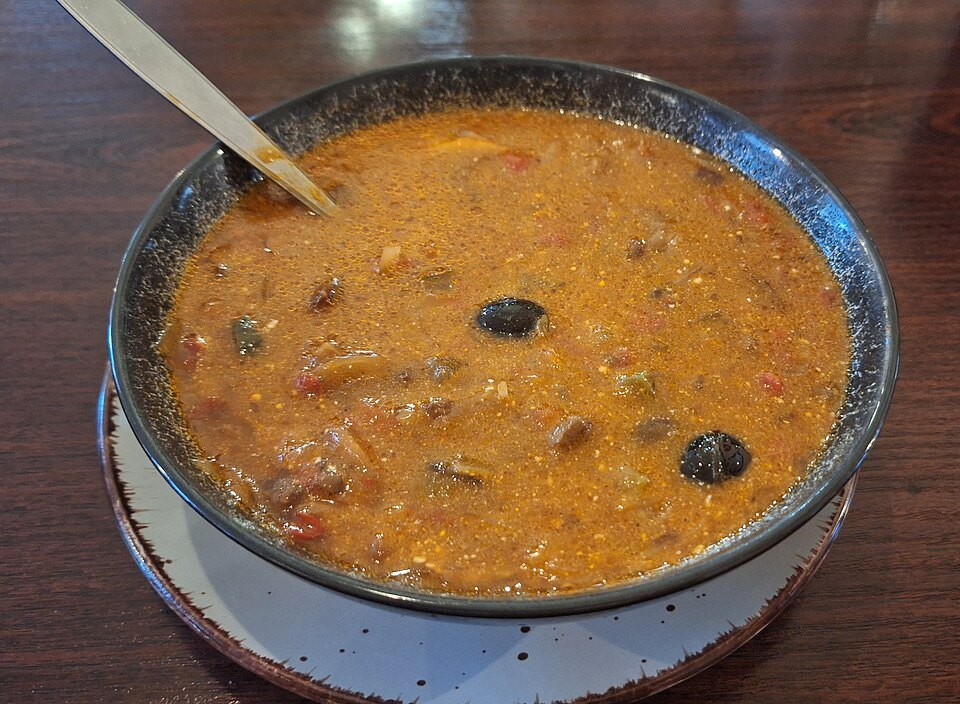
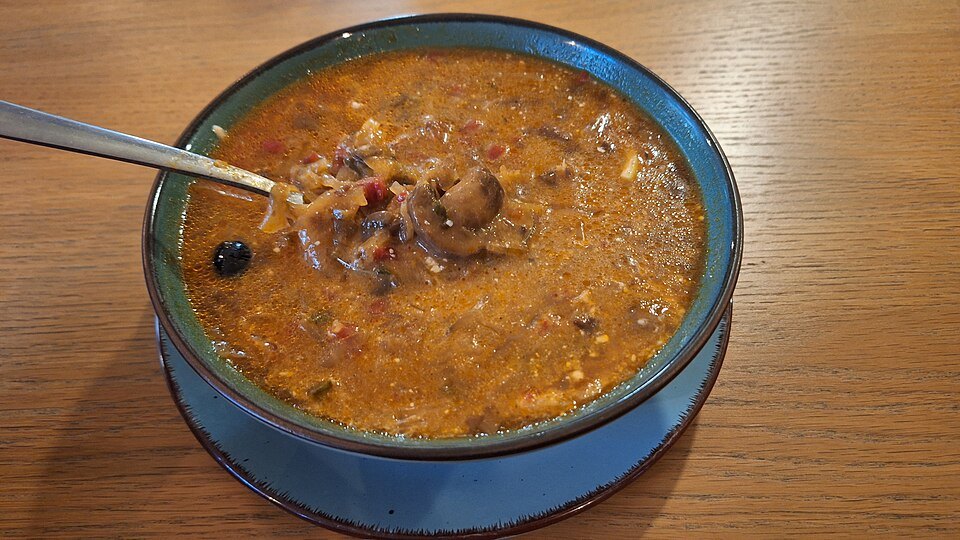
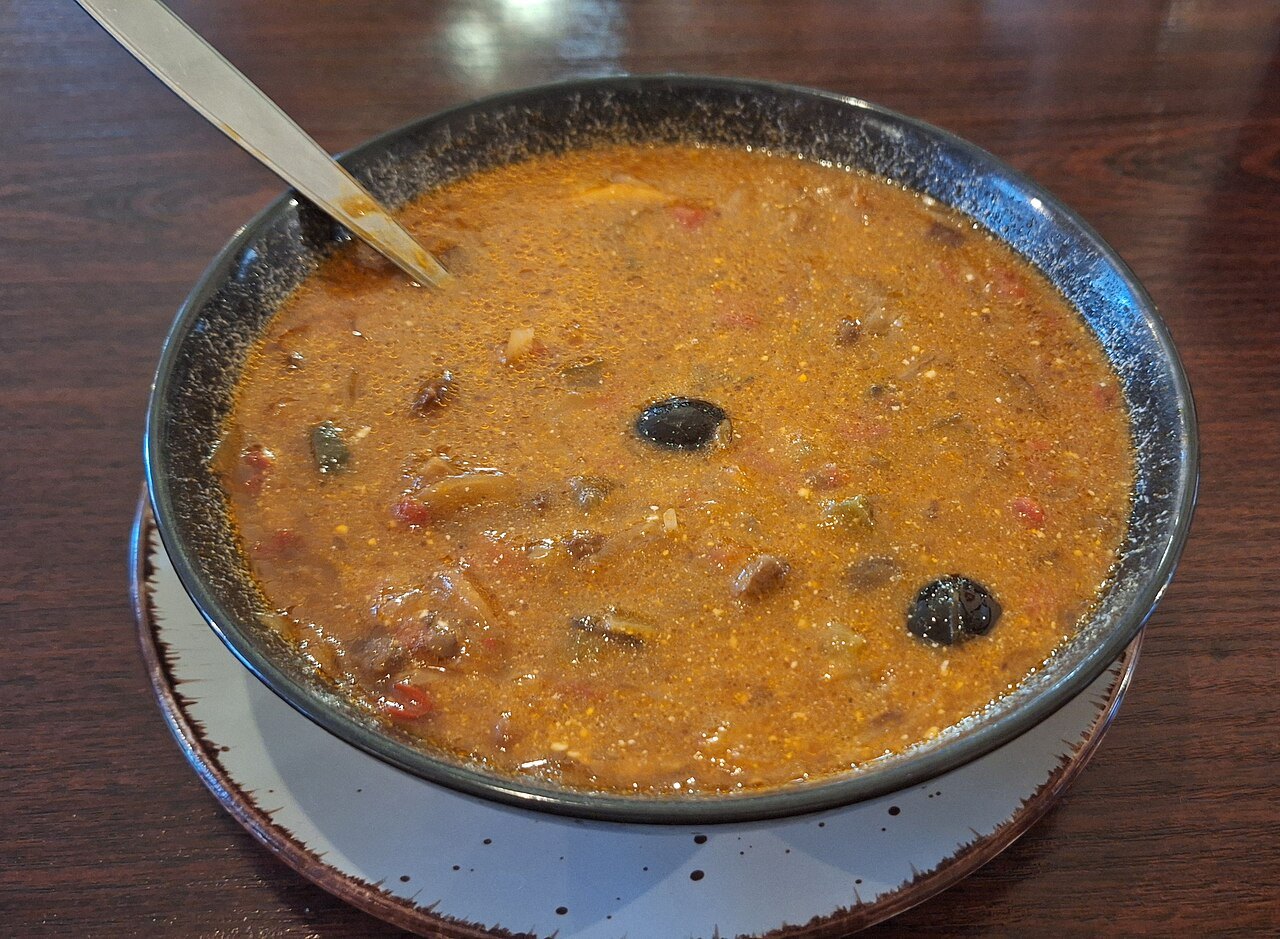
Soljanka, a sour and spicy soup from Eastern European cooking made with pickled cucumbers, was one of the most popular stews in East German restaurants and still turns up on menus across eastern Germany.
05At the Striezelmarkt
The Striezelmarkt on the Altmarkt, held since 1434, is the oldest Christmas market in Germany with a documented founding. It began as a one-day meat market before Christmas, and its name comes from Striezel, an old word for the stollen. At the opening, a stollen is cut whose length in millimeters matches the year. See when to come.
Stalls sell Dresden stollen, gingerbread from Pulsnitz, and mulled wine by the mug, and many visitors keep the mug. Look for the Pflaumentoffel: a little chimney sweep built from about fourteen dried plums on wooden sticks, with a paper head, a top hat and a ladder. It is edible, but people buy it as a good-luck figure; in the nineteenth century children sold them from trays at the market.
Cold weather at Saxon markets also brings Handbrot, a bread baked with a filling of cheese and cooked ham and eaten hot, straight from the stall.
06Wine and beer
The Saxon wine region is one of the smallest in Germany and the easternmost, lying almost entirely along the Elbe valley around Dresden, where vines have been grown for more than eight hundred and fifty years. Phylloxera and building booms wiped out most vineyards around 1900; by the end of East Germany only about two hundred and twenty hectares were planted, and the area has since more than doubled.
Most of it is white wine: Riesling, Müller-Thurgau, Pinot blanc and Pinot gris lead, and Goldriesling is a variety grown only in Saxony. Because so little is made, a glass in Dresden is the easiest way to taste it; the old vineyard slopes of Loschwitz beside the Blaues Wunder are a reminder of how far into the city the vines once reached.
In beer, Germany drinks mostly Pilsner, which holds around two-thirds of the market, and a brewery just outside Dresden claims to have been the first in Germany to brew nothing else.
07What to know
Traditionally the main meal in Germany was lunch, with a lighter evening meal of bread, cold meats and cheese, and bakeries sell filled rolls in the morning for people on the go. Keep the afternoon for coffee and cake. The Neustadt is where Dresden goes out at night — see neighborhoods.
Tipping in restaurants, bars and taxis is customary but not compulsory, and rarely goes beyond ten percent. The usual way is to round up by saying the total you want to pay as you hand over the money, or to say Stimmt so to leave the change.
Note Germans have held on to cash longer than most neighbors. Cards and contactless payment are widely taken in larger shops, but foreign cards are accepted less evenly than in some countries, and small cafés and Christmas market stalls may take cash only — carry some. This guide names no individual café or restaurant.