Schematic, not to scale: each area by its bank and by whether it lies downriver, at the center or upriver.
- 01The Altstadt
- 02The Innere Neustadt
- 03The Äußere Neustadt
- 04Pieschen and the old harbor
- 05Johannstadt
- 06Blasewitz, Loschwitz and Weißer Hirsch
01The Altstadt
The Altstadt lies on the south bank of the Elbe, inside the line of the old fortifications, which is traced today by a ring of streets. Nearly every famous building in Dresden stands here: the Frauenkirche on the Neumarkt, the Zwinger, the palace and the opera along the river. From a bed here, the sights are a walk away, and the Prager Straße leads on foot from the Hauptbahnhof straight to the Altmarkt.
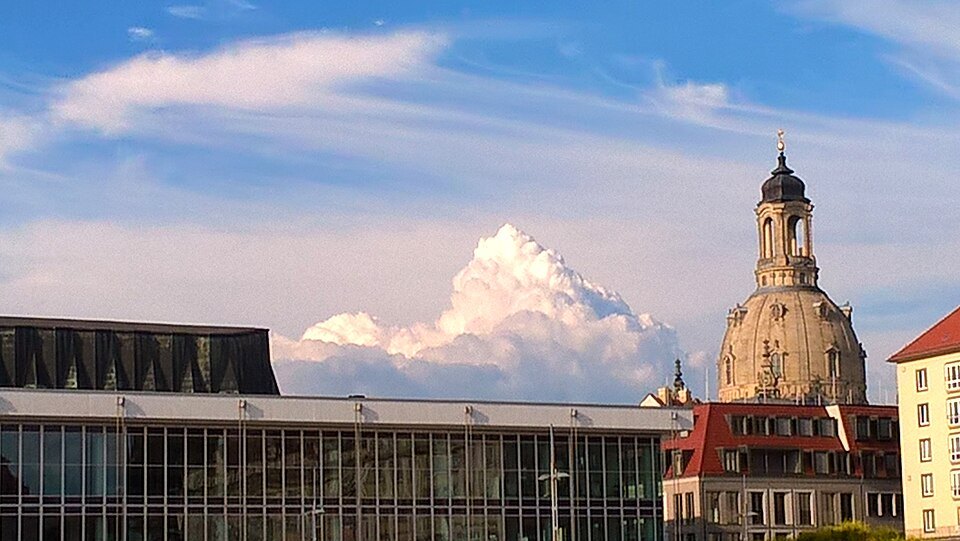
The bombing of February 1945 destroyed the old center almost completely. What stands now is a mix of reconstructed baroque, rebuilt merchants' houses around the Neumarkt, and postwar and recent blocks around the Altmarkt — the story is told in the rebuilt city. The rebuilding favored shops, offices and hotels over flats, and the Innere Altstadt has the highest density of hotels in the city.
It suits a first visit of two or three nights. Note Few people actually live here — fewer than two thousand in the inner district — so it is busy with visitors by day and noticeably quieter once they leave.
02The Innere Neustadt
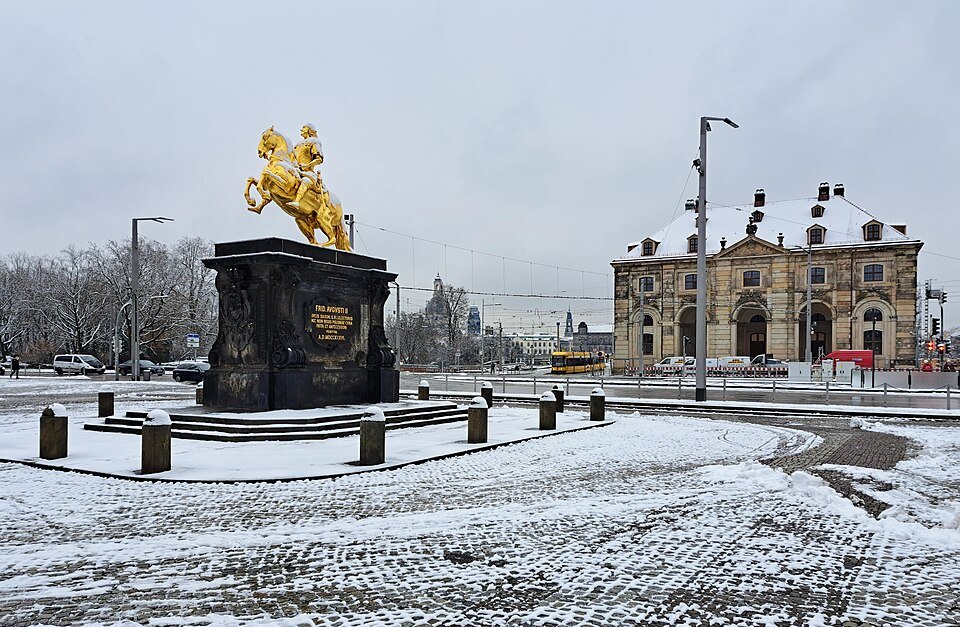
Directly across the Augustus Bridge on the north bank is the Innere Neustadt. The old settlement of Altendresden burned in 1685 and was rebuilt to a plan as the "New Town by Dresden", finished by about 1732. Its spine is the Hauptstraße, a sight line running from the Golden Rider on the Neustädter Markt north to Albertplatz.
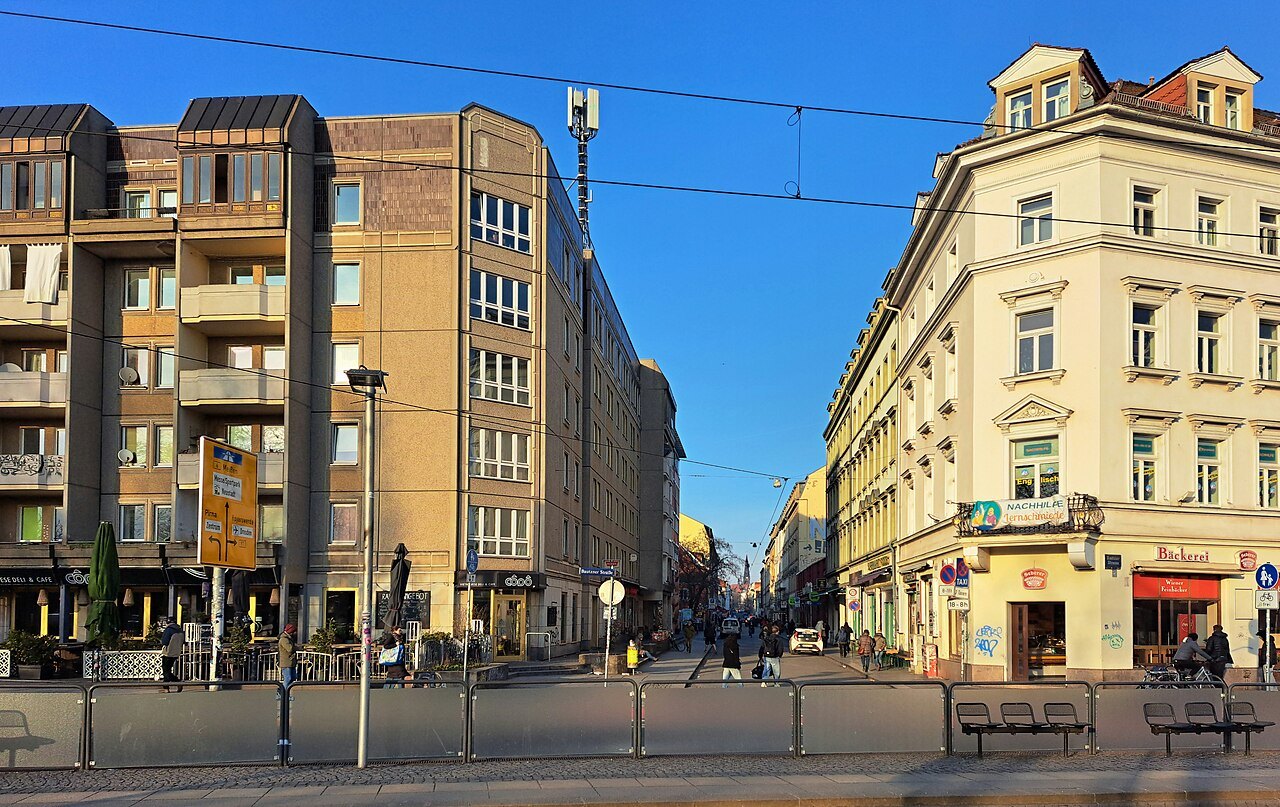
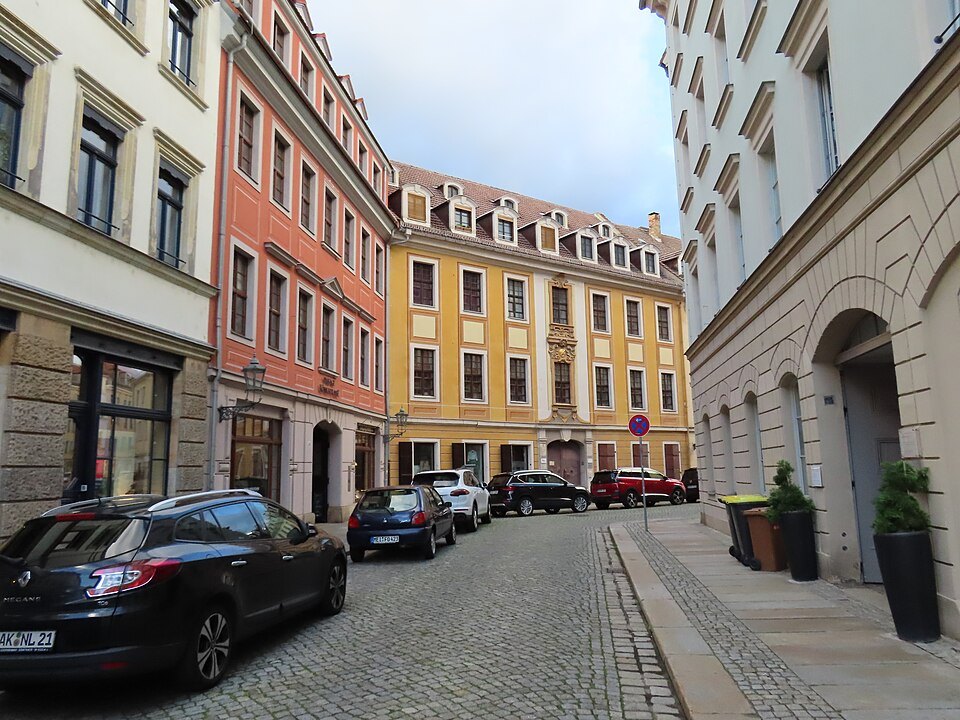
Most of the old Hauptstraße was destroyed in 1945 and rebuilt between 1974 and 1980 as a pedestrian boulevard of five-story prefabricated blocks, with the surviving eighteenth-century houses worked in on the west side. The best-kept baroque townhouses are in the quarter around the Königstraße, which also has craft workshops in its courtyards. The government quarter lines the riverbank upstream.
It is a short walk over the bridge to the Altstadt sights, and Dresden-Neustadt station, a stop for long-distance trains, is at the northwest edge of the district. It suits a visitor who wants the center within walking distance but a calmer street to come back to.
03The Äußere Neustadt
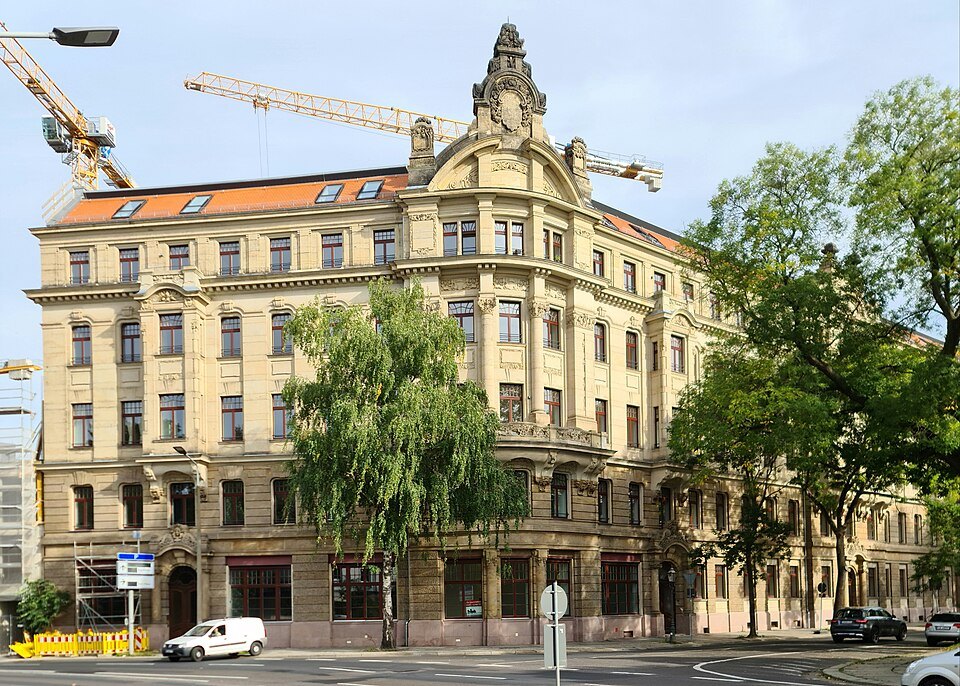
North of Albertplatz begins the Äußere Neustadt, also called the Antonstadt. Its street plan was laid out by 1745, but the buildings are mostly late nineteenth-century apartment blocks. The 1945 bombing largely spared it, and it counts among the largest areas of intact historicist housing in Germany — dense, a little over one square kilometer, with some eighteen thousand residents.
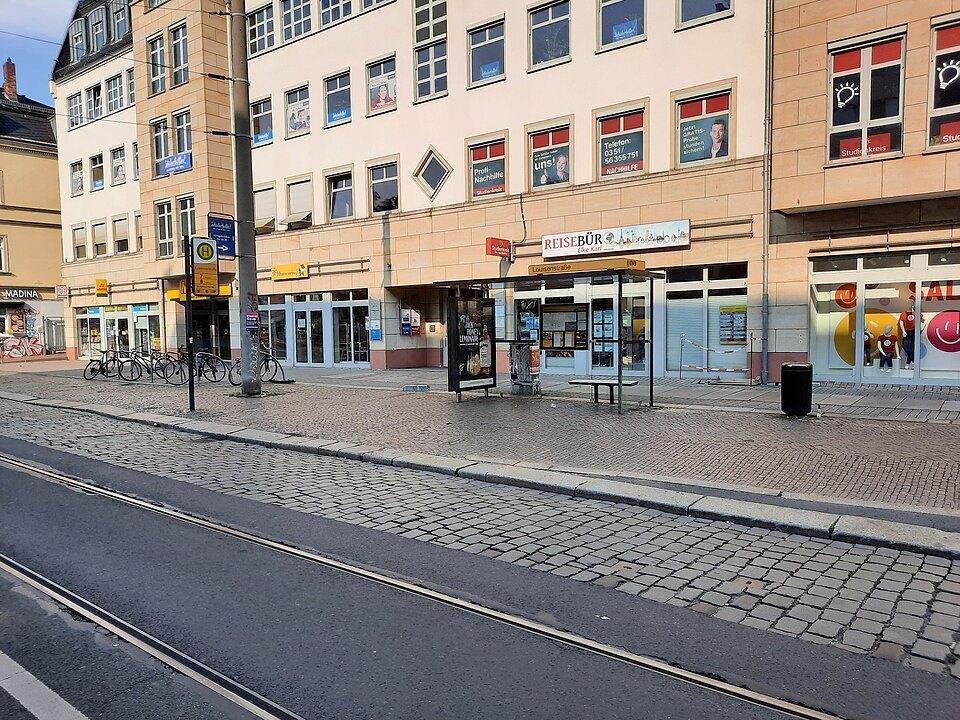
Since 1990 it has become the part of Dresden that goes out at night, with a bar and restaurant scene known far beyond the city and the Bunte Republik Neustadt street festival each summer. The Kunsthofpassage courtyards and Pfunds Molkerei are both here.
The walk down the Hauptstraße and over the bridge reaches the Altstadt; Albertplatz is the district's main tram hub and Neustadt station lies on its western edge. It suits a longer stay and anyone who wants evenings as much as museums. Note Light sleepers should look closely at which street they choose.
04Pieschen and the old harbor
Downriver on the north bank, northwest of the Neustadt, lies Pieschen. It began as a Sorbian fishing and fruit-growing village, first recorded in 1292. The first German long-distance railway in 1839 and a river harbor finished in 1859 turned it into a workers' district from about 1860 onward, built up in continuous rows of three-story houses with back courtyards.
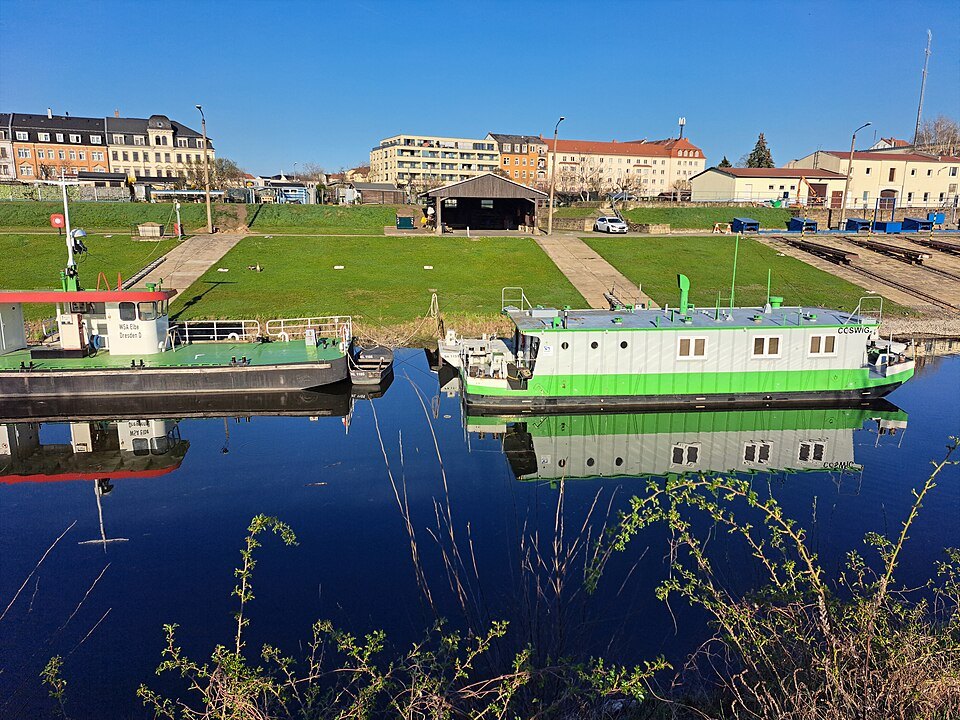
After 1991 Pieschen became the city's second-largest urban renewal area, and many of those tenements were restored rather than lost; it has since become a favorite with younger residents. The Pieschener Hafen now serves only as a winter harbor, and a footbridge over its entrance, built in 2009 and 2010, closed a gap in the Elbe cycle path along the mole.
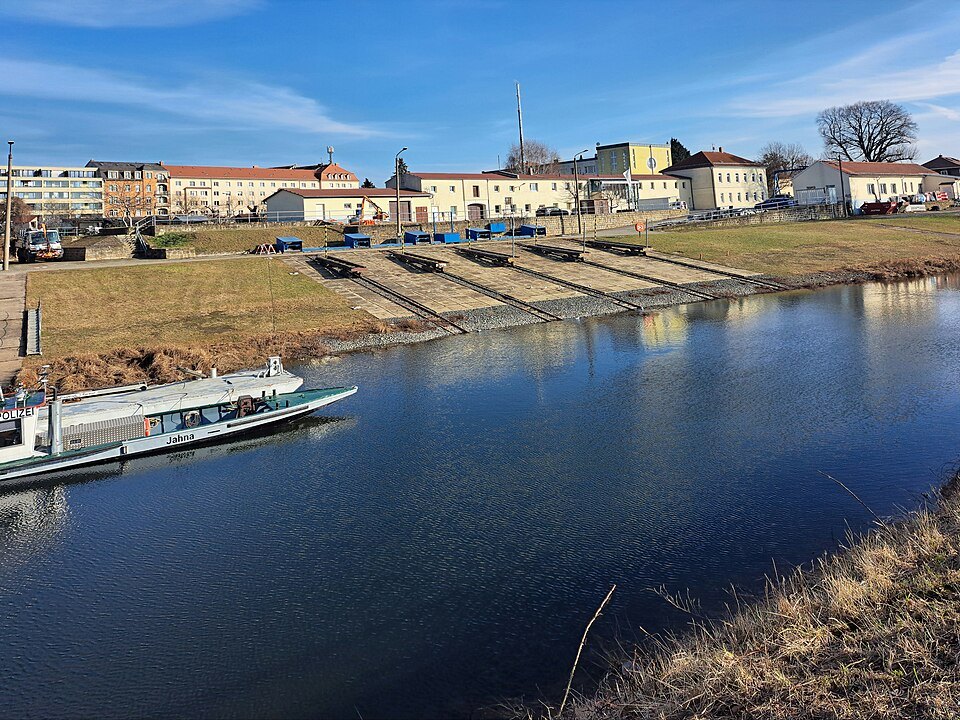
Several tram lines connect Pieschen with the city center, so the sights are a tram ride rather than a walk, or a ride along the river path — see the Elbe. It suits repeat visitors and cyclists more than a first weekend.
05Johannstadt
Upriver from the Altstadt on the south bank, Johannstadt runs along the Elbe, with the Pirnaische Vorstadt to the west and the Großer Garten to the south. It is named after King Johann of Saxony and was built up only after a building ban was lifted in 1874.
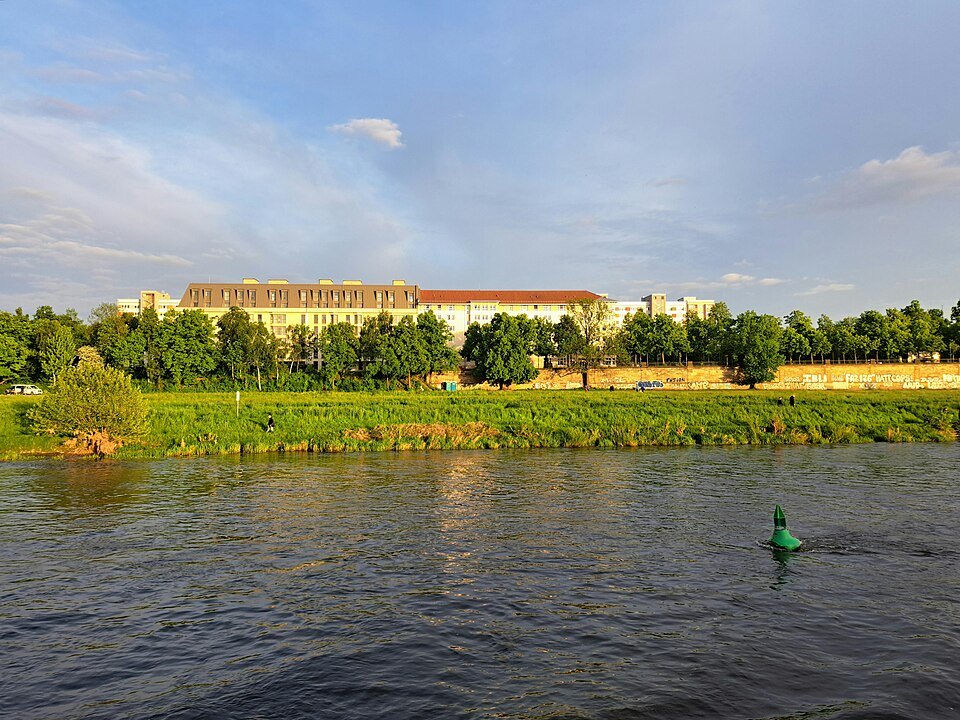
The air raids of 1945 left here the largest continuous field of rubble in the city, and only about four thousand people still lived in the district after the war. Rebuilding from the late 1950s onward was mostly in prefabricated housing blocks, many renovated since 1990; the eastern part keeps more of its late nineteenth-century houses. The university hospital is here.
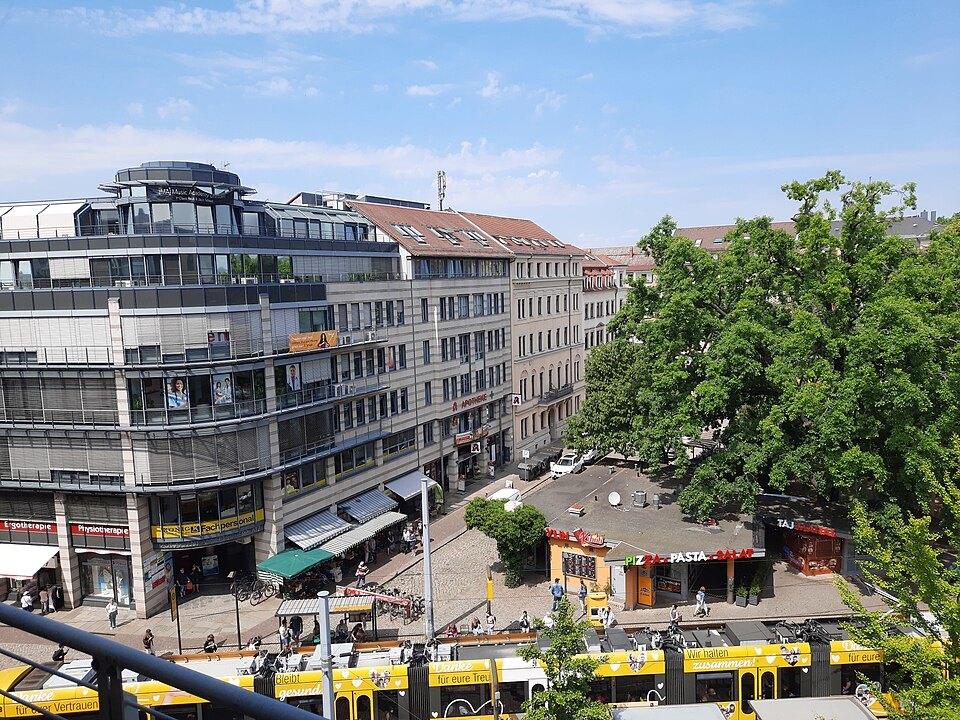
Many tram lines cross Johannstadt, so the Altstadt is a short ride away, and the river meadows are at the end of the street. It is a residential district rather than a visitor quarter, and suits anyone who wants the Großer Garten and the riverbank close at hand.
06Blasewitz, Loschwitz and Weißer Hirsch
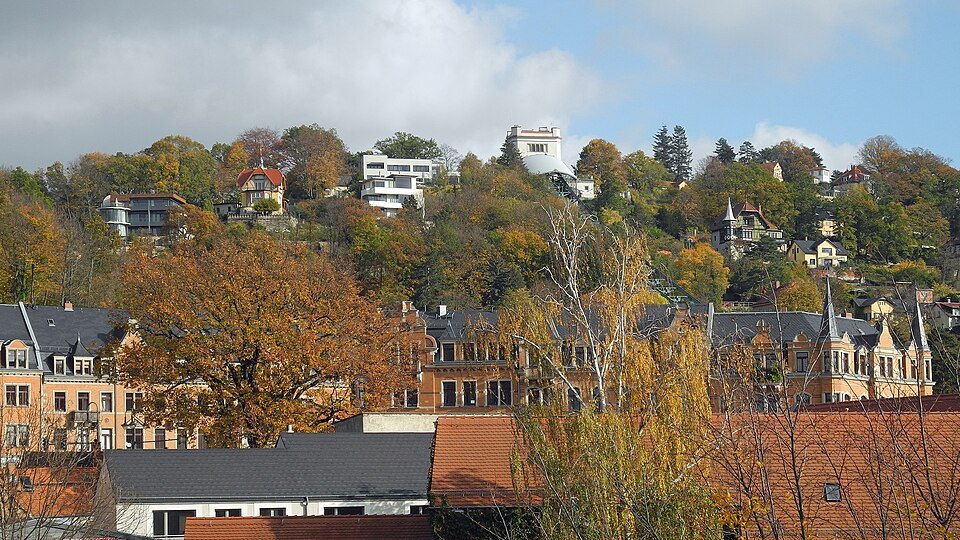
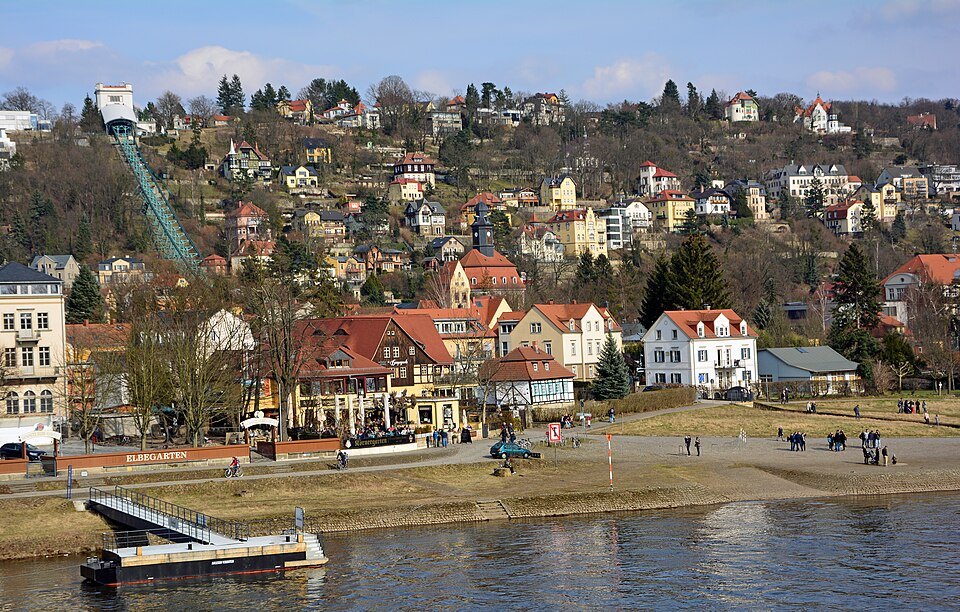
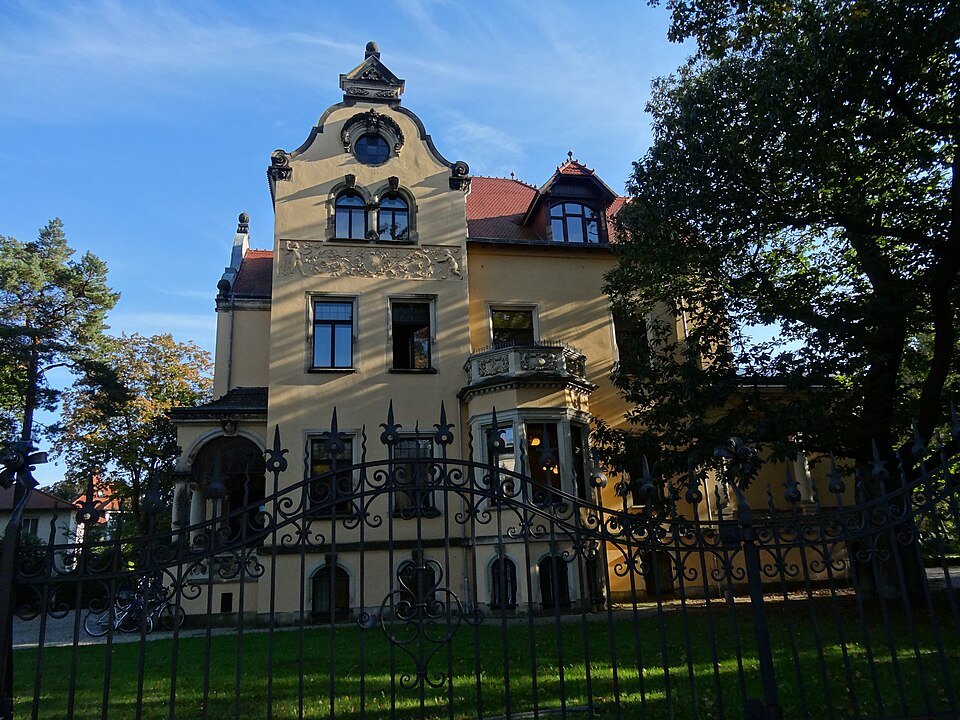
Further upriver, the old fishing and wine village of Blasewitz on the south bank grew into an exclusive villa suburb in the late nineteenth century, around the Schillerplatz and the Waldpark. It was hit by the bombing far less than the center, and destruction of whole streets stopped roughly at the edge of the villa area. Saxony's first electric tram ran from the Schlossplatz to the Schillerplatz in 1893, and trams still link it to the center.
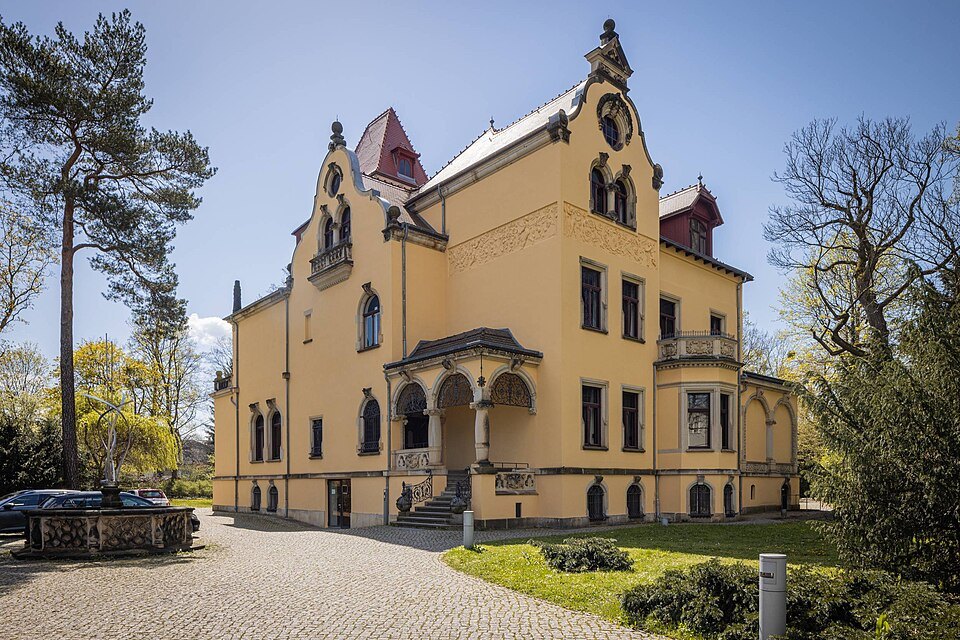
The Blaues Wunder, the steel bridge of 1891 to 1893, crosses to Loschwitz on the north bank, whose old village core is around the Körnerplatz. Its vineyard slopes filled with villas after phylloxera, and the three Elbe castles stand along the hillside. A funicular has climbed since 1895 to Weißer Hirsch, where a sanatorium opened in 1888 made the heights famous; a tram also runs up there.
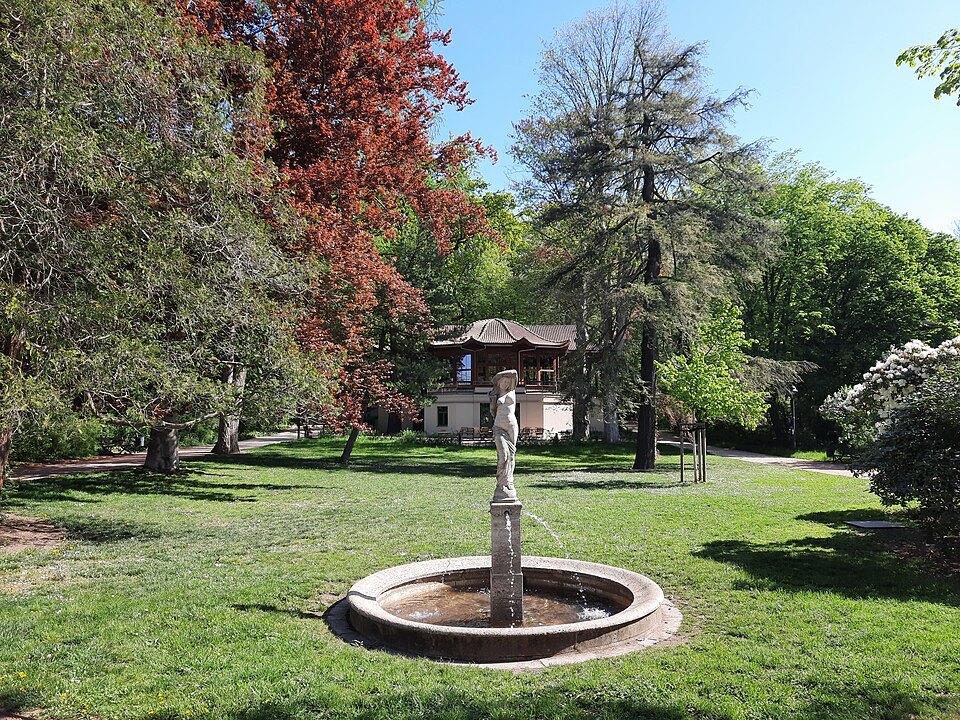
These quarters are quiet and green, with villas, river meadows and the Dresden Heath forest behind. The sights are a longer tram ride away. They suit a slow stay, families and anyone combining the city with Pillnitz further upriver.
07Choosing
For two or three nights, the Altstadt or the Innere Neustadt keeps every major sight within a walk. For a week, or for evenings out, the Äußere Neustadt puts the bar streets outside the door and the museums a bridge away. Pieschen, Johannstadt and the villa quarters upriver trade distance for everyday city life and the river.
Wherever you stay, the trams make the distances small — see getting around for how tickets work, and getting here for the two main stations. Check the dates of large events before you settle on a week; see when to come.