
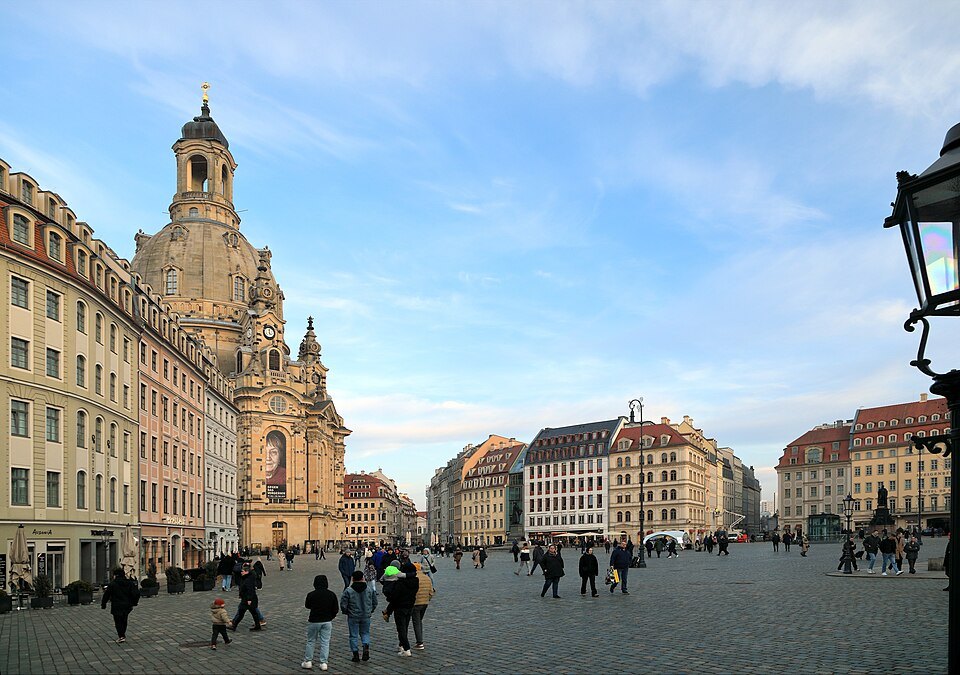
From the Neumarkt, the Frauenkirche's dome looks like a smooth stone bell you could stroll around in five minutes. It isn't. The route to the top is a mix of stairs, ramps, and a long final walkway around the outside of the cupola, and it asks more of visitors than the postcard view suggests. If you're planning to go up, it helps to know what you're actually signing up for before you're committed halfway up a stone staircase with nowhere to turn around.
The route up is longer than the building looks
The climb doesn't go straight up through the middle of the church the way a bell tower might. Instead, you follow a winding path that threads between the inner dome — the one you see when you look up from the nave — and the outer stone dome that gives the Frauenkirche its distinctive silhouette. That gap between the two shells is where the stairs and ramps run, and it means you spend much of the ascent in a curved, narrow space with limited sightlines, not knowing quite how far you've come or how far is left.
Some sections are gently sloped ramps, which is a relief after a run of steps, but the ramps curve continuously, and the combination of curve and incline can be disorienting. There's no single straight shot to the top. You're walking a spiral logic that matches the shape of the building, and that logic isn't obvious from below.
Pace yourself early. The temptation is to climb quickly because the initial stretch feels manageable, but the effort compounds, and the last portion is the most exposed and least forgiving if you're already out of breath.
The outdoor platform changes everything
Once you reach the upper section, the route brings you outside onto a walkway that circles the base of the cupola, well above the rooftops of the old town. This is the payoff — a genuine panorama over the rebuilt city, the river, and the hills beyond — but it's also where the climb stops being a museum stair and starts feeling like a genuine height experience. The platform is open to the weather, the footing can be uneven, and there's a real sense of exposure that the enclosed stairwell doesn't prepare you for.
Wind is the main surprise. Even a mild breeze at ground level can feel considerably stronger up there, and on a blustery day it's enough to make some visitors want to hug the inner wall rather than linger at the railing. Rain or a wet stone surface makes the walkway genuinely slippery, so this isn't a climb to attempt casually in poor weather.
Note If you don't like heights, or you have any concern about vertigo, this is worth thinking through in advance. The stairwell itself is fine for most people, but the open platform is unshielded on more than one side, and there's no quick way to retreat once you're up there other than doing the descent you just did in reverse.
What to expect physically
There is no elevator on this route. The whole ascent is on foot, and while the ramps ease the load compared with a pure staircase, the total distance and the sustained incline add up. Anyone with knee or hip issues, breathing difficulties, or limited stamina should treat this as a serious physical undertaking rather than a quick photo stop. There isn't a lot of room to rest along the way — the stairwell is narrow enough that pausing means stepping to one side and letting others pass, not sitting down and catching your breath properly.
Bags matter too. A large backpack or anything bulky becomes awkward in the tighter turns, and you'll want your hands free for railings on both the stairs and the platform. If you've just arrived in the city with luggage, it's worth sorting that out first — our guide on which station to get off at and what to do with your bags covers where to leave things before you go sightseeing.
Footwear should be sturdy and closed-toe. The stone surfaces, especially on the outdoor section, are not forgiving of sandals or slick soles.
Timing your visit around the crowd, not just the weather
The climb operates on a flow of visitors moving both up and down through the same narrow spaces, so congestion is a real factor. A large tour group ahead of you can turn a brisk climb into a slow shuffle, and the platform itself has a limited capacity for comfortable viewing, meaning a crowded moment there can feel cramped rather than expansive. Checking the general visitor information for the Frauenkirche before you go, including any guidance on the dome climb specifically, is worth doing — see the Frauenkirche page for the practical basics of visiting the church itself.
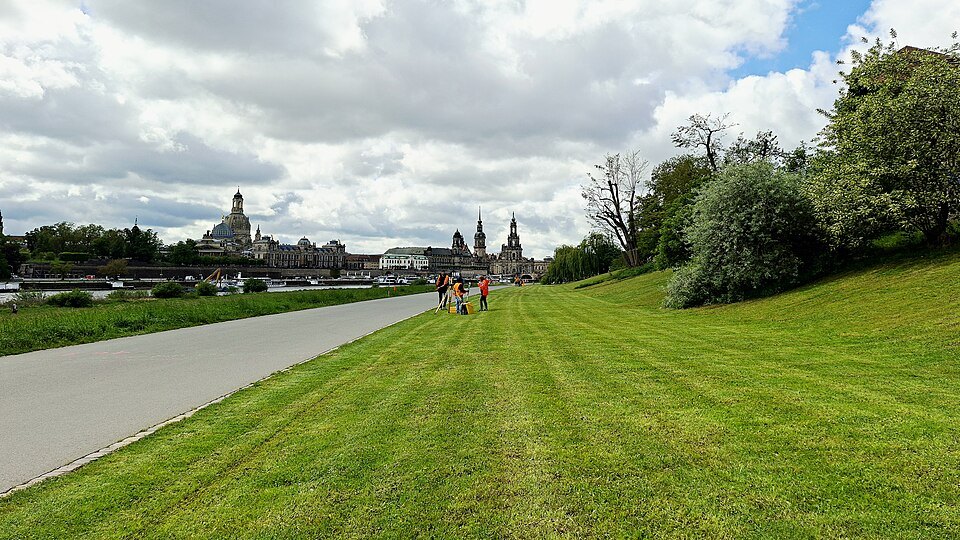
If your main goal is the view rather than the climb as an experience, it's worth comparing this vantage point with the classic elevated view of the city from across the river, which doesn't require any climbing at all. Our piece on where to stand for the Canaletto view of Dresden lays out that alternative, and pairing the two — one view from ground level across the water, one from directly above the rooftops — gives a fuller sense of how the rebuilt skyline fits together.
For context on why the building looks the way it does, both from outside and from the unusual vantage of the dome walkway, it's worth reading about reading the dark and pale stones of the Frauenkirche before or after your climb. Noticing the patchwork of original blackened stone against the newer pale stone is easier when you already understand what you're looking at, and the dome walk puts you close enough to some of that stonework to appreciate the difference firsthand.
Early in the day tends to mean thinner crowds on the stairwell and calmer conditions on the platform, since wind and visitor numbers both tend to build as the day goes on. If your schedule allows flexibility, building the climb into the early part of your visit to the rebuilt city is generally the more comfortable choice.
None of this is meant to discourage the climb — the view from up there is one of the better reasons to visit the Frauenkirche at all, and most visitors manage it without real difficulty. But it rewards a bit of preparation: sensible shoes, a free pair of hands, and a realistic sense of your own tolerance for stairs, wind, and heights before you start.

 Reading the dark and pale stones of the Frauenkirche
 Where to stand for the Canaletto view of Dresden
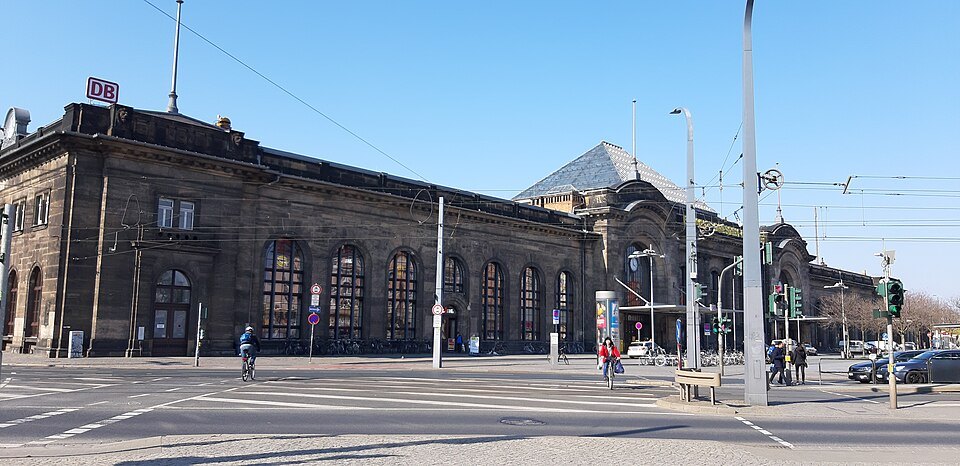 Which Dresden station to get off at, and what to do with your bags