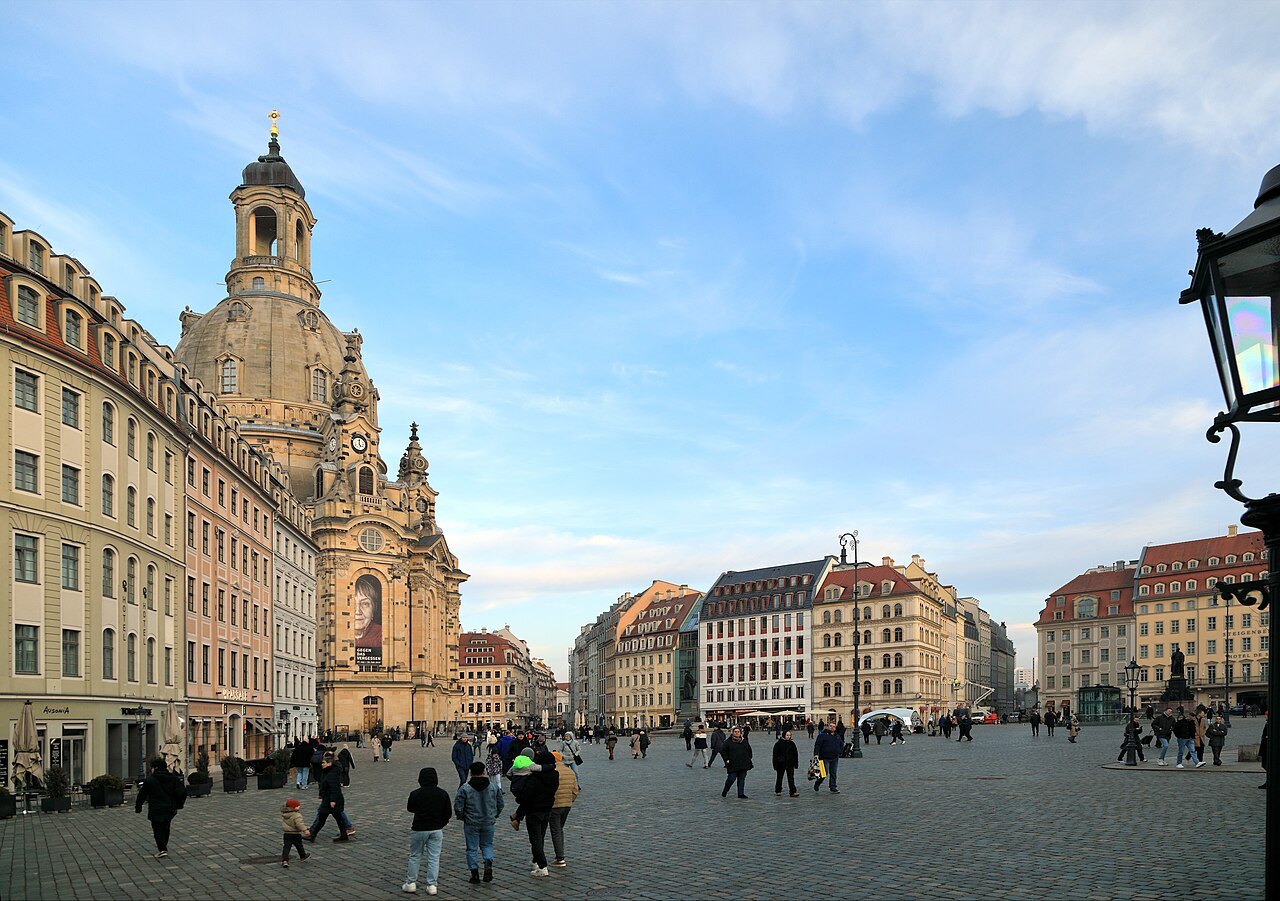
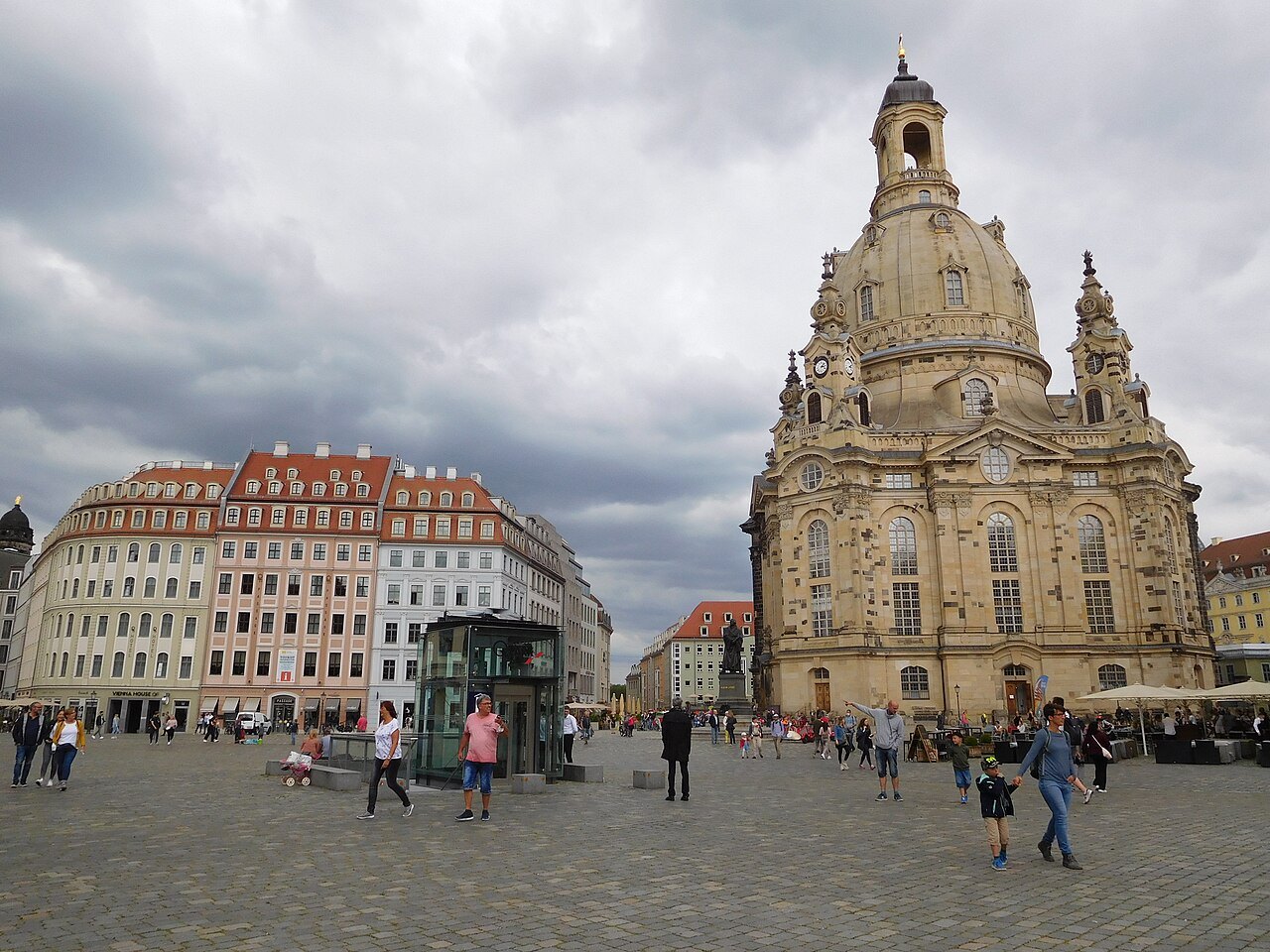
Stand on the Neumarkt and look at the Frauenkirche for a minute before you go in. From a distance it is a single pale building with a stone dome. Closer, the walls break up into a patchwork: most blocks are the colour of new sandstone, and scattered among them — singly, in clusters, in whole patches — are blocks that are almost black.
Those dark stones are the old church. Reading them is the quickest way to understand what happened to Dresden, and it takes nothing but attention.
What the church was
The Frauenkirche was built for the city's Lutheran congregation to the designs of George Bähr, the city's master carpenter. The foundation stone was laid in 1726; the church was consecrated before it was finished, and the cross went up on the lantern in 1743. Bähr died in 1738 and never saw it complete.
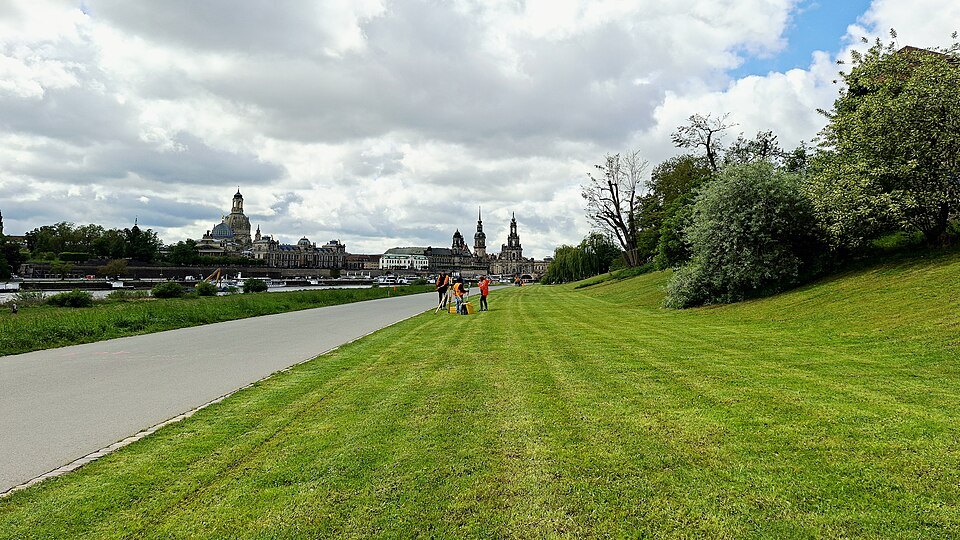
Its dome is built entirely of sandstone. The church calls it the steinerne Glocke, the stone bell, and gives its weight as around twelve thousand tons — one of the largest stone domes north of the Alps. For two centuries it defined the skyline painters recorded from the river; see where to stand for the Canaletto view.
Why some stones are black
Dresden is built of sandstone quarried from the Elbe valley upstream of the city. Fresh from the quarry it is pale and warm. Over years of weather and city air its surface darkens, and on old buildings it can turn nearly black.
On the night of 13 February 1945 the city center was destroyed in the bombing. The Frauenkirche survived the raid itself but burned out, and two days later it collapsed into a mountain of rubble. For almost fifty years that rubble stood in the middle of the city. It was declared a memorial in 1966, and from the early 1980s people gathered at it with candles every 13 February.
So a blackened stone in the wall today is one that stood in the old church, lay in the ruin, and was put back. A pale stone was cut new.
How the church came back
In 1990 a group of citizens published an appeal, the Ruf aus Dresden, for a faithful rebuilding paid for by donations from Germany and abroad. The ruin was taken down in 1993 and every fragment was measured, catalogued and stored. The first new stone was set in 1994, the lower church was finished in 1996, the walls rose through the late 1990s, the dome was closed in 2003, and the rebuilding was complete in 2005.
Wherever an original stone could be identified and was sound enough, it went back to its old position. The church puts the result plainly in its own building figures: about 45 percent of the building, counting the lower church and the ruin sections built back in, is historic stone. More than eight thousand old stones were reused, over seven thousand of them in the facade.
Where to look
You can see the pattern from any side, but some places show it best.
- The facade, all round. The recovered blocks are spread through every side of the building, singly and in patches; walk a full circuit rather than looking from one spot.
- The west gable. A whole section of the historic west gable was built back into the church in 1998.
- A stair tower. In 2001 a single fragment of the old building weighing some 95 tons — the rebuilders called it the Schmetterling, the butterfly — was set into one of the corner stair towers.
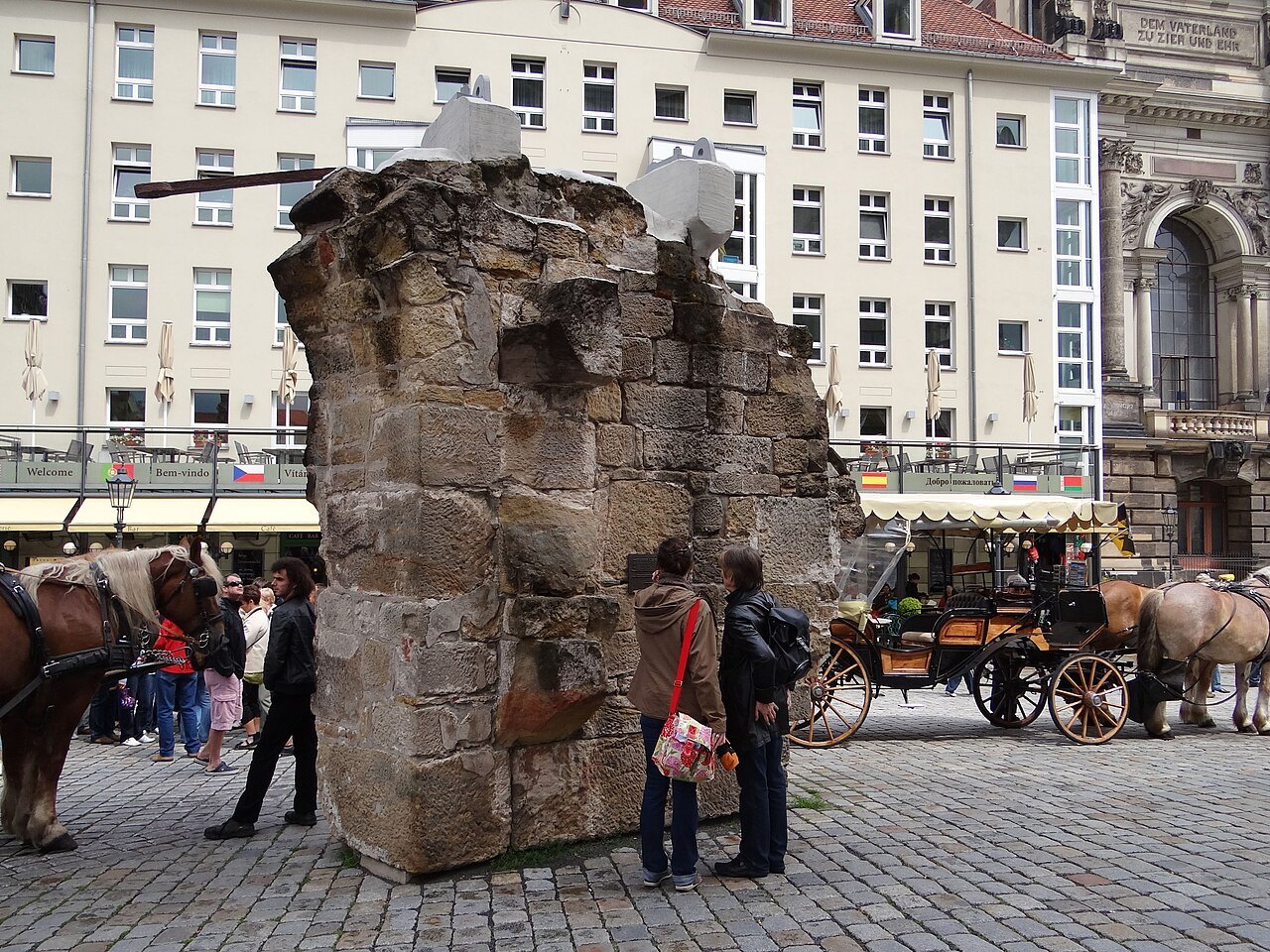
- The fallen dome. Beside the church, a large piece of the collapsed dome lies on the square as a memorial.
Note The contrast will soften. New sandstone darkens with time too, so every year the patchwork is a little less obvious than it was when the scaffolding came down. Now is a good time to see it clearly.
What came back from the old church
The stones in the walls are the part everyone sees, but the old church returned in other ways too, and the church's own figures record them.
- The altar. About 80 percent of the altar is original material: more than sixteen hundred fragments were recovered from the rubble and set back in their places.
- The bells. Of the church's eight bells, seven are new and one, called Maria, comes from the old Frauenkirche.
- The music. The old church had a Silbermann organ, on which Johann Sebastian Bach gave a concert in 1736; the organ in the rebuilt church is a new instrument.
Inside, look for the altar at the east end: its patched surface, like the walls outside, shows where the old fragments sit among the new.
Inside, and above
Inside, the church is bright and painted, and the old and new are harder to tell apart. The church is open to visitors as an open church, free to enter, whenever there is no service, concert or wedding — which happens often, so check its calendar.
The climb to the lantern is separate and ticketed: stairs, then a long sloping ramp that winds around the outer dome, then steep steps to a platform 67 meters up. From there you look down on the rooftops of the rebuilt Neumarkt and across the river to the Neustadt.
The rest of the square
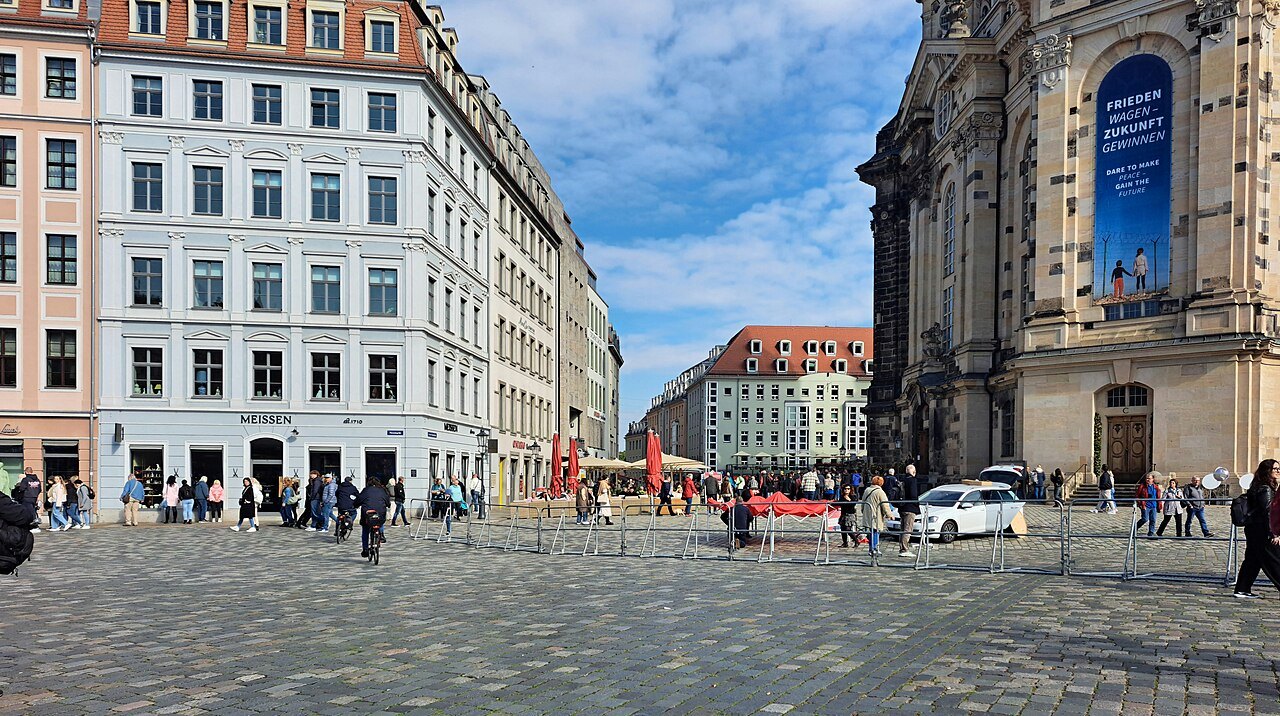
Once the stones of the church make sense, the Neumarkt around it reads differently too. Many of its baroque fronts are new buildings behind reconstructed facades, built in this century on the old plots. Some people in Dresden think that was the right choice and some think it was not, and the argument is part of the city.
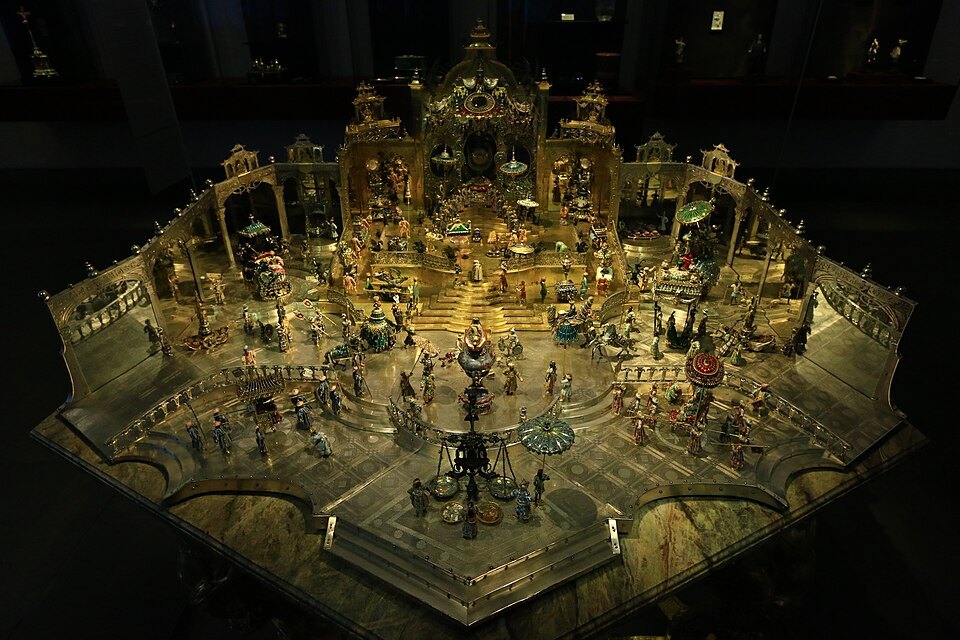
For more of the city's history on its walls, see the rebuilt city. If you want the other half of Dresden's baroque story — the treasure the rulers kept rather than the church the citizens built — the palace is a few minutes' walk away; see the Green Vault piece.
 Where to stand for the Canaletto view of Dresden
 How to get a Historic Green Vault time slot and use it well