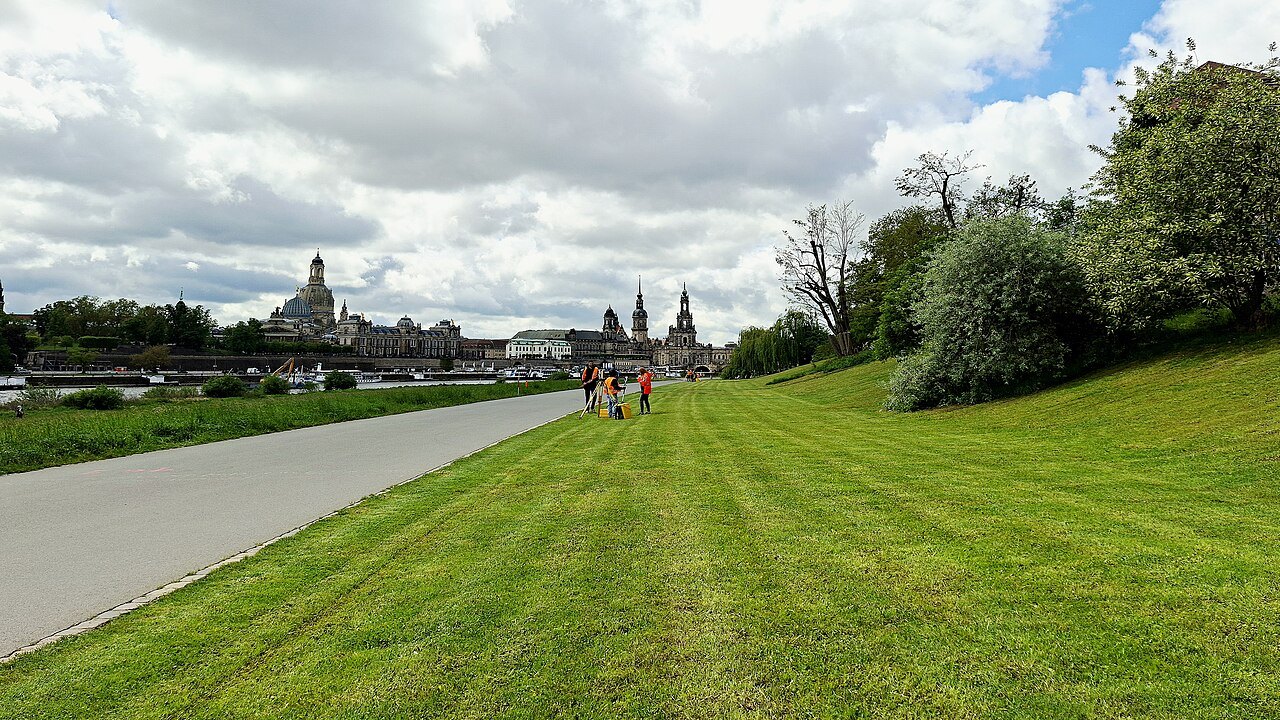
Every city has one picture of itself. Dresden's was painted in 1748: the Altstadt seen across the Elbe from the Neustadt bank, the bridge on the left, the domes and towers in a line along the far shore. It hangs in the Old Masters Picture Gallery, and the view it shows is still called the Canaletto view, the Canaletto-Blick.
You can stand in almost the same place today. This piece explains who painted it, where he stood, and how to see the view at its best.
Which Canaletto
The painter was not the famous Venetian Canaletto but his nephew and pupil, Bernardo Bellotto. He came to Dresden in 1747 at the invitation of Augustus III, Elector of Saxony and King of Poland, and stayed until 1758, painting the city and its surroundings. In Germany and Poland he used his uncle's name, which is why the view carries it.
His picture, Dresden from the Right Bank of the Elbe below the Augustus Bridge, is now in the Old Masters gallery in the Zwinger. Bellotto's views are also a record of the baroque city that the bombing destroyed in 1945.
Where he stood
The painting's own title gives the position: the right bank — the Neustadt side — below, meaning downstream of, the Augustus Bridge. Bellotto worked from the Neustadt shore a little way downstream of the bridge, looking upstream and across.
To stand there, cross the Augustus Bridge from the Theaterplatz towards the Golden Rider, then go down to the river meadows on your left as you reach the Neustadt bank and walk a short way downstream. As you walk, watch the far bank: the buildings shift against each other, and at some point they settle into the line you know from the painting.
Note You will not find a single marked spot, and you do not need one. The meadows are open, and the view holds for a good stretch of the path.
If you have seen the painting first, bring a photograph of it on your phone. Holding it up against the real skyline is the quickest way to find your place, and to see how closely the painter recorded what was in front of him.
What you see
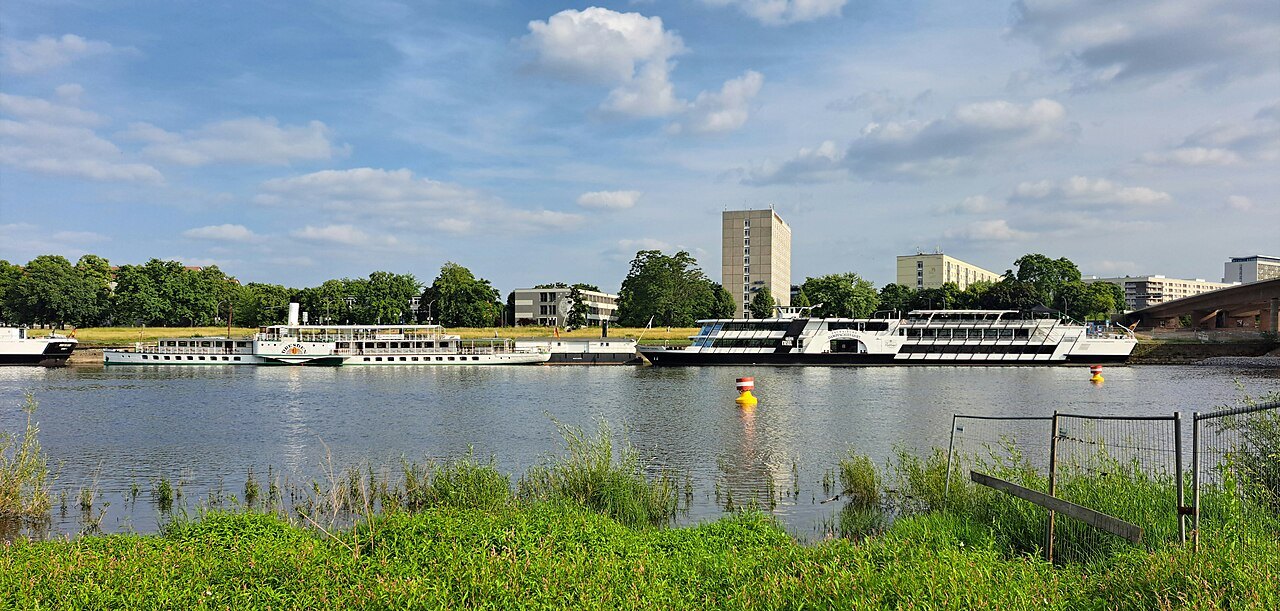
Across the water, along the south bank, look for:
- the arches of the Augustus Bridge, crossing between the two banks;
- the tower and figures of the Hofkirche, with the palace's Hausmannsturm behind it;
- the long front of Brühl's Terrace above the river wall, with the glass dome of the Academy of Fine Arts;
- the stone dome of the Frauenkirche rising behind the terrace.
The Frauenkirche's dome is the detail that matters. In Bellotto's time it had only just been finished; after 1945 it was missing from this view for decades. Standing here now, you are looking at a skyline that was painted, destroyed and put back. For how to read the church's stones up close, see the dark and pale stones.
Bellotto's foreground was a working riverbank, crowded with boats and timber and people unloading goods. Yours will be grass: the meadows along the Elbe have been kept open because the river floods them.
Bellotto's other Dresden
The river view is the most famous of Bellotto's Dresden paintings, but not the only one, and the Old Masters gallery holds several. He painted the city from the other bank too, looking across from the Altstadt side above the bridge, and he painted its squares from street level.
One of those street views looks across the Neumarkt towards the Frauenkirche. Look at it after a walk around the rebuilt square and compare the two.
He also painted Pirna and its surroundings upriver before leaving Dresden in 1758 for Vienna, and later worked in Warsaw — so the same eye recorded several of Central Europe's capitals.
A view that cost a listing
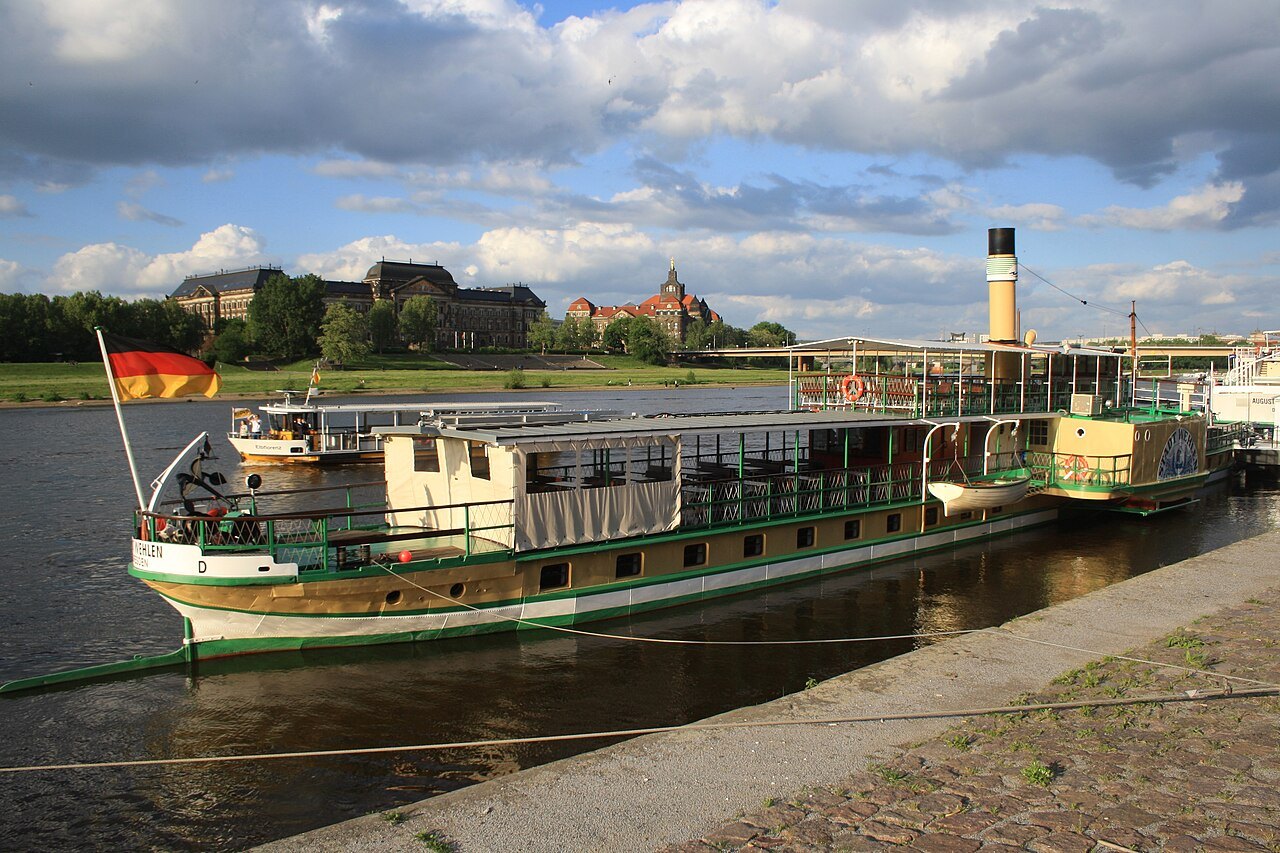
The meadows you stand on are part of the reason Dresden's river landscape was added to UNESCO's World Heritage list in 2004. After the city built the Waldschlößchen Bridge across the meadows further upstream, UNESCO removed the listing in 2009 — one of the very few sites ever taken off the list. The view from here was not affected; the argument about it is still remembered.
When the light is right
The Altstadt faces the Neustadt bank across the river, so the time of day changes the view completely.
- Late afternoon and early evening are the best: the light comes down the valley from the west and turns the sandstone warm.
- Morning is quieter on the path, and good if you want the meadows to yourself.
- After dark, the floodlit buildings reflect in the water.
Note In summer the meadows on this bank also host the Filmnächte, the big open-air cinema, and parts of the riverbank are fenced for it. The view across remains; your spot on the grass may move.
Seeing the painting, then the place
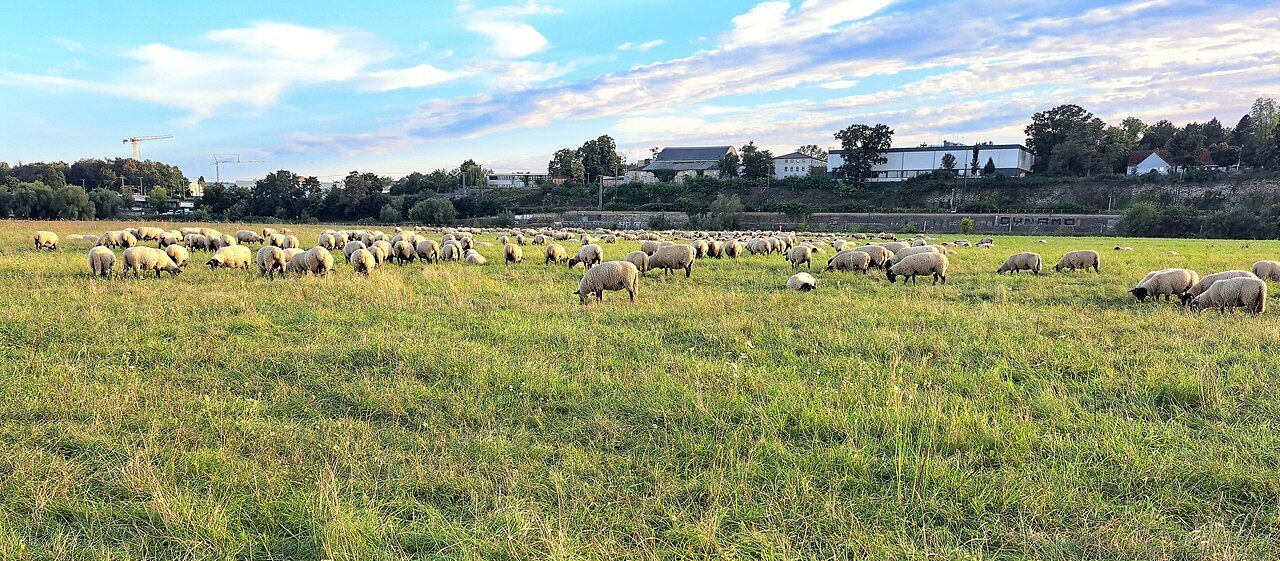
The best way to use the view is in two halves. See the painting in the Old Masters gallery in the Zwinger — the museums close on different days of the week, so check — and then walk across the bridge and find the view yourself.
Or do it the other way round, and end the evening on the Neustadt side. The river meadows lead back up into the Innere Neustadt, and from there the evening streets of the Äußere Neustadt are a walk away; see an evening in the Äußere Neustadt. For the river itself — its meadows, bridges and steamers — see the Elbe.
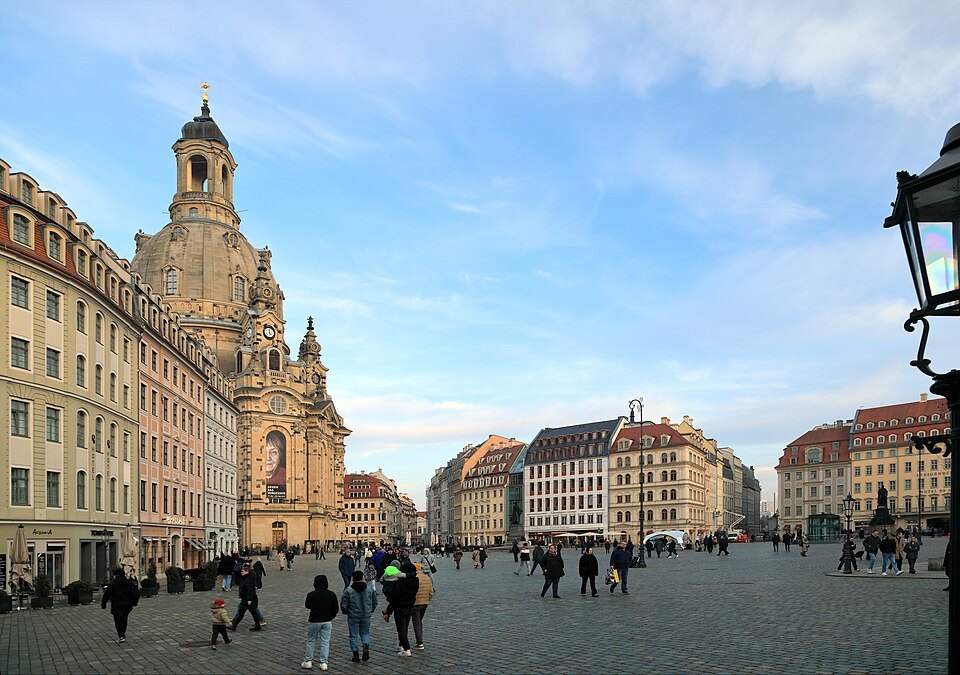 Reading the dark and pale stones of the Frauenkirche
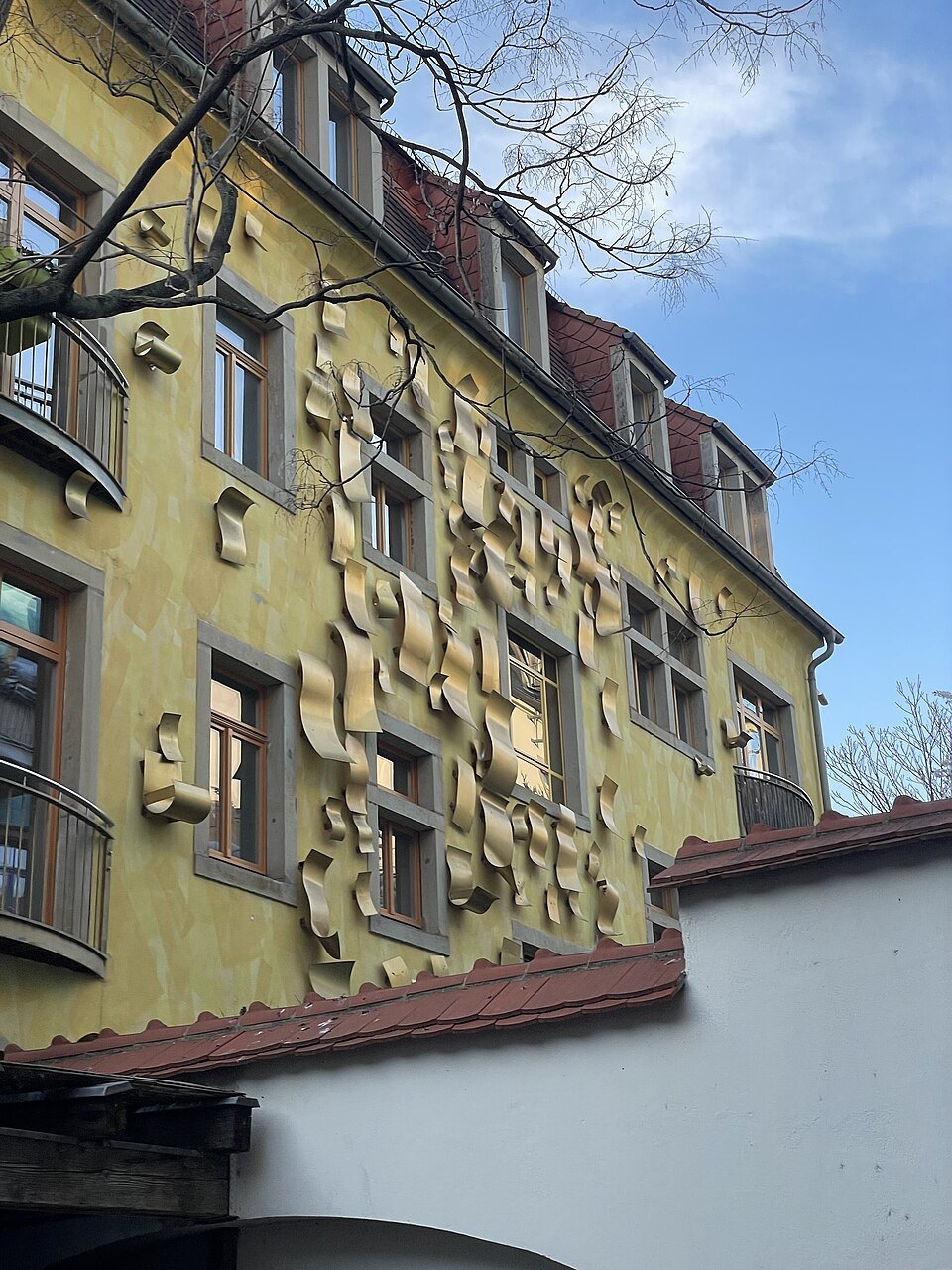 Spending an evening in the Äußere Neustadt when the museums have shut