- 1945the center destroyed
- 1962the Hofkirche restored
- 1985the Semperoper reopens
- 1993the Frauenkirche ruin cleared
- 2005the Frauenkirche finished
01What happened
On the night of 13 February 1945 and the following day, British and American bombers attacked Dresden. The firestorm destroyed the center. A historians' commission appointed by the city concluded in 2010 that between 22,700 and 25,000 people were killed — far fewer than the figures of hundreds of thousands that wartime propaganda spread and that still circulate.
02Rebuilt in stages
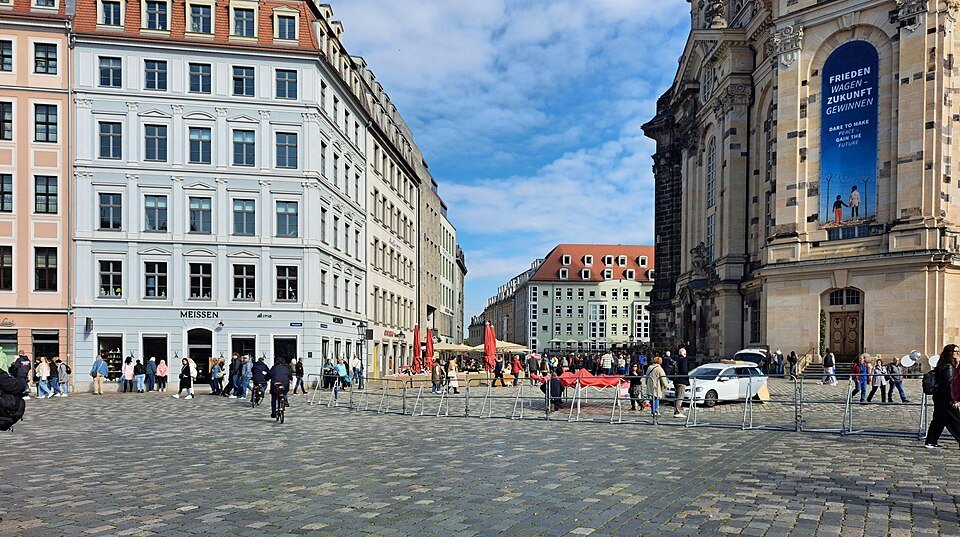
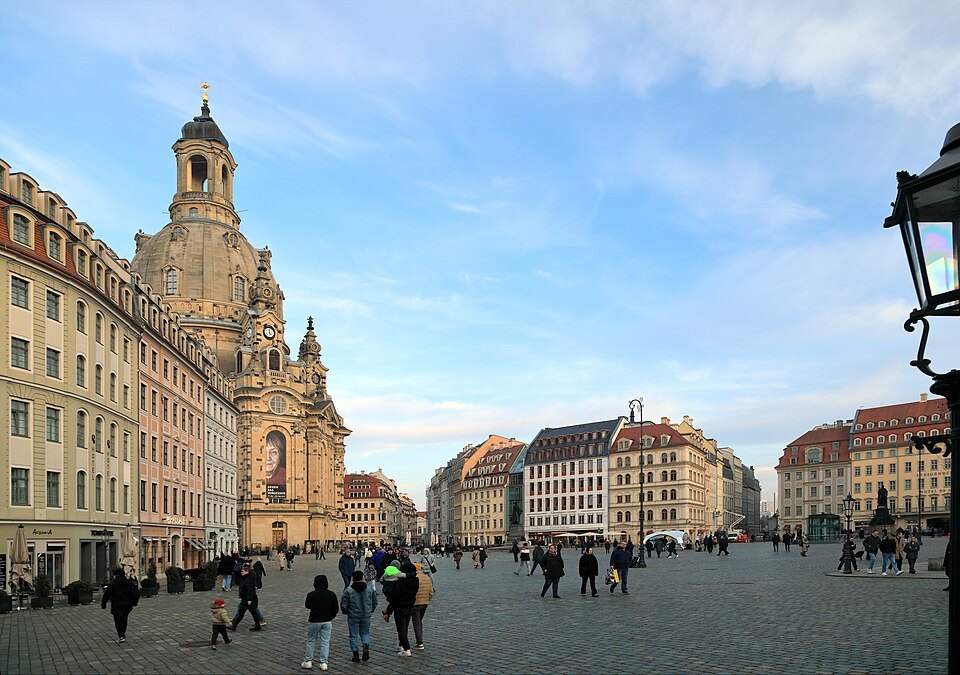
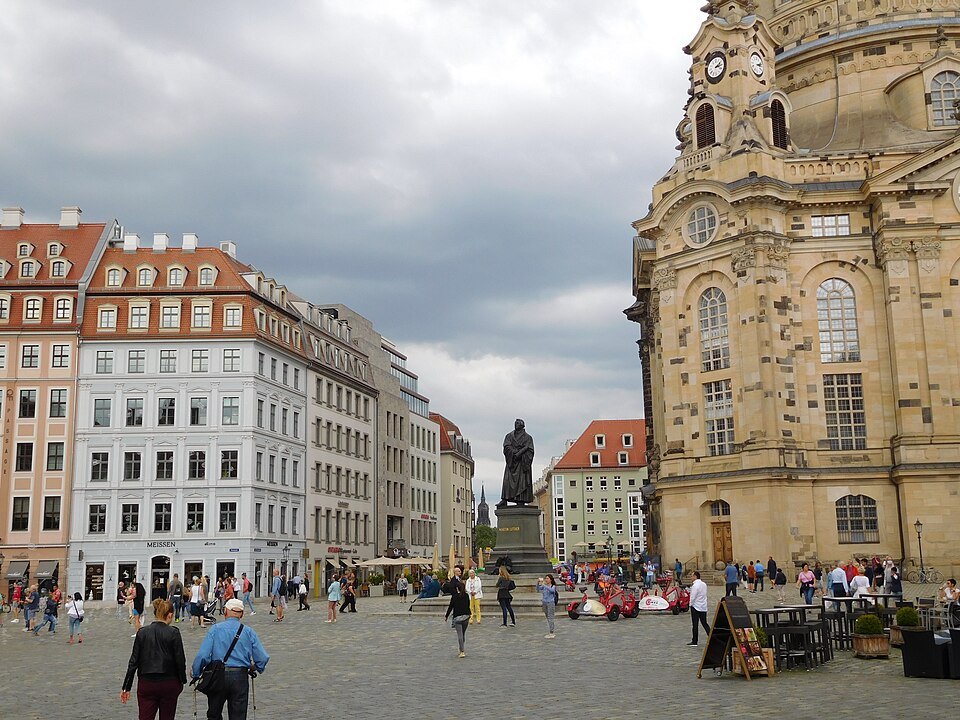
The city was rebuilt over sixty years, and you can read the stages in the stone. The Zwinger was put back in the 1950s and 1960s, the Hofkirche by 1962, the Semperoper in 1985. The palace took decades more. The Frauenkirche lay in rubble until 1993 and was finished in 2005, and the Neumarkt around it has been filled since then with new houses built to old facades.
03Reading the stones
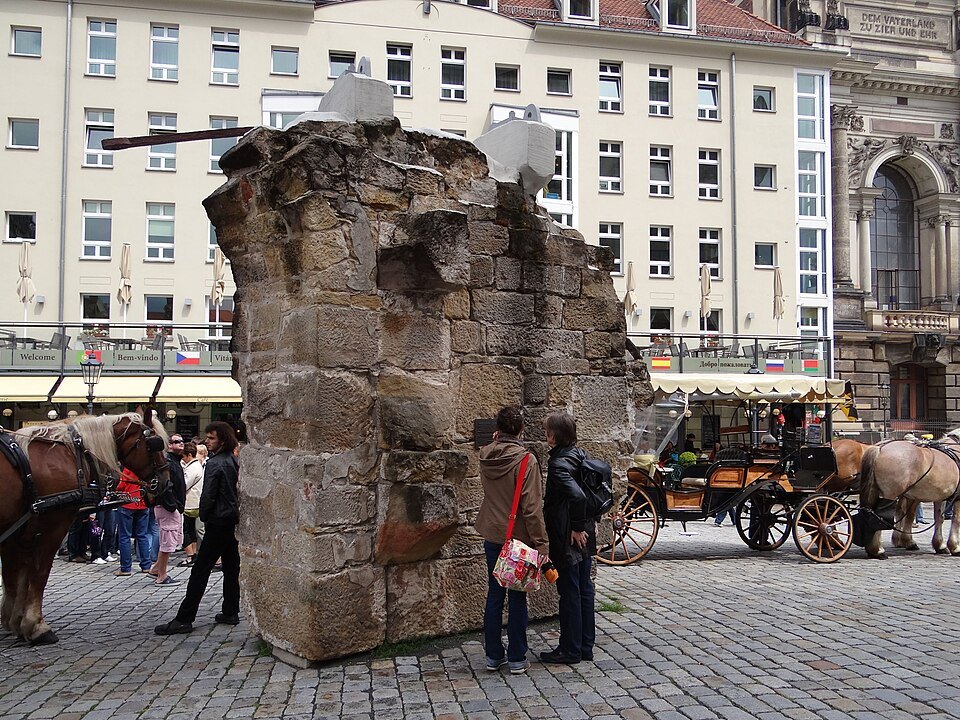
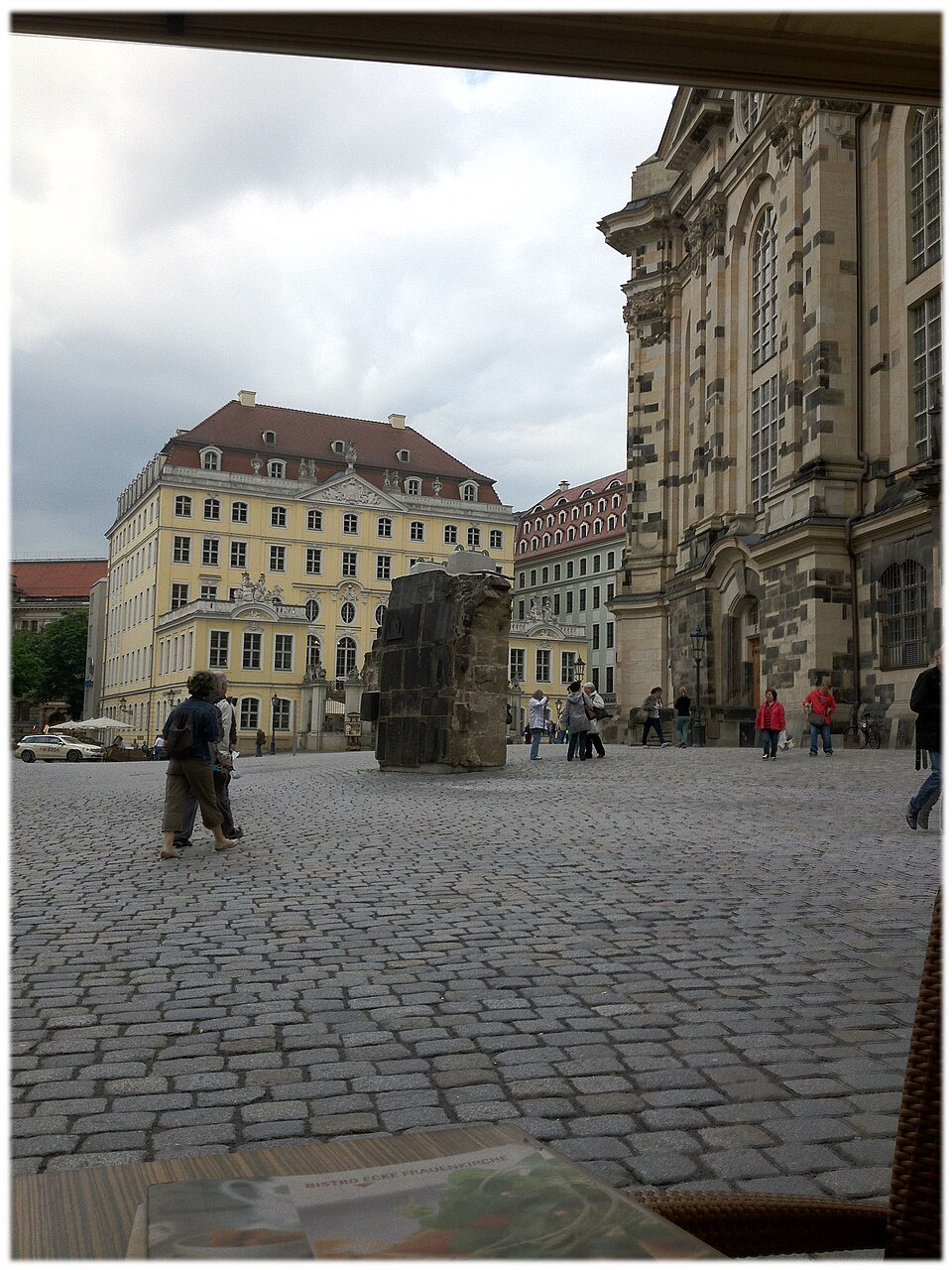
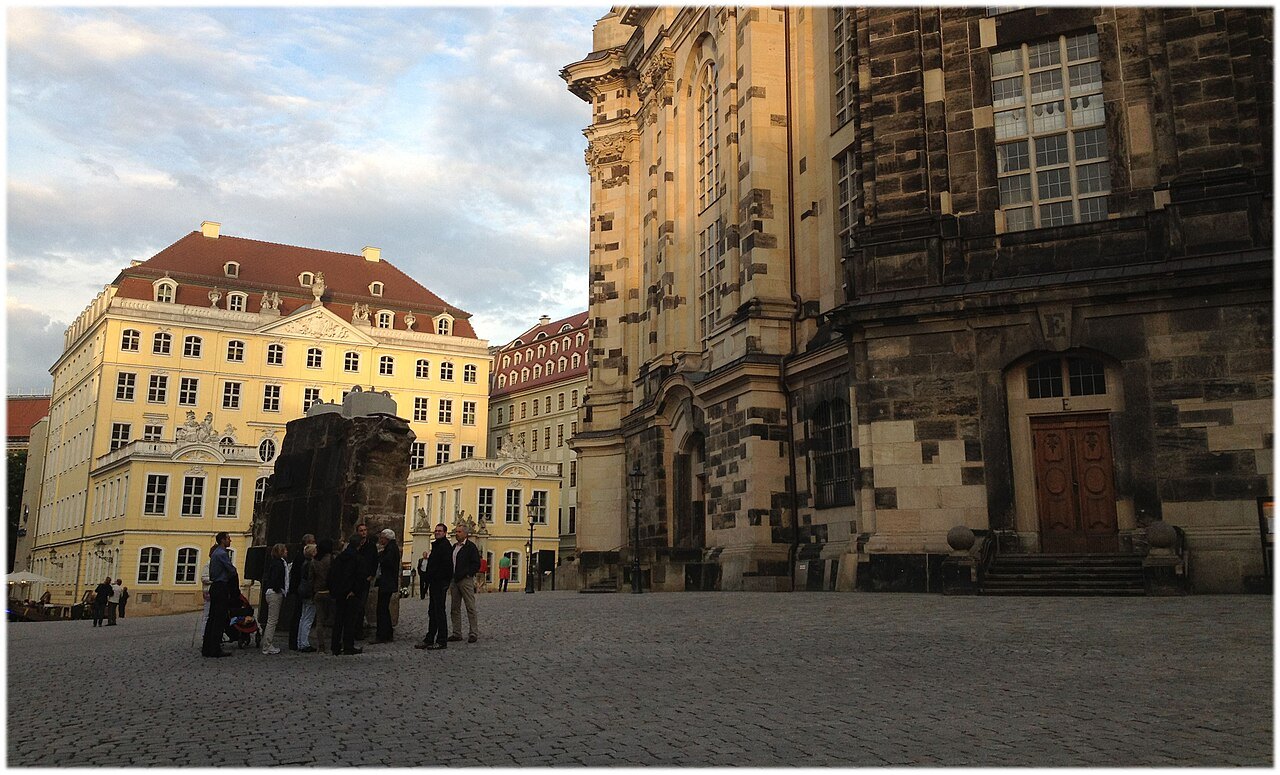
Dresden is built of Elbe sandstone, which weathers dark. So a blackened block in a pale wall is usually an old stone recovered from the ruins, and the pale blocks around it are new. The Frauenkirche is the clearest example: its walls are a patchwork of both.
Note On the Neumarkt, many of the handsome baroque fronts are new buildings behind reconstructed facades. That is not a deception; it is the choice the city made, and it is argued about in Dresden to this day.
04What was left bare
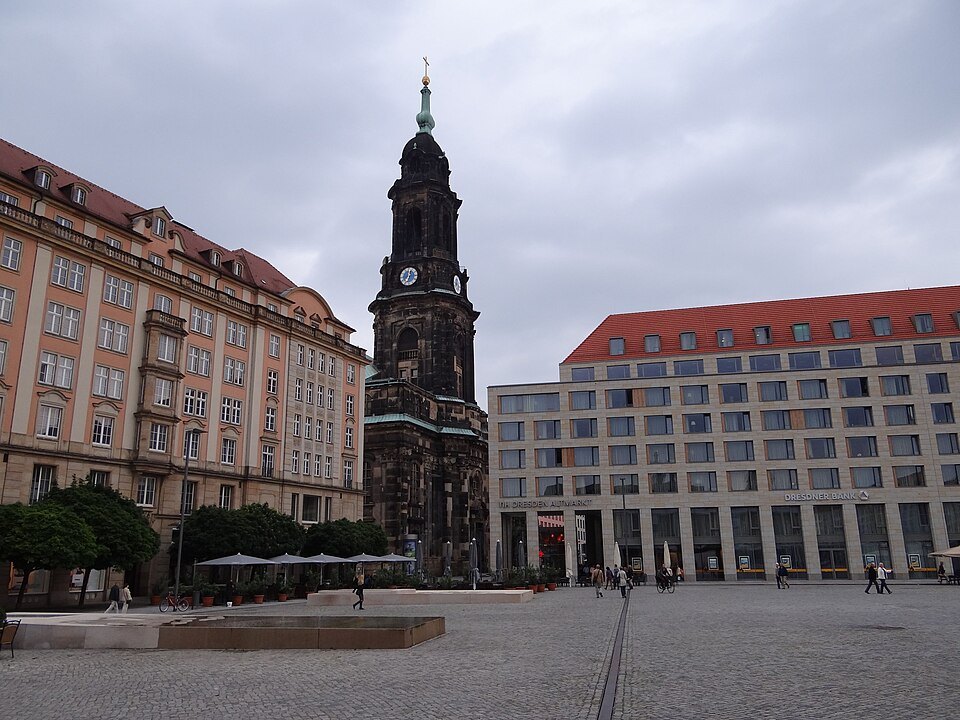
Not everything was put back as it was. The Kreuzkirche kept a plain rough-plaster interior after 1945 on purpose. The Military History Museum answered its old building with a wedge that points towards where the bombing began.
0513 February
The anniversary is kept every year. It is a day of remembrance, not a spectacle — see when to come.