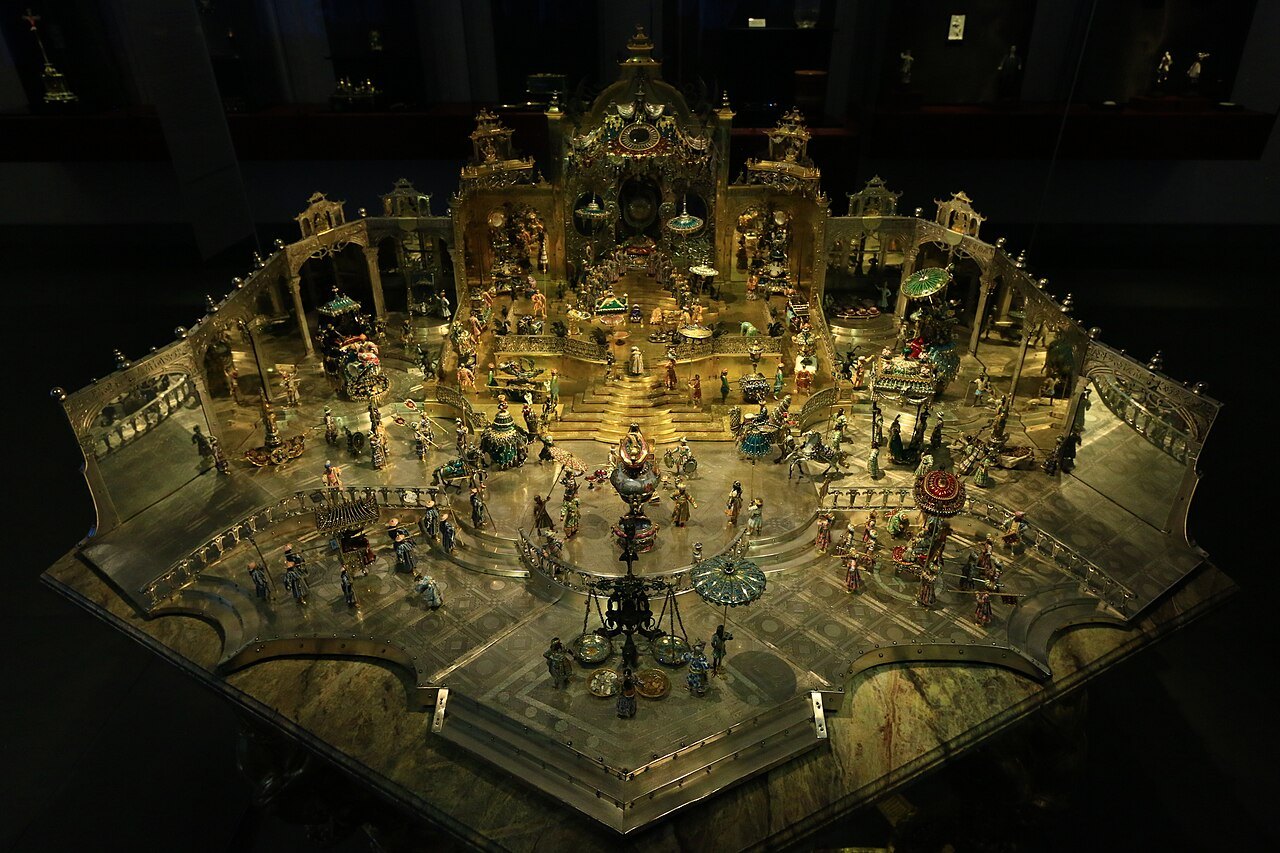
Almost everything in Dresden's Altstadt can be walked into. The one great exception is the Historic Green Vault, the baroque treasure chambers in the Residenzschloss, and it is the exception visitors most often discover too late. The rooms can take only a limited number of people at a time, so entry works on time-slot tickets, and the museum itself recommends booking online.
This piece covers how the tickets work, how to shape a day around your slot, and how to spend the time inside once you have one.
Two vaults, two kinds of ticket
The Green Vault is one collection shown in two places inside the Residenzschloss. The Historic Green Vault recreates the treasure chambers as a whole, as they stood in 1733 at the death of Augustus the Strong, who turned his private treasury into a museum between 1723 and 1729. The New Green Vault, upstairs, shows individual objects one by one in plain rooms.
They are sold differently. The palace's ordinary ticket covers the New Green Vault and the other museums in the building — the Armoury with the Turkish Chamber, the Coin Cabinet, the prints and drawings, the state apartments and the Hausmannsturm — but not the Historic Green Vault. That needs its own time-slot ticket, and a combined ticket covers both.
Note So a palace ticket bought at the desk on the day will get you into almost everything except the rooms you probably came for.
Booking the slot
Book the Historic Green Vault first, before you fix anything else about the day that uses it. Slots are limited by the size of the rooms, and on busy days — weekends, school holidays, Advent — the convenient ones go first.
Book through the Dresden State Art Collections' own online shop, and check the palace's opening days while you are there: the palace closes one day a week, and the state museums around it do not all close on the same day. Check both before you build a museum day — see itineraries.
The palace has also offered an evening opening of both Green Vaults on Fridays. If the daytime slots are gone, look at the evening before giving up.
Planning the day around it
A timed entry is a fixed point, and everything else in the Altstadt can move around it, because the famous buildings are minutes apart. A good shape for the day:
- If your slot is early, go straight in, then walk out through the Großer Schlosshof to the Theaterplatz and the Zwinger.
- If your slot is in the middle of the day, spend the morning outside — the Frauenkirche, the Fürstenzug along Augustusstraße — and arrive at the palace with time to spare.
- If it is late, use the palace ticket for the New Green Vault and the Armoury first, and finish in the historic rooms.
Note Arrive early enough to leave coats and bags. The museums provide cloakrooms and lockers, and the lockers take coins, so have some ready. A large bag is an obstacle in rooms full of objects on open display — another reason to sort luggage out first; see what to do with your bags.
Inside the historic rooms
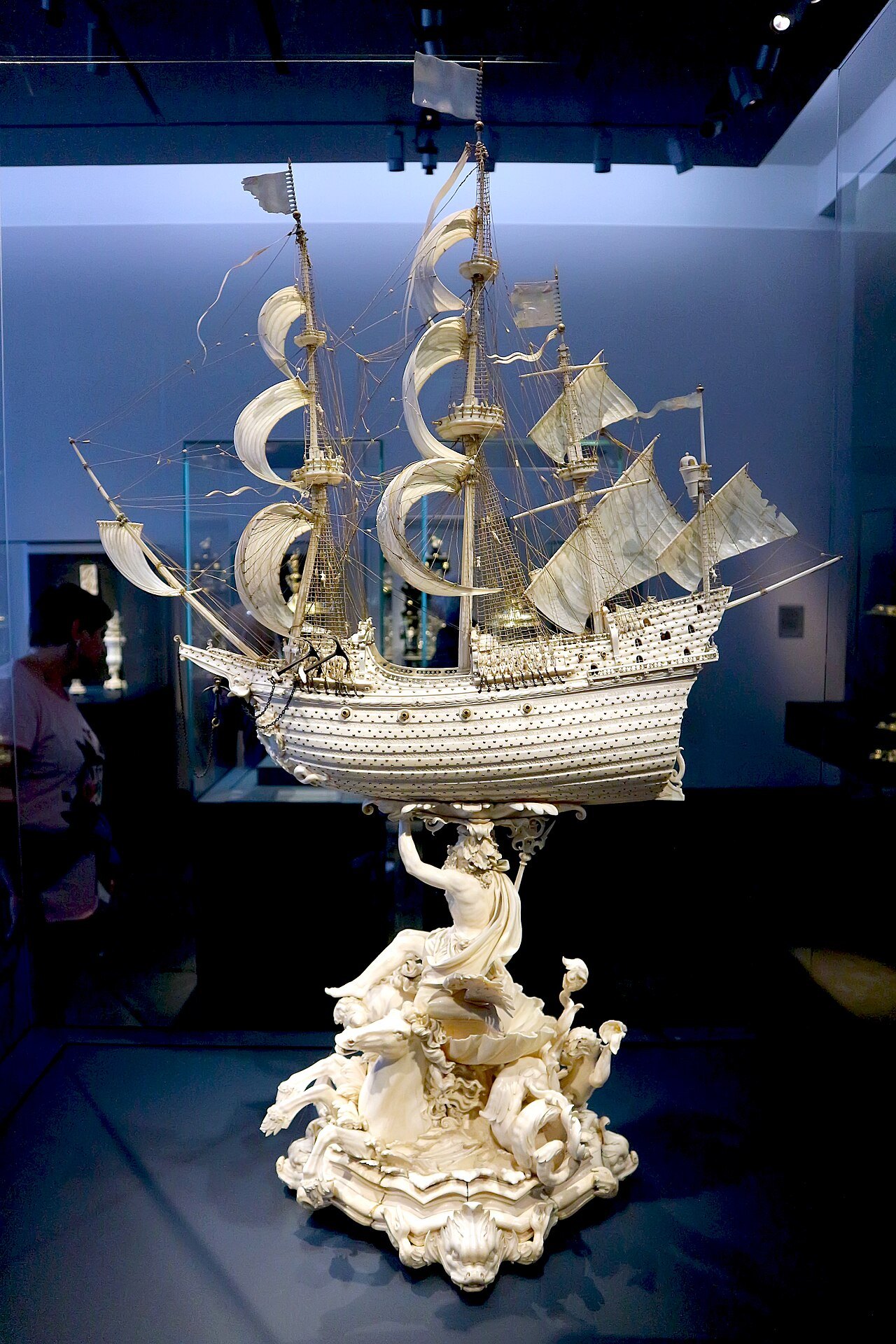
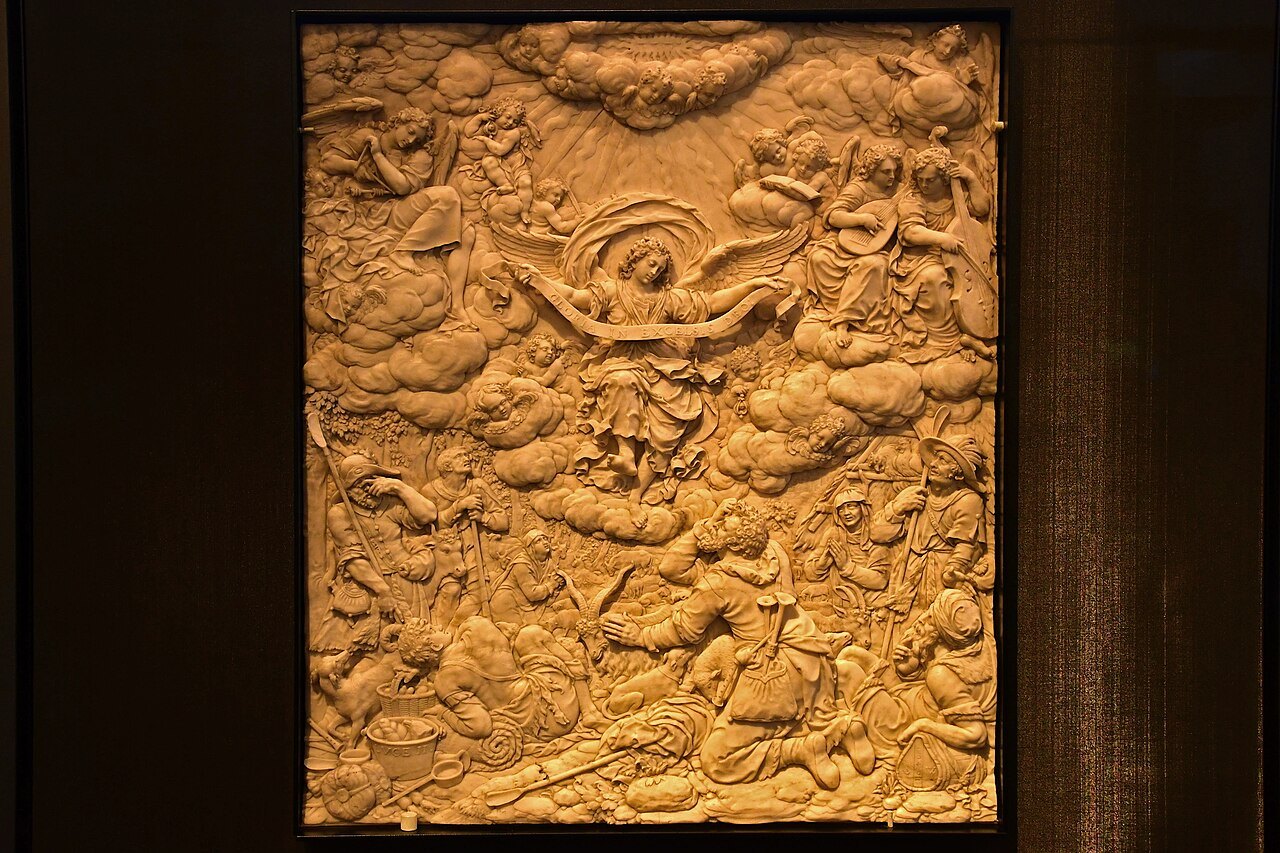
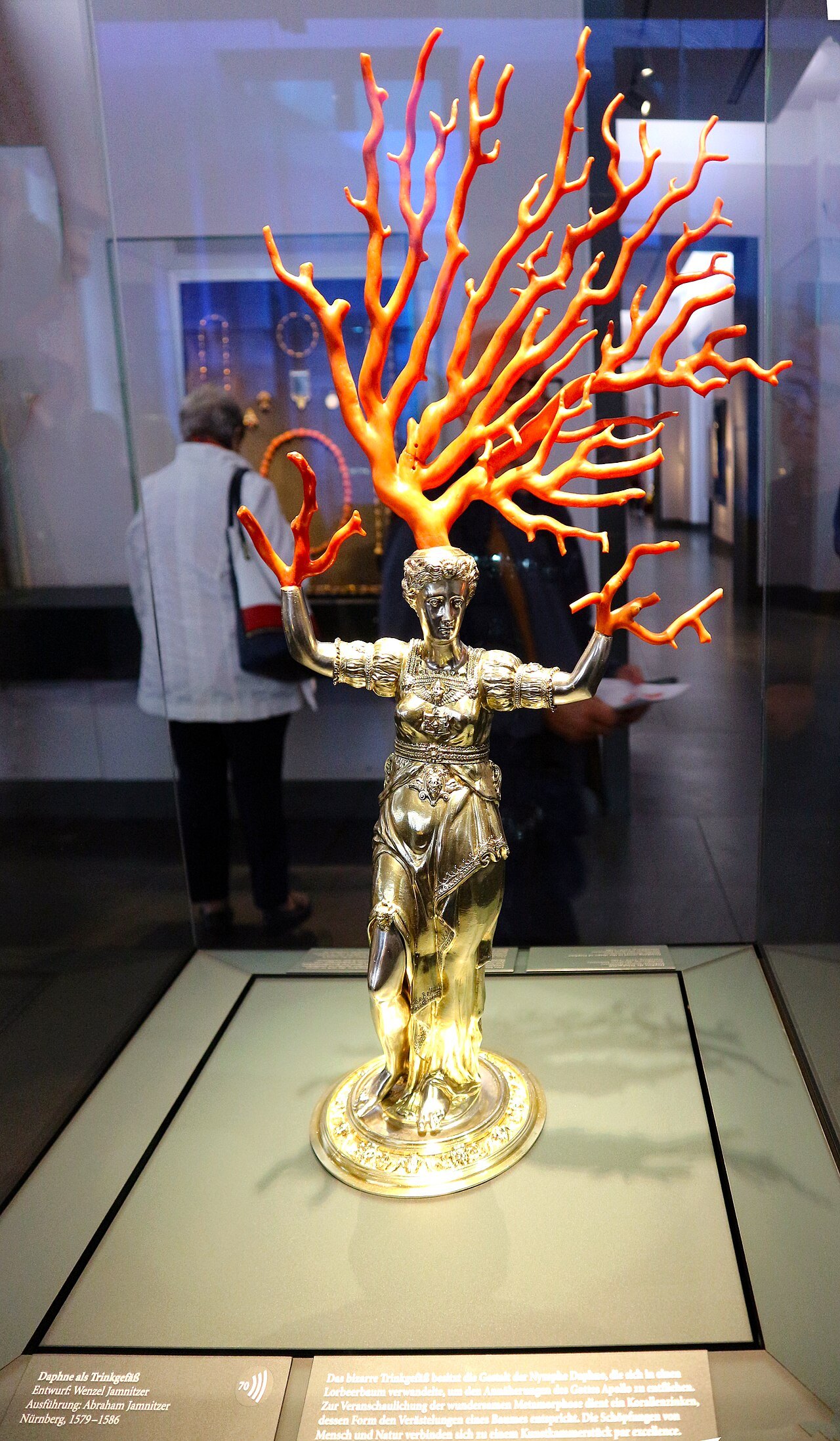
The Historic Green Vault is less a gallery than a sequence of rooms, each dressed in one material or kind of object: silver, gilded silver, bronzes, ivory, jewels. In the rooms the objects stand on consoles against mirrored and gilded walls rather than behind glass, which is exactly why the number of visitors is limited.
The largest room, the Pretiosensaal, is lined almost entirely with mirrors, and vessels of coloured stone, amber, shells and ostrich eggs stand multiplied in them. In the Jewel Room is one of the collection's most famous pieces, the Moor with Emerald Cluster, made by the court goldsmith Johann Melchior Dinglinger with the sculptor Balthasar Permoser.
Note Photography is not permitted in the Historic Green Vault, although it is allowed without flash in the palace's other permanent exhibitions. That turns out to be a gift: without a phone in your hand, you look at the rooms instead of at a screen.
If every slot is gone
Sometimes the slots for your dates are simply sold out. That is disappointing, but it does not have to empty the day, because the palace ticket still opens most of the building.
- The New Green Vault shows the treasury's single masterpieces, and many of the smallest and finest objects are there rather than in the historic rooms.
- The Armoury fills the Riesensaal, the Giants' Hall, with armor, and the Turkish Chamber holds the Saxon rulers' collection of Ottoman objects.
- The Hausmannsturm, the palace tower, gives a view down over the Altstadt roofs.
Then check the Historic Green Vault again for a later day of your stay. A free morning later in the week may still have one.
The New Green Vault afterwards
Upstairs, the New Green Vault puts single objects under light in quiet rooms, which is the right place for the smallest and strangest things in the collection. Among them is a cherry stone carved with more than a hundred tiny faces, given to the Elector Christian I in 1589.
The Green Vault also holds the Dresden Green Diamond, a large naturally green diamond set in a hat clasp, acquired by Augustus III in 1742.
A note on 2019
In November 2019 thieves broke into the Historic Green Vault and took early eighteenth-century royal jewellery. In December 2022 investigators recovered many of the stolen objects, and in 2023 five men were convicted. It is part of the museum's recent history, and the reason security is visible.
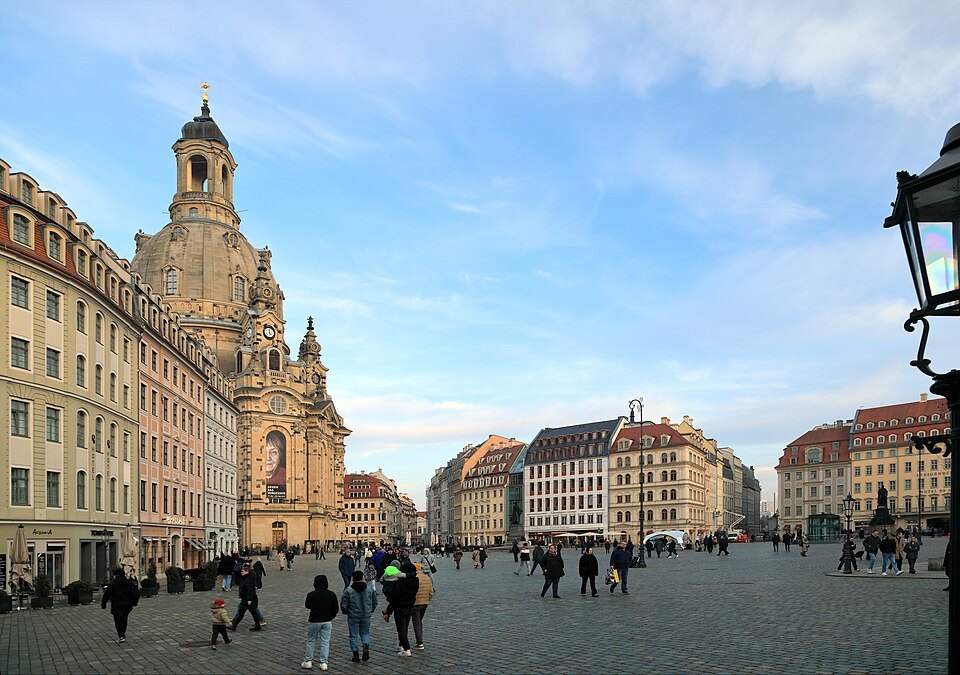
Once you have seen the treasure, the rest of the city's history is on its walls rather than in its vitrines. Walk to the Neumarkt and read the old and new stones of the Frauenkirche — see reading the dark and pale stones — or go back to booking ahead for the other things worth arranging.
Booking the practical bits
Some links on this page are affiliate links. If you book through one we may earn a commission, at no extra cost to you. It does not affect what is recommended here, and no sight page on this site carries one.
The time-slot ticket, the palace's own pages and the tram app all live on your phone, so a data plan that works from arrival is the one practical thing to sort first.
 Which Dresden station to get off at, and what to do with your bags
 Reading the dark and pale stones of the Frauenkirche