- 1792builtconsecrated after the Seven Years' War
- 1945lostgutted; tower and outer walls stood
- 1955rebuiltreopened 13 February in rough plaster
- 01The city church on the Altmarkt
- 02Five times destroyed
- 03Why the walls are bare
- 04What to look at inside
- 05Hearing the Kreuzchor
- 06Up the tower
01The city church on the Altmarkt
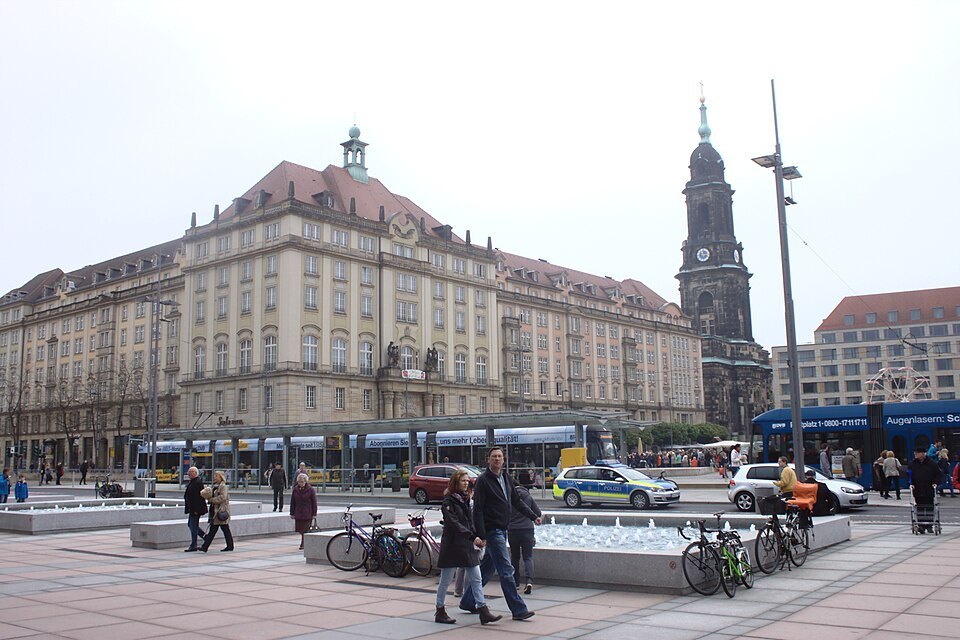
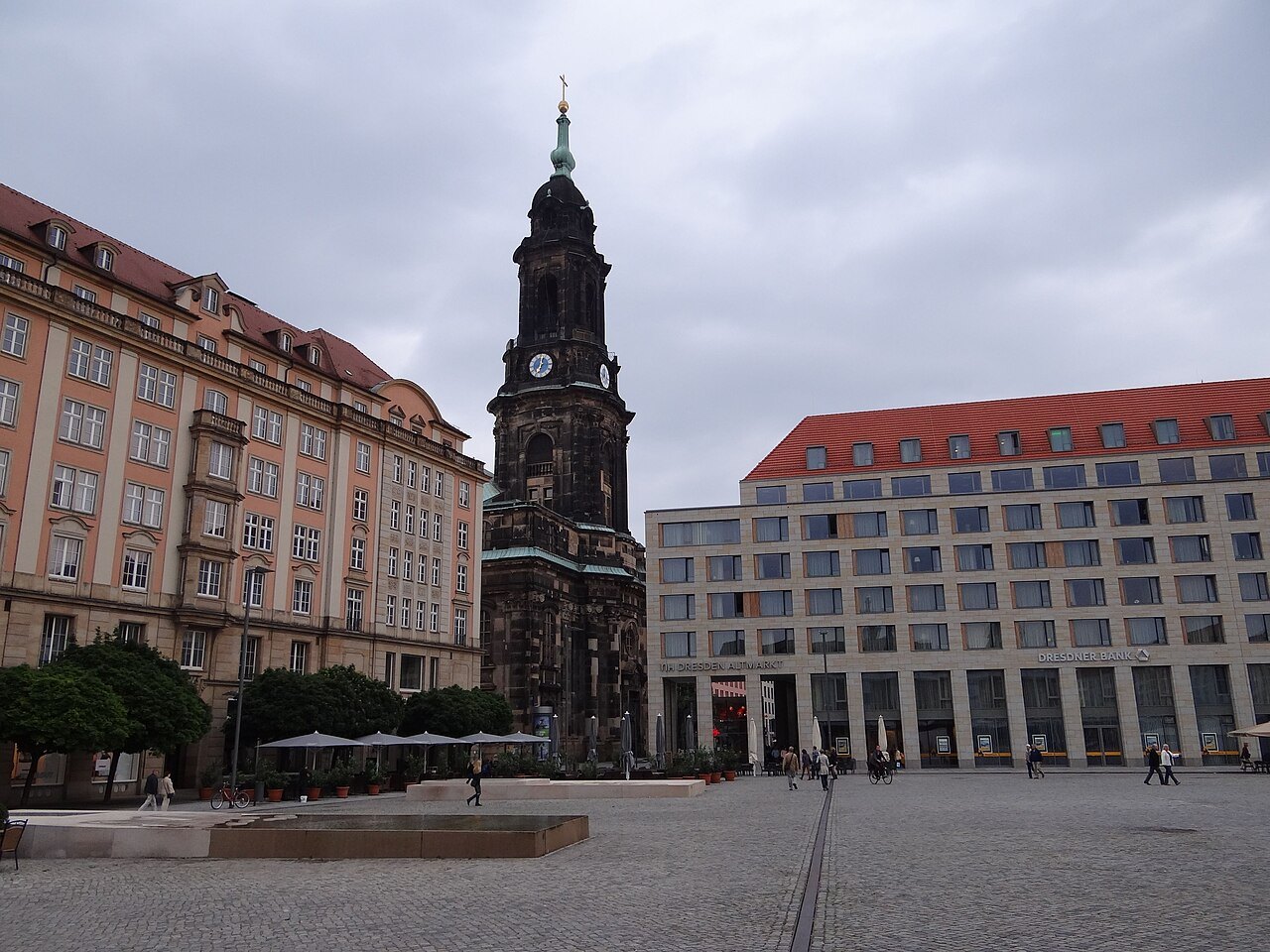
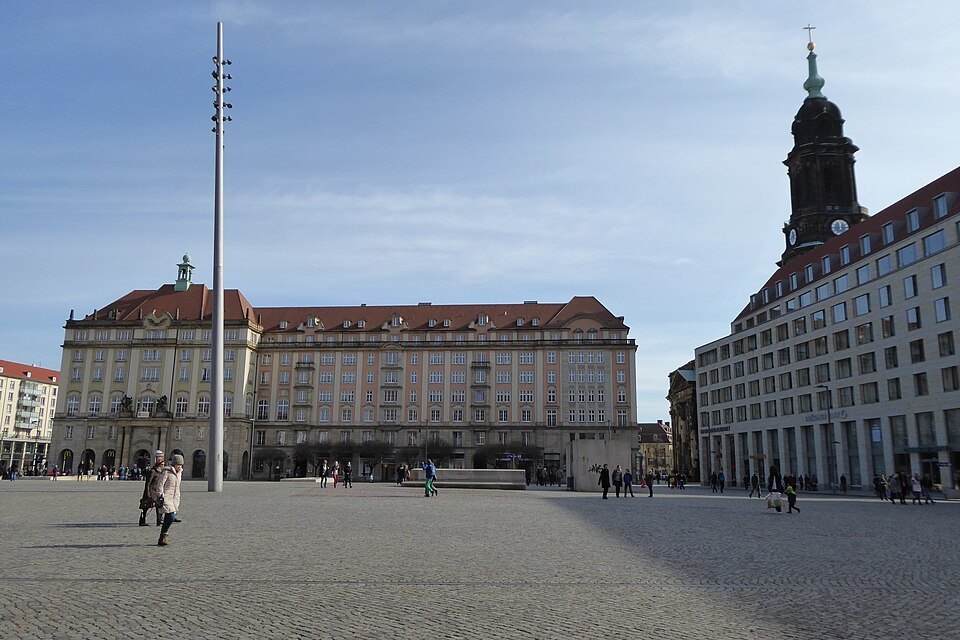
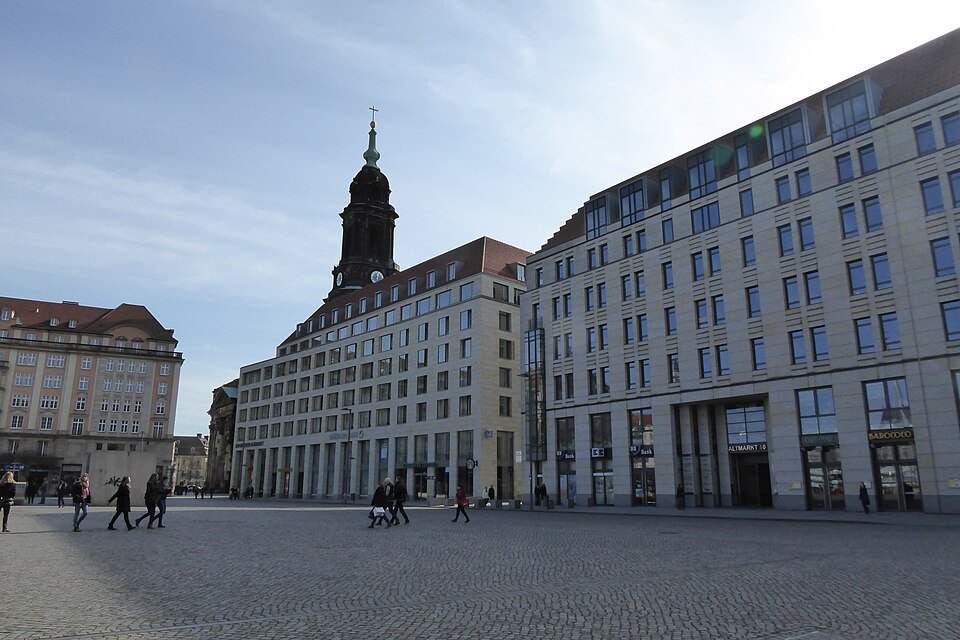
The Kreuzkirche, the Church of the Holy Cross, stands at the southeast corner of the Altmarkt. It is the main Lutheran church of Dresden and a preaching church of the Lutheran bishop of Saxony, and it is home to the Dresdner Kreuzchor, the boys' choir whose history runs back some seven centuries. That makes it the center of church music in the city.
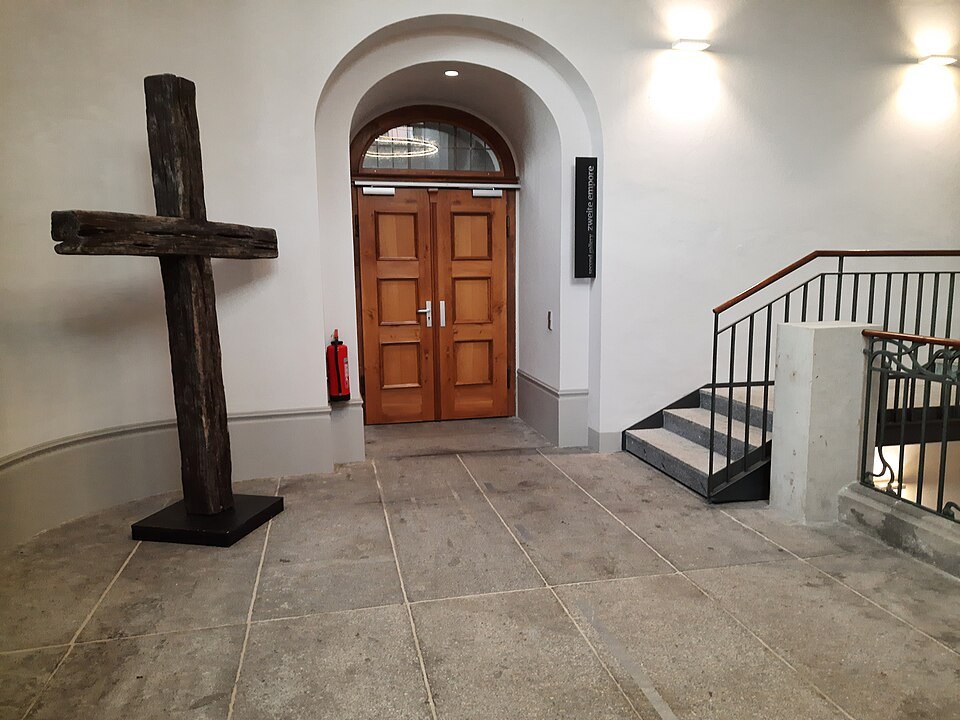
Where the Frauenkirche was rebuilt to look as it did before the war, the Kreuzkirche shows the other answer Dresden gave to destruction. Its grand exterior hides a gray, rough-walled interior left from the years of scarcity after 1945, and that bareness is the reason to step inside.
02Five times destroyed
A church has stood on this corner since the city was founded as a merchant settlement in the twelfth century. First known as St. Nicholas, it took its present name from a chapel built for a relic of the True Cross, given in the thirteenth century; by 1388 the whole church was dedicated to the Holy Cross. In 1539 the first Lutheran service in Dresden was held here.
The building has been destroyed five times. A city fire ruined the Gothic hall church in 1491. In July 1760, during the Seven Years' War, Prussian artillery wrecked the nave and choir, and the surviving tower front collapsed in 1765 during rebuilding. After decades of dispute between Baroque and Neoclassical architects, the new church got a Baroque interior plan and a Neoclassical exterior; its tower was finished in 1788, it was consecrated in 1792, and it was complete by 1800.
In February 1897 fire gutted it again, and the interior was redone in Neo-Baroque and Art Nouveau forms. Then, in the raids of 13 February 1945, the church burned out completely; only the tower and the outer walls remained.
03Why the walls are bare
The architect Fritz Steudtner led the rebuilding from 1946. The Art Nouveau stucco had come away from the walls, and he chose a coarse Rauputz, a rough plaster, as a base coat meant to be temporary, so as not to prejudge any later decoration. He noted that it clearly improved the acoustics. Painted benches replaced the oak pews, and much of the surviving furnishing was removed or cut down. The church reopened on 13 February 1955, ten years to the day after its destruction, and the Kreuzchor sang the Dresden Requiem that its cantor Rudolf Mauersberger had written after seeing the city burn.
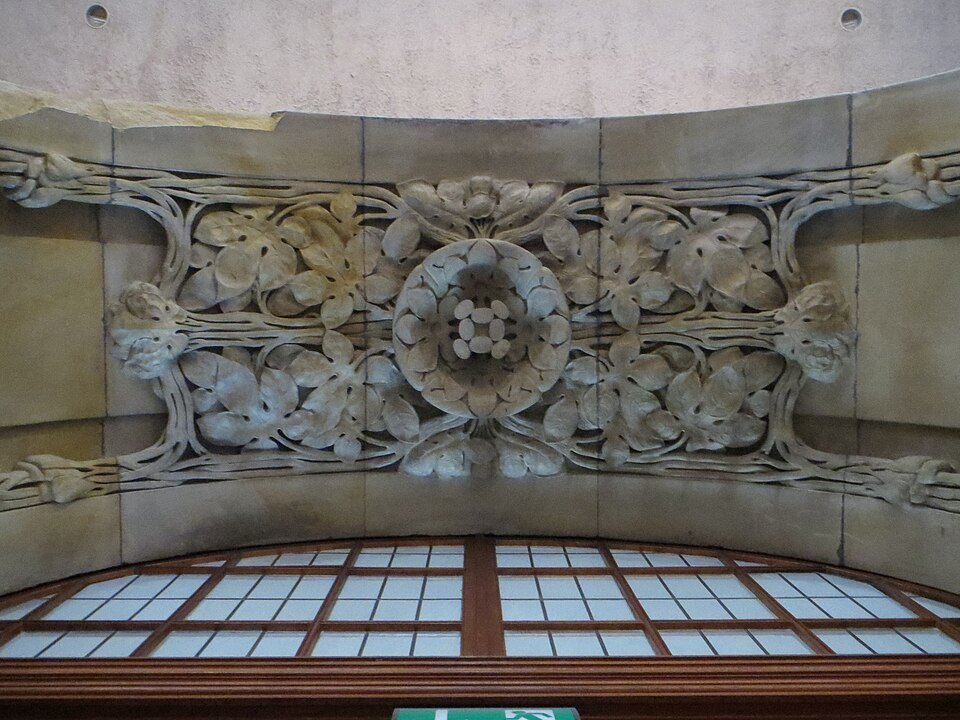
The provisional look stayed. When the Frauenkirche was rebuilt, there was debate about restoring the prewar interior here too. Instead, by then recognized as a monument in its own right, the 1955 interior was carefully restored between 2000 and 2004: the plaster was repaired and lightened, the lamps refitted, and new pews made by the joinery of the Moravian Church in Herrnhut. See the rebuilt city.
04What to look at inside
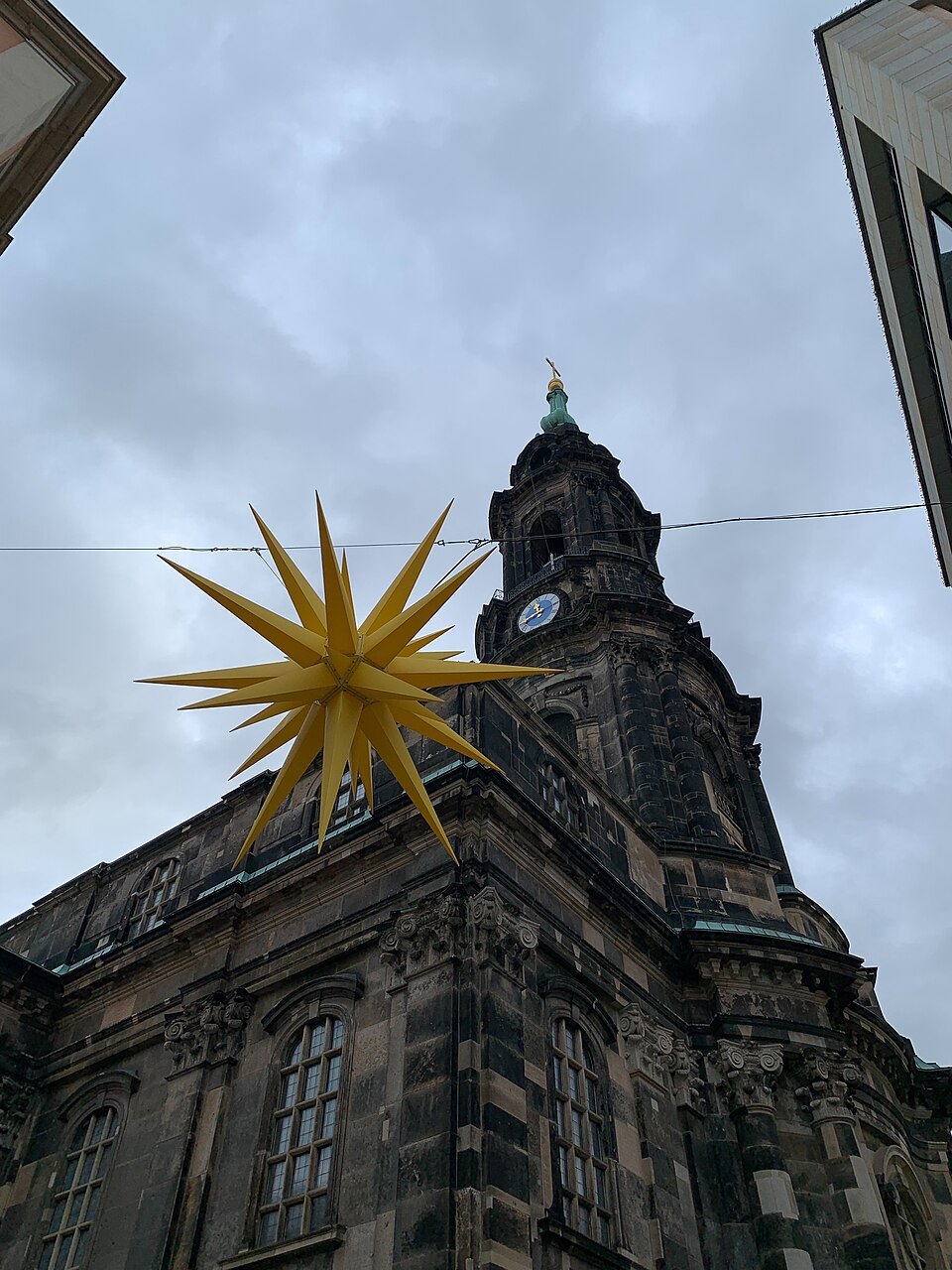
The interior is a Baroque central space: an oval nave set within square outer walls, galleries on two levels along the sides, and the altar and organ facing each other across the church. The rough gray walls, the plain forms and the star-shaped hanging lamps, which locals nicknamed dandelions, give it the feel of a vast, quiet hall.
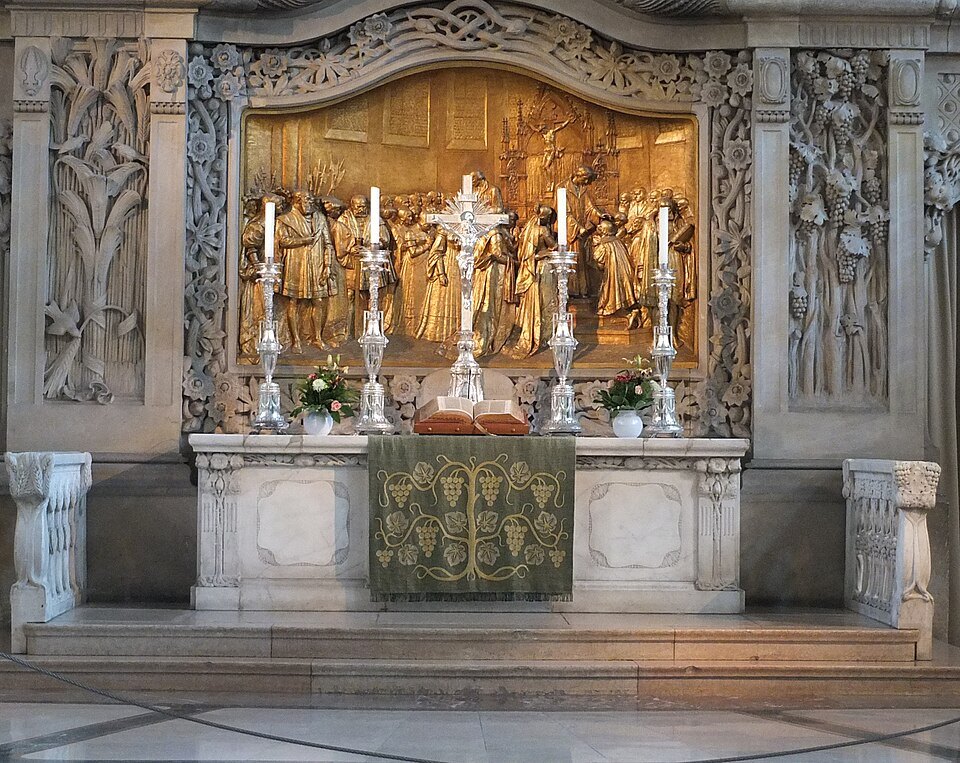
At the altar hangs the Crucifixion painted by Anton Dietrich in 1900, which survived 1945 with its scorch marks, and below it a bronze relief of that first Lutheran service of 1539. The church also keeps a cross of nails from Coventry, received in 1986, and holds a regular prayer for peace and reconciliation using the Coventry litany.
Opposite the altar, the Jehmlich organ of 1963 is the largest in Dresden, with more than six thousand pipes. In a side chapel named after the composer Heinrich Schütz hangs a bronze crucifix of 1652, brought from the old Sophienkirche.
05Hearing the Kreuzchor
The choir has about 150 boys and young men, aged roughly nine to nineteen, who attend the Kreuzschule. Its director, the Kreuzkantor, holds an office that goes back to the Reformation. The choir sings Vespers most Saturdays and the Sunday service, outside the Saxon school summer holidays, and gives concerts in the church each year that include Bach's Christmas Oratorio and St. Matthew Passion.
The choir also tours widely, so check the dates published by the church and the choir before planning around it. Opera houses have engaged its members as boy soloists, the Semperoper among them, for roles such as the three boys in The Magic Flute. For concert tickets, see booking ahead.
06Up the tower
The tower rises 92 meters, and it survived the fire of 1897 that gutted the church. The climb starts from the entrance to the left of the main portal: 259 steps lead to a viewing platform 54 meters up, passing the church's great bells on the way. Its ring of five bells, cast in 1899, is counted among the heaviest in Germany. Just below the platform is the room where a tower keeper lived until 1950.
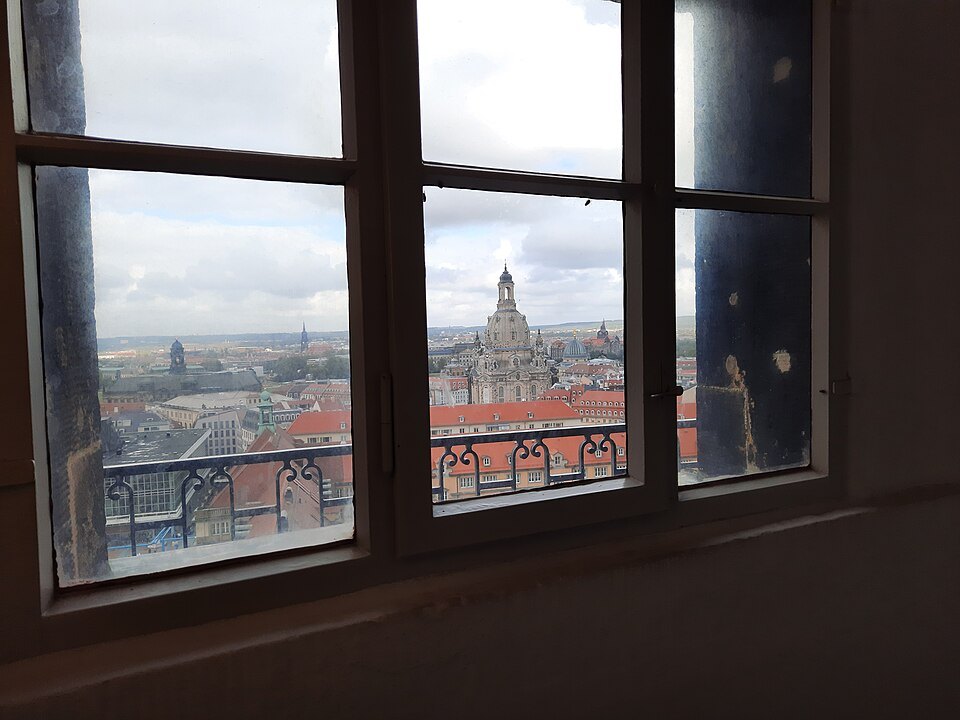
Note The steps are many and the timing of the climb is set by the church, so check its own information before planning around it. From the top, the Altmarkt lies directly below and the dome of the Frauenkirche is close at hand.
07Planning a visit
Allow twenty minutes for the interior and three quarters of an hour with the tower. A Saturday Vespers is the best way to hear the building as it was meant to be used. The church is a short walk from the Frauenkirche and the Residenzschloss.
More than two hundred thousand people a year come to its services, Vespers and concerts, and around three hundred thousand more visit the open church simply to look. In Advent the Striezelmarkt fills the Altmarkt square at its foot, and the Kreuzchor's Christmas music is part of the season.