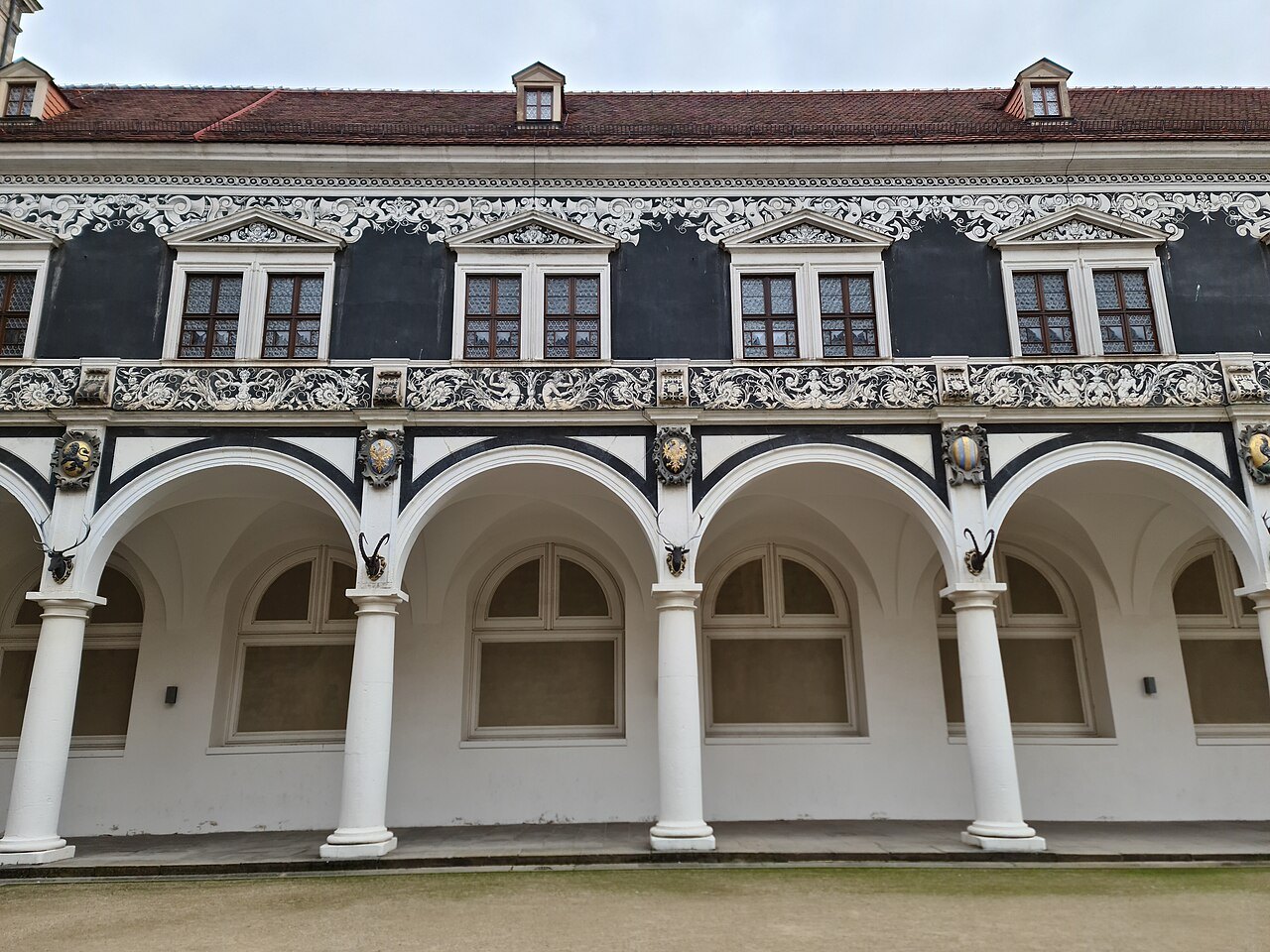
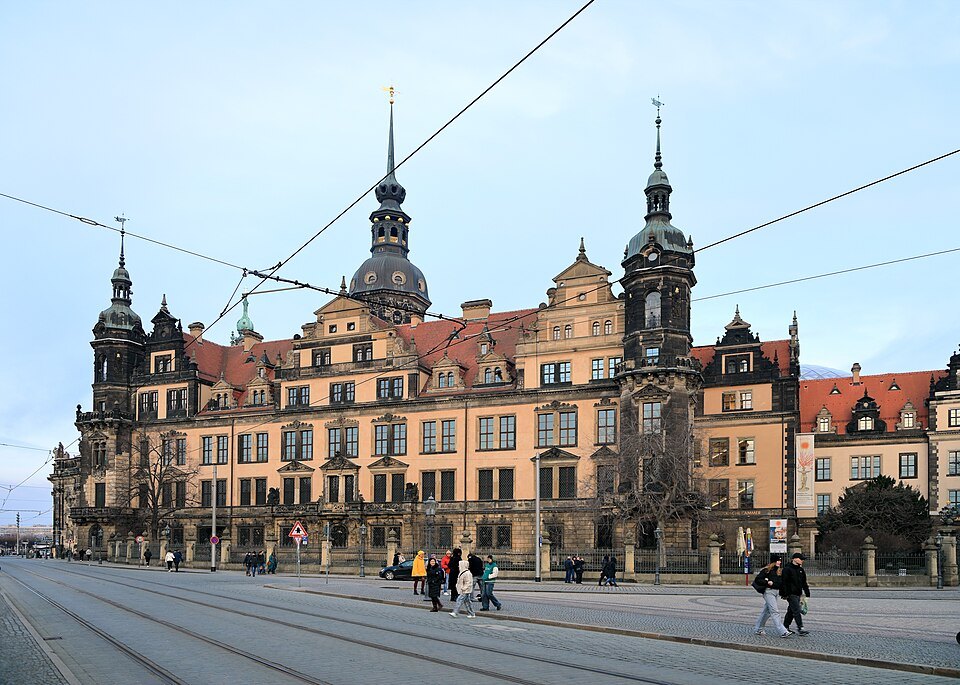
Ask a visitor leaving the Residenzschloss what they saw, and the answer is almost always the same: jewels. The Historic Green Vault, with its time-slotted rooms of gold and gemstones, absorbs so much attention that an entire wing of the palace goes quiet. That wing holds the Turkish Chamber, the largest collection of Ottoman art outside Turkey, and it rewards the small number of people who make the detour.
How a Saxon palace ended up with an Ottoman treasury
The collection is not a souvenir of conquest. Saxony's electors never fought the Ottoman Empire directly in any sustained way; what they acquired came through trade, diplomatic gifts, and the general European fascination with the Ottoman court that gripped princely collectors from the sixteenth century onward. Augustus the Strong, who shaped so much of Dresden's identity as a collecting city, expanded the holdings further, staging mock Ottoman processions and tournaments at court using the real tents, weapons, and costumes now on display.
That origin matters because it changes how the room reads. This isn't a trophy case. It's closer to a cabinet of fascination, assembled by people who saw the Ottoman world as a source of luxury and spectacle worth imitating, not just a political rival. The objects reflect that admiration more than any military encounter.
Why everyone walks past it
The layout of the Residenzschloss works against the Turkish Chamber. Visitors typically plan their visit around the Historic Green Vault, which requires a reserved time slot and understandably becomes the spine of the day — if you haven't sorted that out yet, our guide to getting a Historic Green Vault slot is worth reading before you arrive. Once that slot is used, many people feel they've "done" the palace and head for the courtyard or the next sight on their list.
The New Green Vault, with its freer entry and equally dazzling contents, absorbs most of the remaining attention. By comparison, the Turkish Chamber sits in a less obvious part of the building, and nothing in the palace's signage particularly insists that you see it. It's entirely possible to buy a full Residenzschloss ticket and leave without knowing the room exists.
If you're choosing where to spend limited time in the palace, ask at the entrance which route takes in the Turkish Chamber — staff can point you toward it directly rather than leaving you to stumble on it by chance.
What's actually in the room
The centerpiece is a full Ottoman tent, an enormous multi-chambered structure in silk and wool that once traveled with a sultan's court. Seeing it assembled indoors, under a European palace ceiling, is a strange and effective juxtaposition — it's the kind of object that photographs poorly but makes a real impression in person, simply from scale.
Around the tent are the other trappings of Ottoman court life as European collectors understood it: horsetail standards, ceremonial weapons with elaborate hilts, saddles and horse armor worked in gold thread, and textiles whose colors have survived centuries indoors far better than they would have outside. There are also musical instruments connected to the janissary bands that so influenced European military music — the origin, indirectly, of the cymbals and bass drums that later turned up in European orchestras.
None of it is behind the kind of dense crowd you'll meet in the Green Vault rooms. You can circle the tent at your own pace, read the labels properly, and look closely at stitching and metalwork that would be impossible to study through a scrum of other visitors.
Fitting it into a Residenzschloss visit
The Turkish Chamber works well as a counterweight to the jewel rooms rather than a replacement for them. Where the Green Vaults are about concentrated wealth and craftsmanship in miniature, the Turkish Chamber is about scale, textile, and a different aesthetic tradition entirely. Seeing both in one visit gives a fuller sense of what "treasury" meant to a Saxon court — not just gemstones, but also prestige objects from a wider world.
If you're building a day around the Residenzschloss, the Turkish Chamber is easiest to add on after the New Green Vault, since the two sit on compatible routes through the building. Check the palace's current floor plan at the entrance, since room access can shift with ongoing conservation work — the same caution applies to several of the historic apartments here.
Note Don't assume a standard palace ticket automatically includes every collection inside the Residenzschloss. The building houses several distinct museums under one roof, and combination tickets vary. Confirm exactly what your ticket covers before you plan your route, particularly if the Historic Green Vault is part of your day.
For general planning — when to visit, how to avoid the worst crowds, and how the Residenzschloss fits against Dresden's other major sights — the sights overview and booking ahead pages are useful starting points before you commit to a particular order of rooms.
A quieter kind of highlight
There's a pattern in Dresden where the most heavily marketed sight in a building becomes the only one most visitors see. The Frauenkirche's dome climb gets overshadowed by the church itself in exactly this way — see our piece on climbing the Frauenkirche dome for a similar case of an underused option sitting right next to a famous one. The Turkish Chamber is the Residenzschloss's version of that gap: not hidden exactly, just overshadowed by a more photogenic neighbor.
Giving it twenty unhurried minutes costs you little against a full day in the palace, and it's one of the few rooms in central Dresden where you're likely to have real space to look rather than jostle. For a city whose historic core was so thoroughly rebuilt after the war, as covered in our piece on the rebuilt city, the Turkish Chamber is also a reminder that not everything inside these restored walls is European in origin — some of Dresden's grandest objects came from well beyond Saxony's borders, carried home by a court captivated by what it saw as glamour from elsewhere.
 How to get a Historic Green Vault time slot and use it well
 What the New Green Vault shows that the Historic one does not
 Climbing the Frauenkirche dome is harder than it looks from the square