- 1841builtSemper's first house, burned 1869
- 1878builtthe second house, by Manfred Semper
- 1945lostburned out to the shell
- 1985rebuiltreopened 13 February
- 01The opera house on the Theaterplatz
- 02Semper's first house
- 03The second house and the Strauss years
- 04Destroyed, rebuilt, reopened to the day
- 05The facade and the auditorium
- 06Seeing it
01The opera house on the Theaterplatz
The Semperoper is the house of the Saxon State Opera, its ballet company, and the Staatskapelle Dresden, the former court orchestra, which plays for the operas and gives its own symphony concerts here. It closes the Theaterplatz between the Zwinger, the Hofkirche and the river.
It matters to a visitor for two reasons. The building is one of the great nineteenth-century theaters, named after its architect, and the company inside it has a long record of first performances, from Wagner in the 1840s to Richard Strauss in the twentieth century. Even without a ticket, the square in front of it is one of the best places to take in the Altstadt.
02Semper's first house
Opera in Dresden is far older than this building: the court had opera houses from the seventeenth century on. Between 1838 and 1841 the architect Gottfried Semper built a new royal court theater, a rounded building in the forms of the Italian early Renaissance, which contemporaries praised as one of the most beautiful theaters in Europe. It stood considerably closer to the palace than the present house.
Richard Wagner was court conductor here in the 1840s, and three of his operas had their first nights in Semper's first house: Rienzi, Der fliegende Holländer and Tannhäuser. Semper, for his part, joined the May uprising of 1849 in Dresden and had to flee Saxony when it failed; for many years he was not allowed to return.
On 21 September 1869 a fire destroyed the first house completely. Within weeks a temporary wooden theater was put up nearby, nicknamed the Bretterbude, the shack of boards, and it opened that December with Goethe's Iphigenie auf Tauris, serving while a new house was planned.
03The second house and the Strauss years
Dresden's citizens wanted Semper again, though he was still barred from entering Saxony, even while the work went on. He drew up new plans, and his eldest son Manfred Semper supervised their construction from 1871; the second house opened in February 1878, in a Neo-Renaissance style.
Under the conductor Ernst von Schuch, the house became a stage for new work. Between 1901 and 1938 nine of Richard Strauss's fifteen operas were first performed in Dresden, among them Salome, Elektra and Der Rosenkavalier. The last performance before the war closed the house was Weber's Der Freischütz, at the end of August 1944.
04Destroyed, rebuilt, reopened to the day
In the raid of 13 February 1945 the house burned out. The fire destroyed the auditorium and the stage, and the rear wall of the stage house fell; only the outer shell and the foyer corridors were largely spared. For decades the company played elsewhere in the city while the ruin was secured and the rebuilding studied.
The foundation stone for the reconstruction was laid in June 1977, under the chief architect Wolfgang Hänsch. The house was rebuilt largely to Semper's plans, with modern stage machinery, fewer seats than before, and a new service building behind it joined by bridges. It reopened on 13 February 1985, forty years to the day after the raid, with Der Freischütz, the opera that had closed it. In August 2002 the Elbe flood filled the lower levels with water and caused heavy damage. With help from around the world, the house was playing again before the end of that year.
05The facade and the auditorium
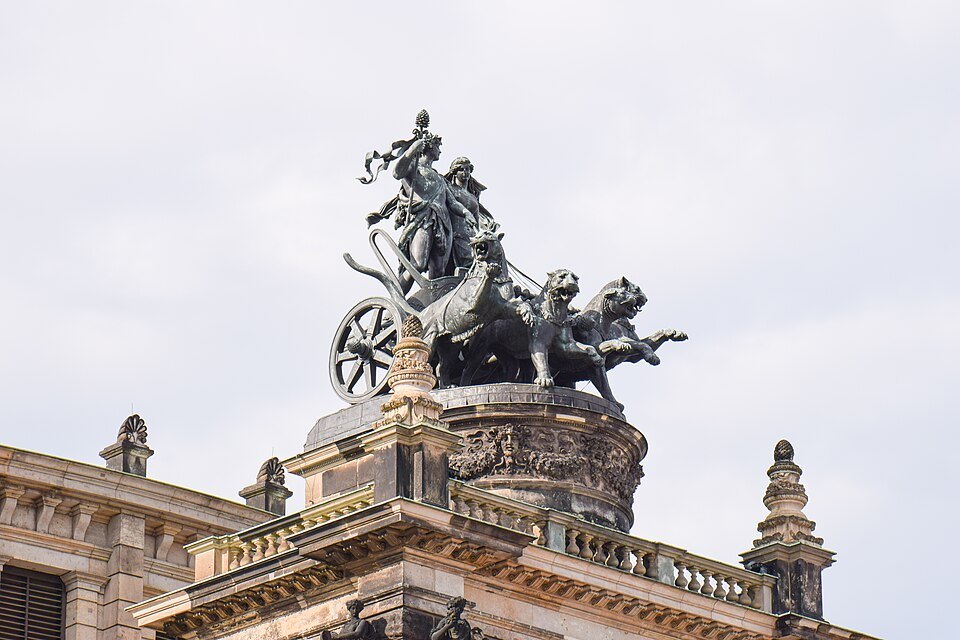
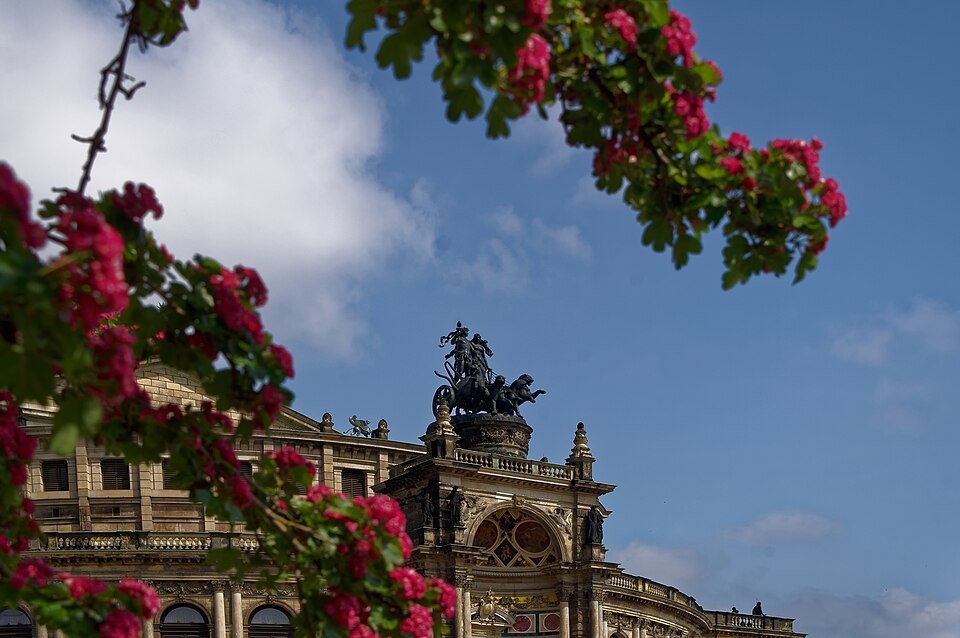
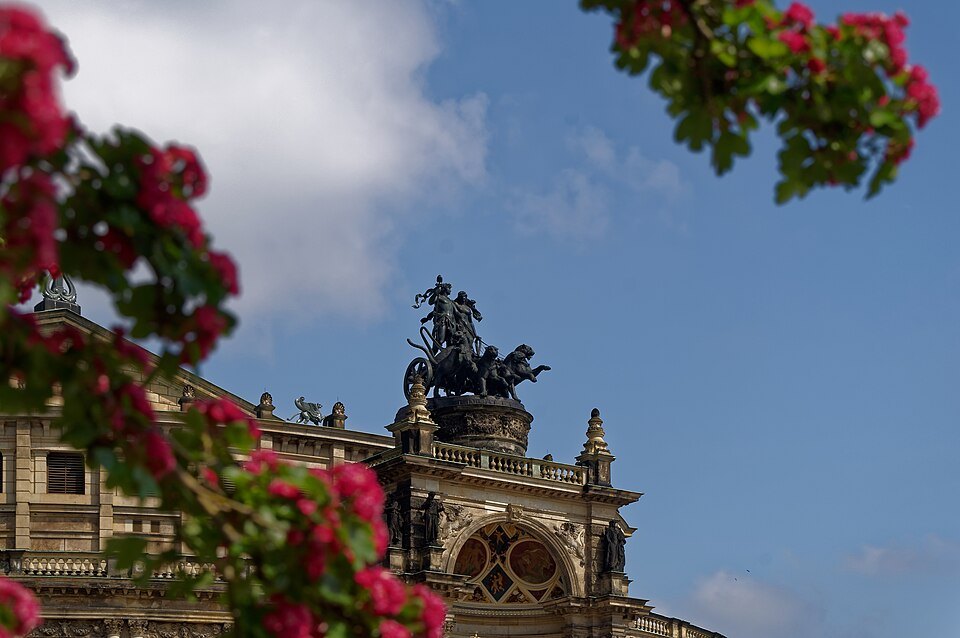
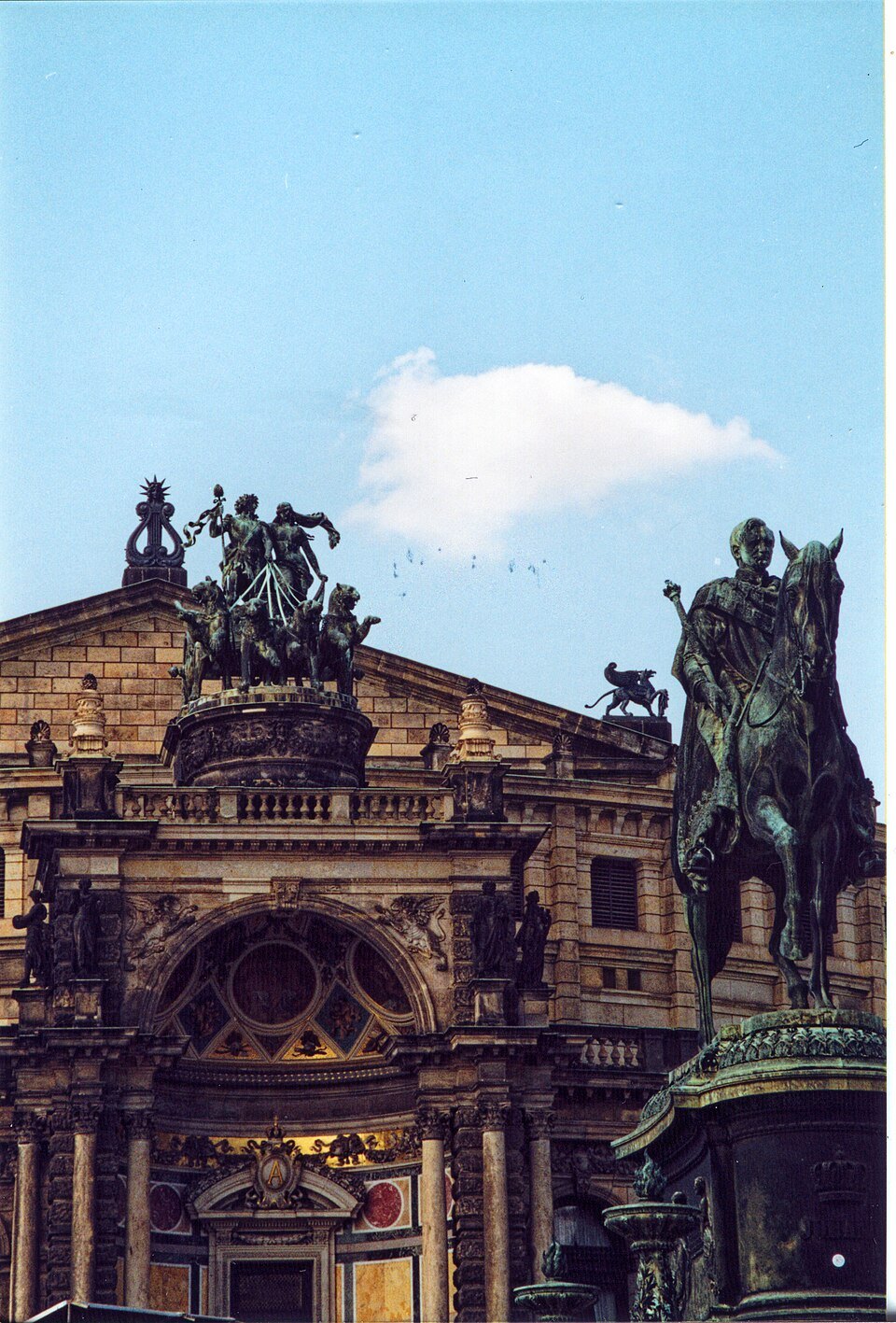
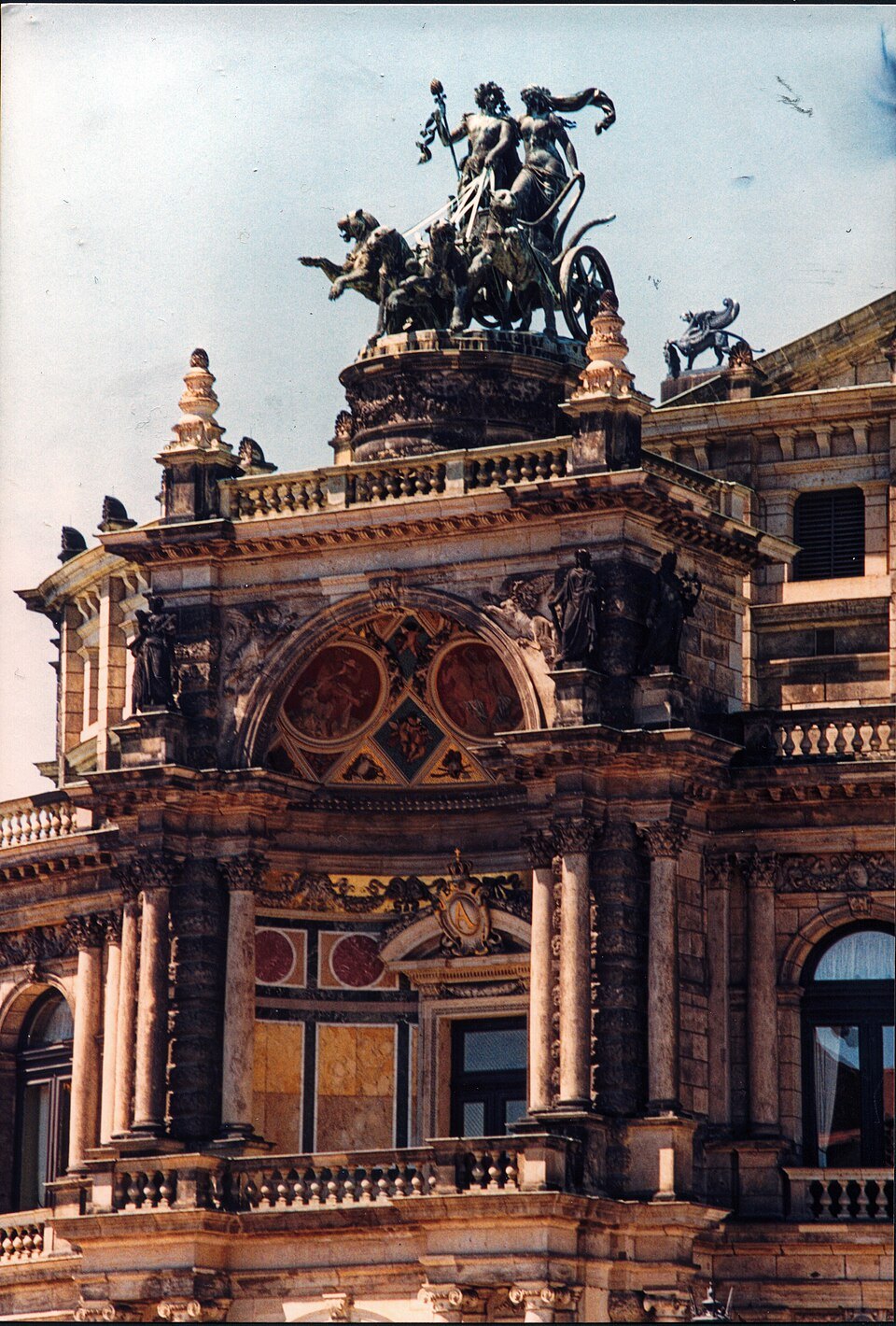
A bronze panther quadriga carrying Dionysus and Ariadne, by Johannes Schilling, crowns the main portal. Statues of Goethe and Schiller stand beside the entrance, and Shakespeare, Sophocles, Molière and Euripides fill the niches of the facade. On the rear of the stage house are the Saxon coat of arms and a bust of Semper.
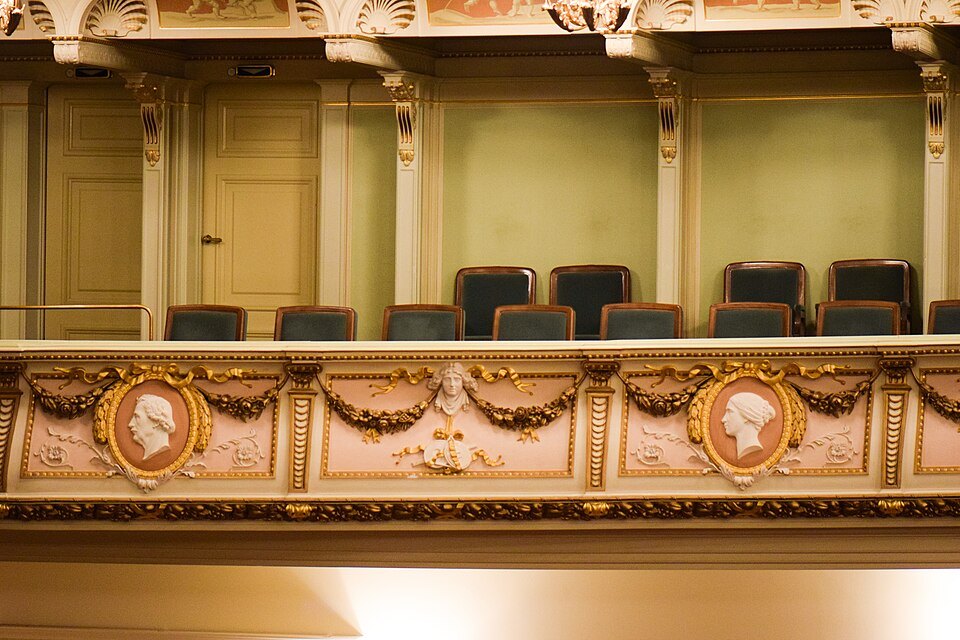
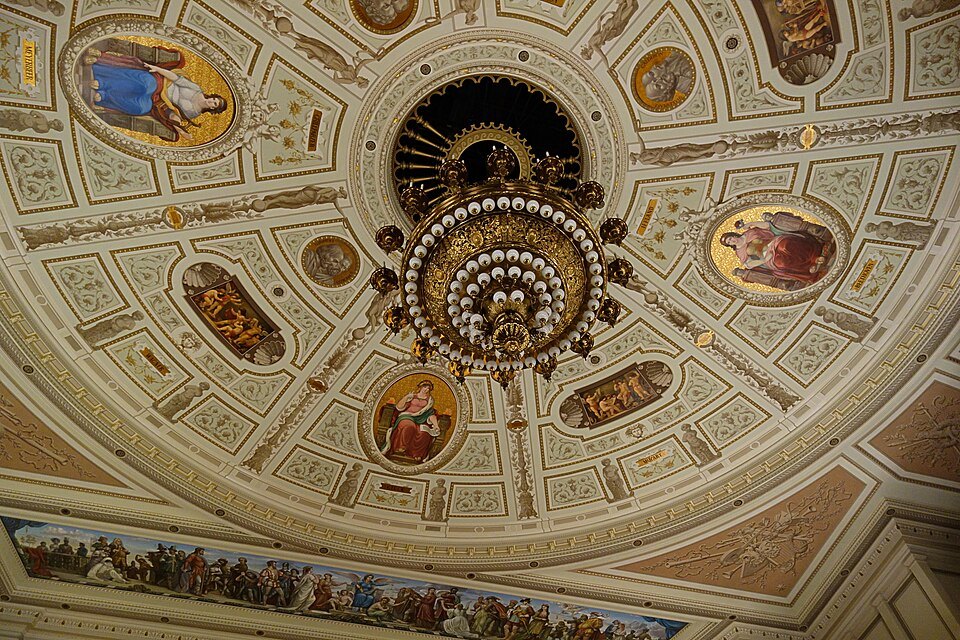
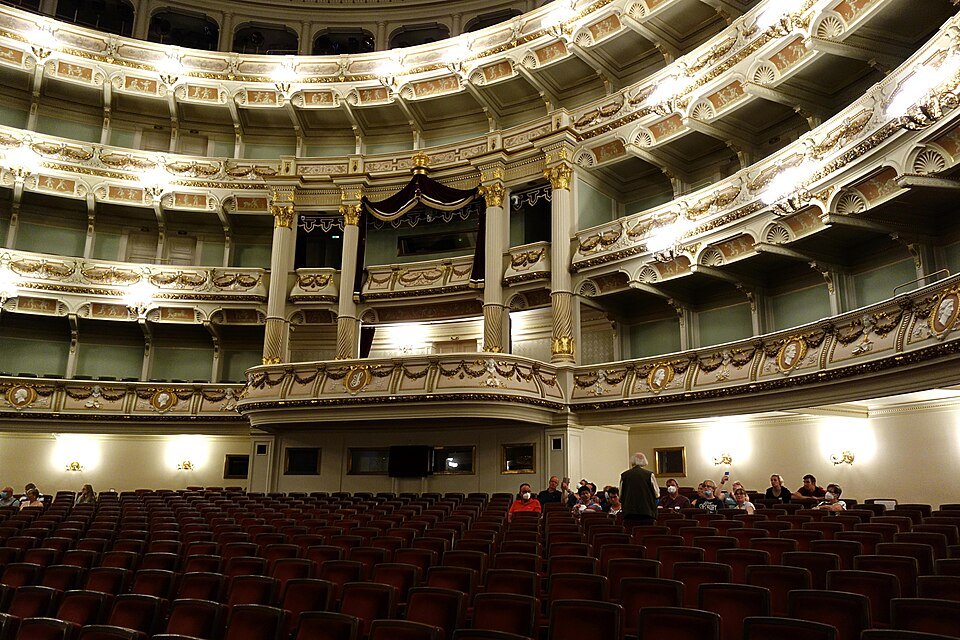
Inside, the foyers and corridors lead the audience to the auditorium. Semper dressed the structure in forms drawn from the Italian Renaissance, mostly in stucco applied over walls and ceilings, and the reconstruction followed his designs. The painted curtain, first designed by Ferdinand Keller, was made anew for the reconstruction; its borders carry medallions of poets and composers from Sophocles to Wagner.
Look above the stage for the clock known as the five-minute clock. The first house already had a clock that showed the time in numbers rather than with hands, a novelty of its day, and the second house was given a new one on the same model. The frieze over the stage opening parades characters from plays and operas, among them Papageno, Faust and Falstaff.
06Seeing it
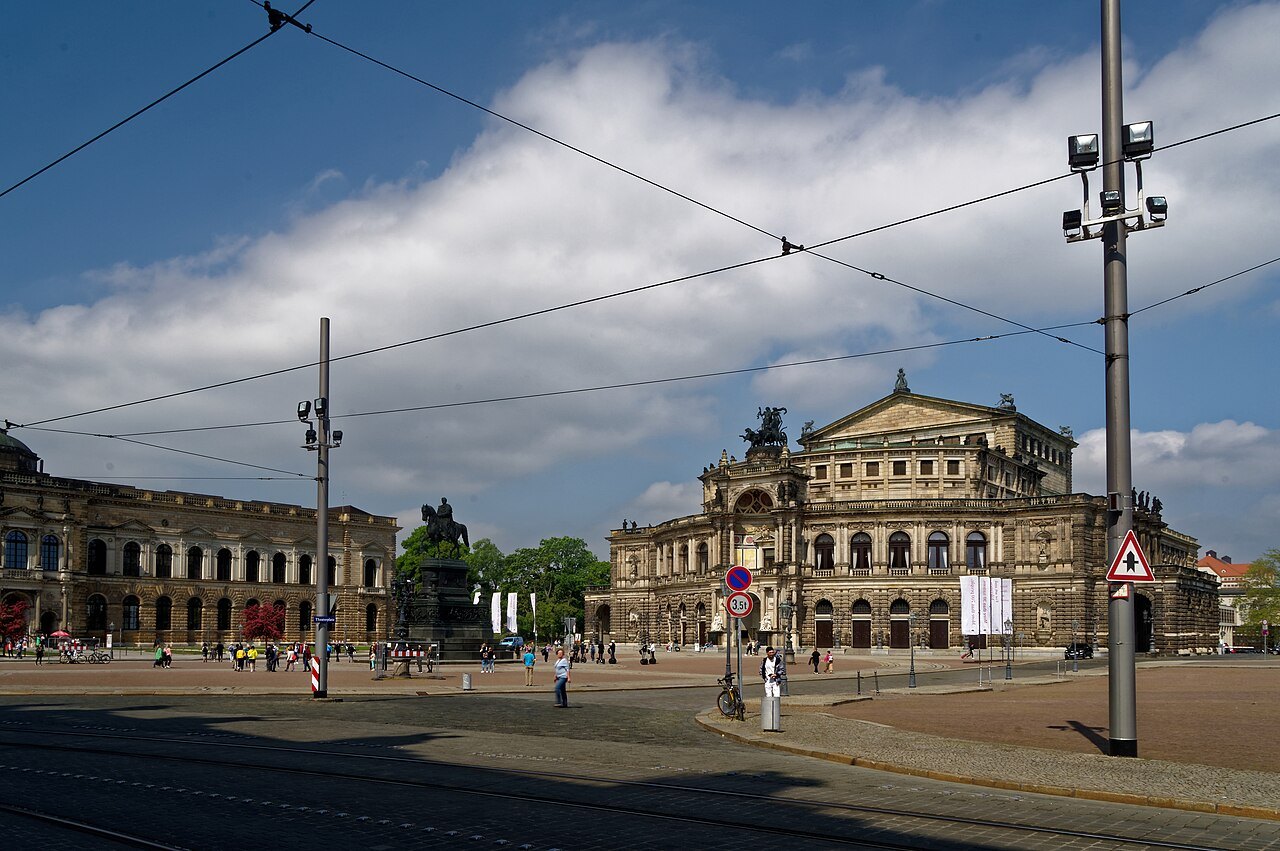
The best view of the front is from the middle of the Theaterplatz, with the equestrian statue of King John, who commissioned the second house, in the foreground. The interior can only be seen on a guided tour or at a performance. Guided tours lead through the halls of the house; some are themed around architecture or musical history, and short tours of the foyers are offered before selected performances for ticket holders.
A performance is the fuller experience. The house asks for clothes that suit a festive occasion rather than formal dress, and most operas carry surtitles in German and English; check for the performance you choose. Book early for popular dates, though last-minute tickets often become available shortly before a show; see booking ahead. The box office is in the Schinkelwache, the old guardhouse on the same square.
Allow under an hour for a tour, or a whole evening for an opera. Pair a daytime visit with the Zwinger galleries next door and the terrace walk along the river. Tickets for the short tours before a performance are sold only together with a ticket for that evening.