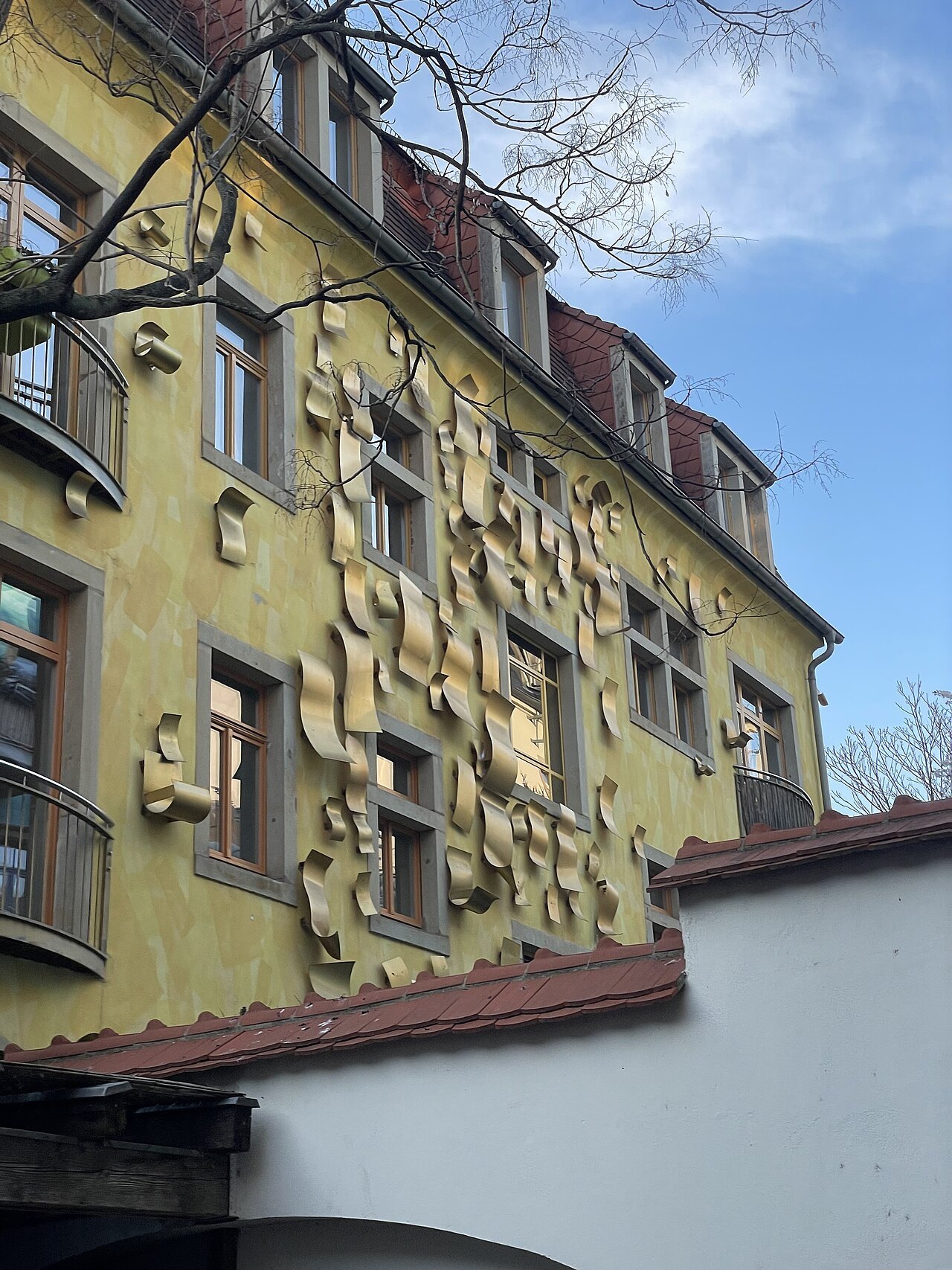
By early evening the Altstadt changes. The museums close, the tour groups leave, and the squares around the Frauenkirche and the Zwinger grow quiet. Many visitors take that as a sign the day is over. The people who live in Dresden take it as a sign to cross the river.
North of the Elbe, beyond the baroque New Town, lies the Äußere Neustadt — a grid of nineteenth-century streets that is where the city eats, drinks and stays out late. This piece is about how to get there and how to use an evening in it.
What the Äußere Neustadt is
The name means the Outer New Town. It is the part of the Neustadt that grew up outside the line of the old town walls, north of Albertplatz. Its street plan was laid out in the eighteenth century and has changed little, and most of its buildings date from the building boom of the late nineteenth century.
The bombing of 1945 largely spared it. That is why, in a city whose center is so much rebuilt, the Äußere Neustadt is one of the largest surviving quarters of its kind in Germany — whole streets of old apartment houses, many with their shops and courtyards on the ground floor. For the contrast with the other bank, see the rebuilt city and the dark and pale stones.
A small piece of its history: the world's first milk chocolate is recorded as having been made in 1839 at a factory in these streets.
Getting there on foot
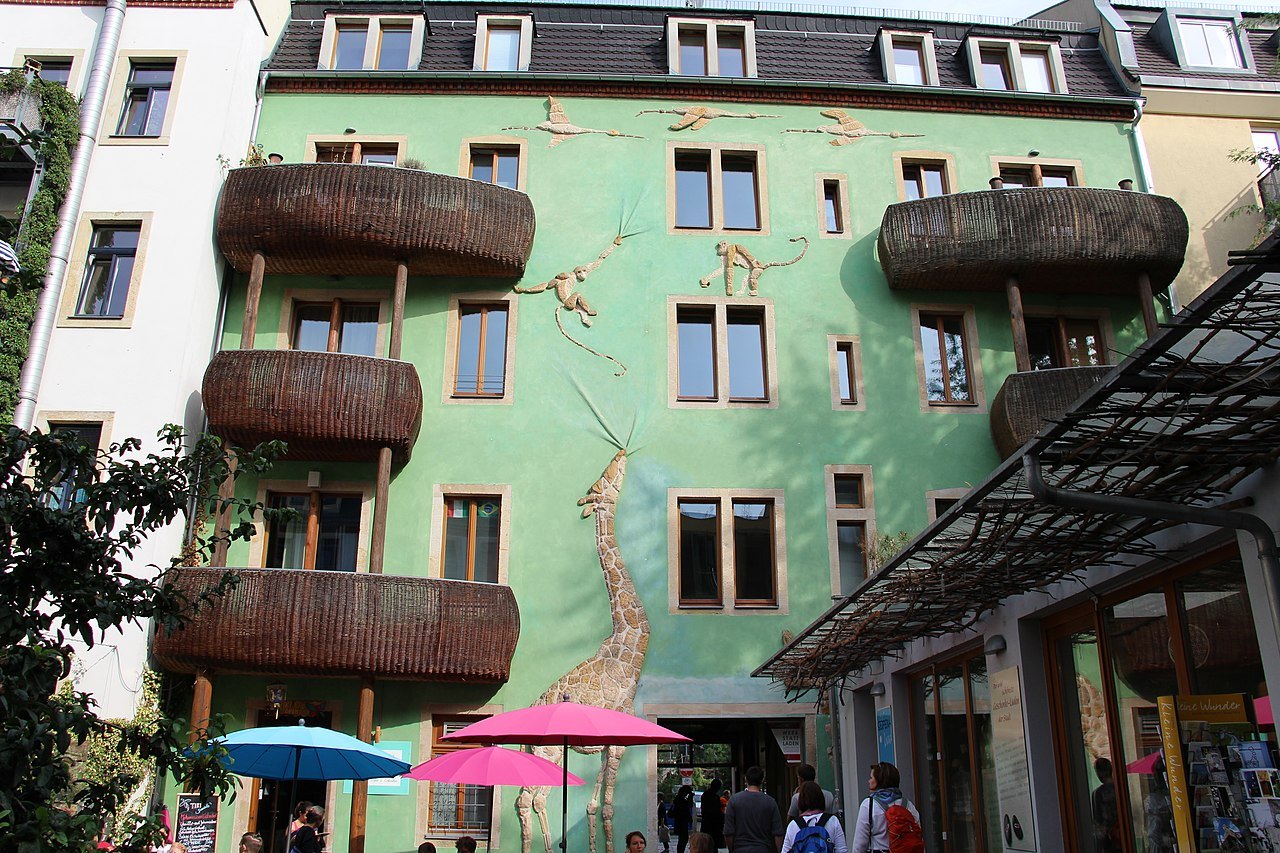
Walk. From the Theaterplatz, cross the Augustus Bridge — stopping halfway for the view back at the Altstadt — to the Golden Rider on the Neustädter Markt. From there the tree-lined Hauptstraße runs straight north as a pedestrian avenue through the Innere Neustadt to Albertplatz. The Äußere Neustadt begins on the far side.
If you want to see the Altstadt skyline first, go down to the river meadows on the Neustadt bank before you walk up the Hauptstraße; see where to stand for the Canaletto view. Trams also run to Albertplatz, which is the main tram junction north of the river.
The Innere Neustadt on the way
The walk up the Hauptstraße is worth taking slowly, because it passes through a different town from the one you are heading for. The Innere Neustadt, the inner New Town, is baroque: it was laid out afresh after a fire destroyed the older settlement on this bank in 1685, which is how it came to be called new at all.
The gilded statue of Augustus the Strong at its southern end, the Golden Rider, was set up in 1736, and the avenue behind it was planned as a grand approach. By the time you reach Albertplatz, the city around you has changed century: tall apartment houses, shopfronts and the busy tram junction mark the start of the Äußere Neustadt.
At the edge of the quarter stands the Martin-Luther-Kirche, built in the 1880s, whose tall tower is a landmark over the rooftops.
The streets to know
The quarter is small enough to wander without a plan, but a few streets give it its shape.
- Alaunstraße runs north from Albertplatz, with bars, small shops and cafés all along it.
- Louisenstraße and Görlitzer Straße cross it, and around them the evening crowd is thickest.
- The side streets between them hold smaller, quieter places.
- To the north, the Alaunpark fills on warm evenings.
This guide names no individual bar or restaurant — what is good changes faster than a page does. Walk, look through the windows, and go where the room looks right.
Start in the Kunsthofpassage
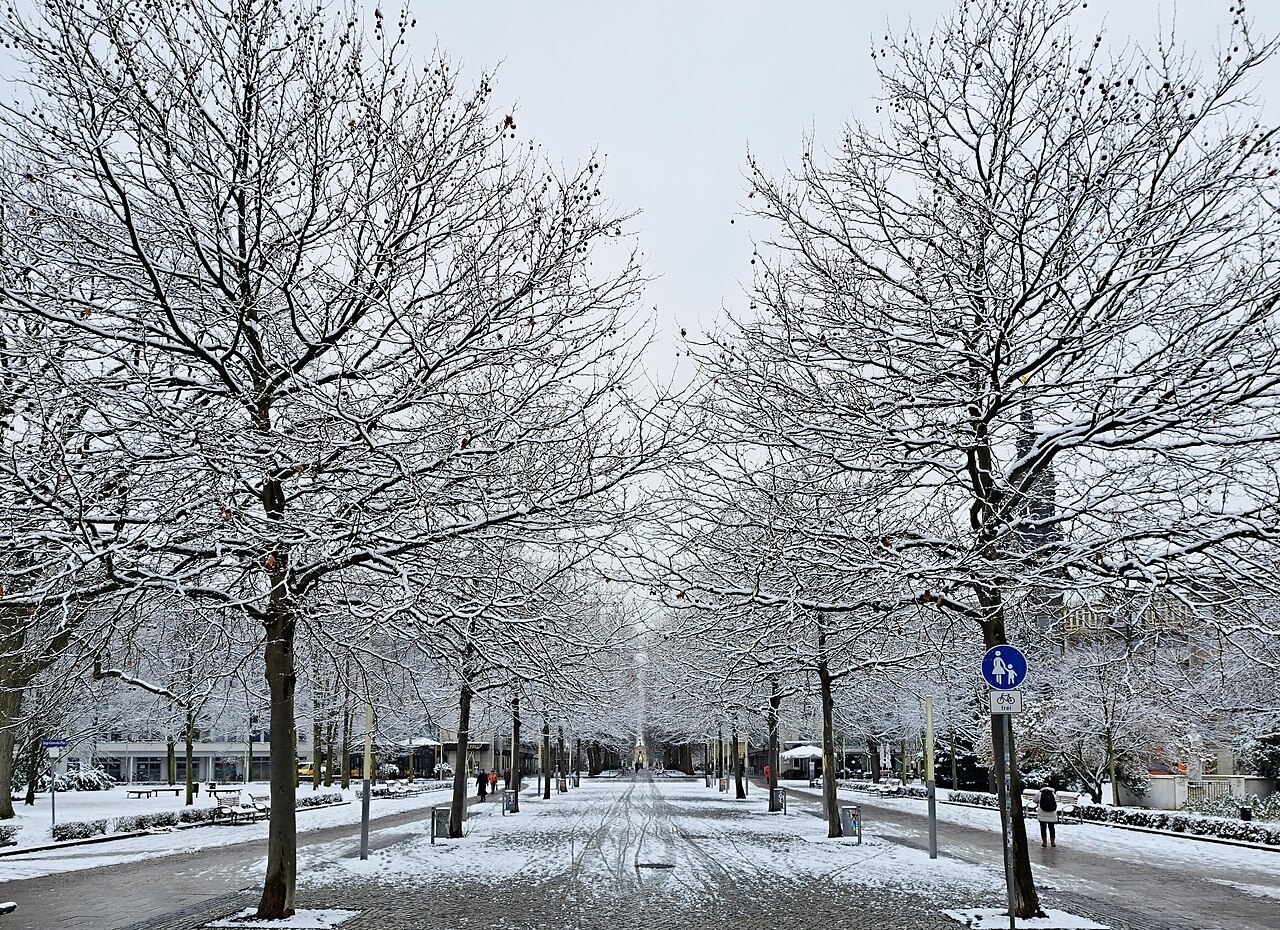
The best place to begin, while there is still some light, is the Kunsthofpassage: five small courtyards linked between Görlitzer Straße and Alaunstraße, each decorated by artists around its own theme. The famous one is the Courtyard of the Elements, where a blue wall is hung with gutters and drainpipes that make music when it rains. There are also a courtyard of animals, one of mythical creatures and one of light.
Note The courtyards are between houses where people live. Enjoy them quietly, especially later in the evening.
What to expect
The Äußere Neustadt is lively rather than polished. Walls carry street art and posters, the pavements outside bars fill in summer, and the quarter is proud of its alternative streak: it even holds a yearly street festival, the Bunte Republik Neustadt, a pun on the German name for the Federal Republic.
- Note It is loud at weekends, especially on the busiest corners. If you are sleeping here, ask for a room away from the street.
- Weeknights are calmer, and better for a long dinner and a slow walk.
- Keep an eye on your belongings in crowded streets late at night, as in any busy nightlife area.
Getting back
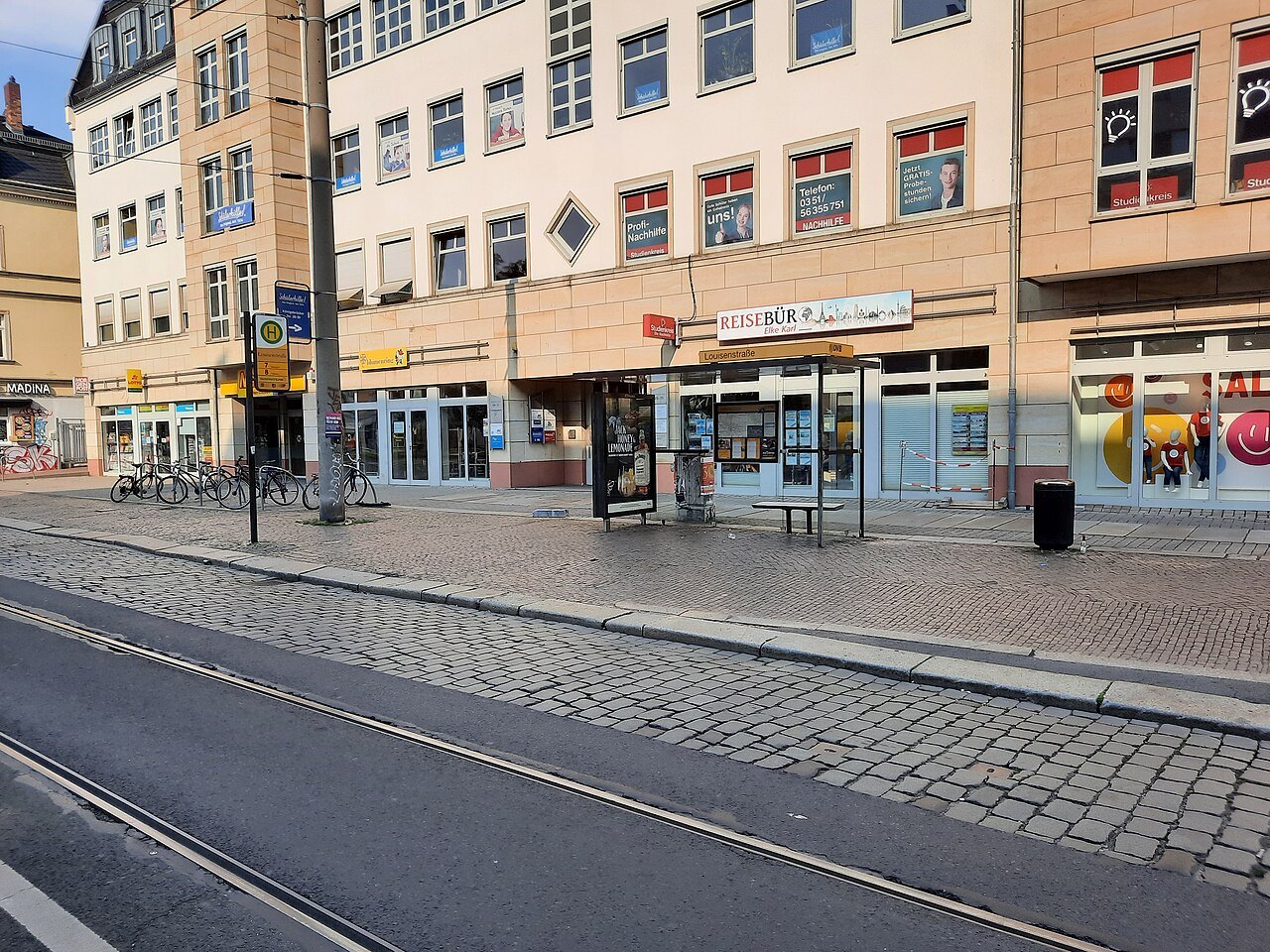
If you are staying in the Altstadt, the walk back is the same route in reverse: Albertplatz, the Hauptstraße, the Golden Rider and the Augustus Bridge, with the floodlit skyline in front of you across the water. It is one of the best walks in the city after dark. Trams also run back from Albertplatz across the river.
If you are deciding where to base yourself, the evening is the strongest argument for the Neustadt; see neighborhoods. And if you are arriving by train, remember that Dresden-Neustadt station is the stop for this side of the river — see which station to get off at.
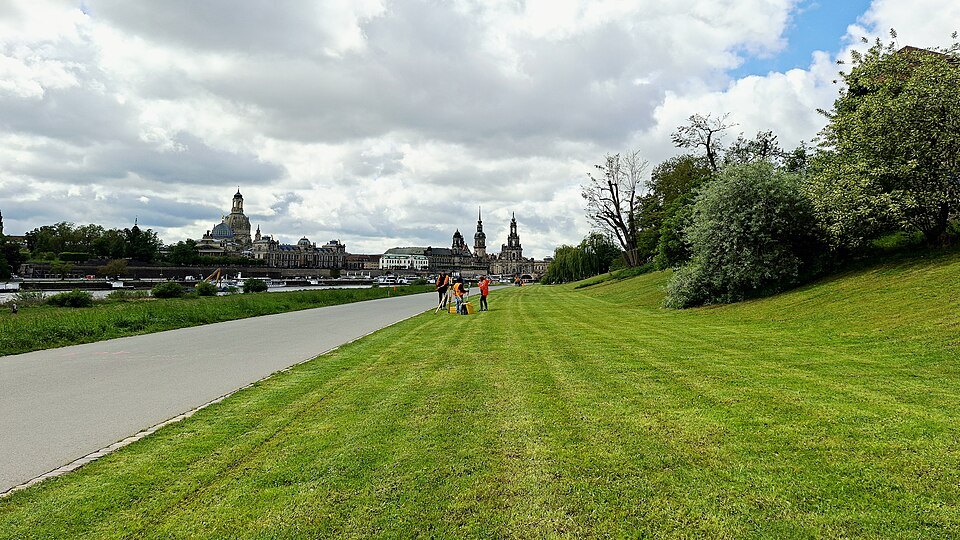 Where to stand for the Canaletto view of Dresden
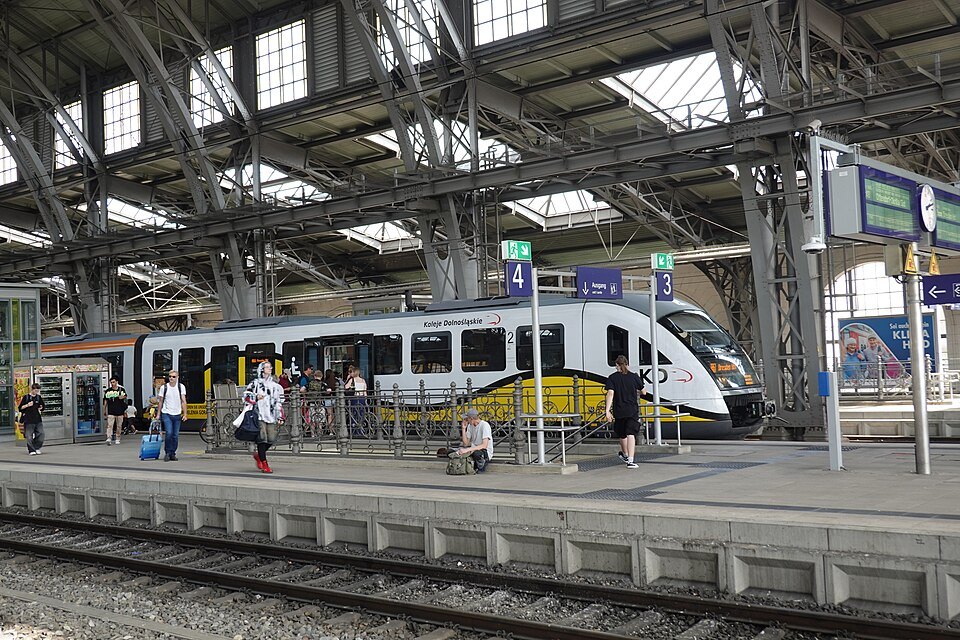 Which Dresden station to get off at, and what to do with your bags
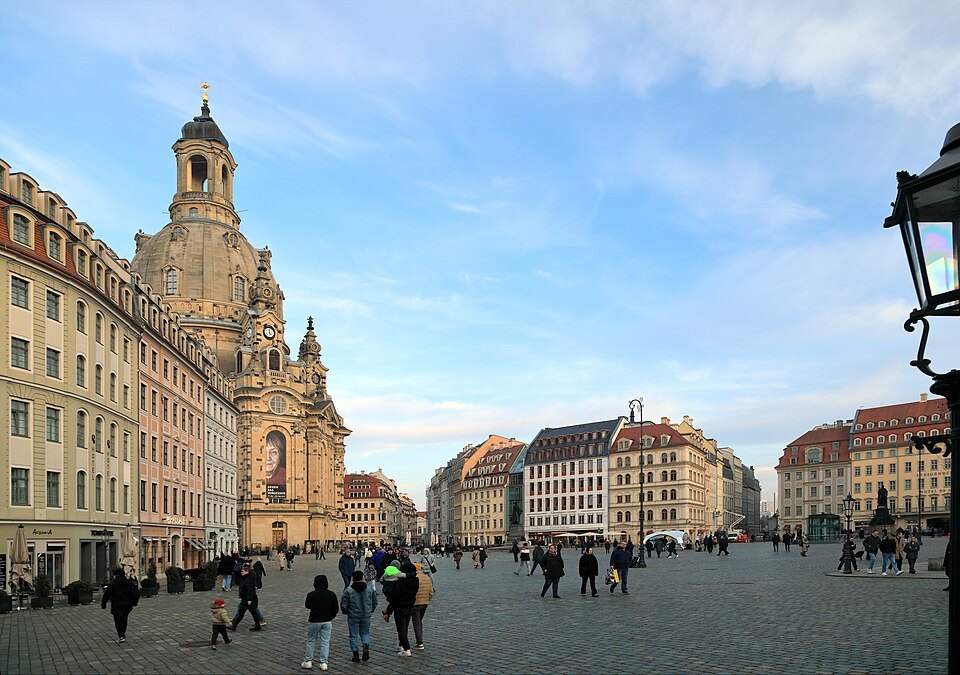 Reading the dark and pale stones of the Frauenkirche