Most visitors assume the Zwinger is a museum you buy a ticket for, see the inside, and leave. In fact the Zwinger is really a walled courtyard garden with museums built into its edges — and the courtyard itself, along with its gates, fountains, and sculpture, is open to anyone who walks in. You can spend a genuinely satisfying half hour here without going near a ticket desk.
What "the Zwinger" actually is
The complex is a rectangle of sandstone pavilions and galleries wrapped around a sunken lawn and formal garden, built for courtly festivities rather than defense, despite the fortress-sounding name. The Gemäldegalerie Alte Meister, the Porcelain Collection, and the Mathematical-Physical Salon all charge admission and sit inside the surrounding buildings — but the courtyard they enclose is public space. You can enter through any of the main gates, cross the grass, look up at the ornamented facades from below, and leave through another gate entirely, all without a ticket.
This makes the Zwinger one of the easiest stops to fold into a walking route through the historic center — see the sights overview for how it connects to the Hofkirche, Residenzschloss, and Semperoper, which all stand within a few minutes' walk.
The Crown Gate and the wall pavilions
The single most photographed feature is the Kronentor, the Crown Gate, on the side facing away from the river. Its curved, gilded crown atop an onion dome makes it recognizable even to people who've never heard of the Zwinger, and you can walk straight underneath it into the courtyard. Take the time to look back at it from inside the garden as well as from outside — the proportions read very differently from each side.
Running along the courtyard's long sides are the Wallpavillon and, opposite it, the pavilion housing the carillon, or Glockenspielpavillon, whose bells are made of Meissen porcelain rather than cast metal — a detail that rewards a closer look at the roofline even if you never hear them. Both pavilions are covered in the kind of exuberant stone ornament — garlands, putti, urns — that defines the whole complex, and both can be admired entirely from outside their doors.
Walk the raised terrace that runs along the inner wall rather than only crossing the lawn. From up there you get a much better view down into the courtyard's geometry and up at the sculpture lining the balustrades.

The Nymphenbad and the fountains
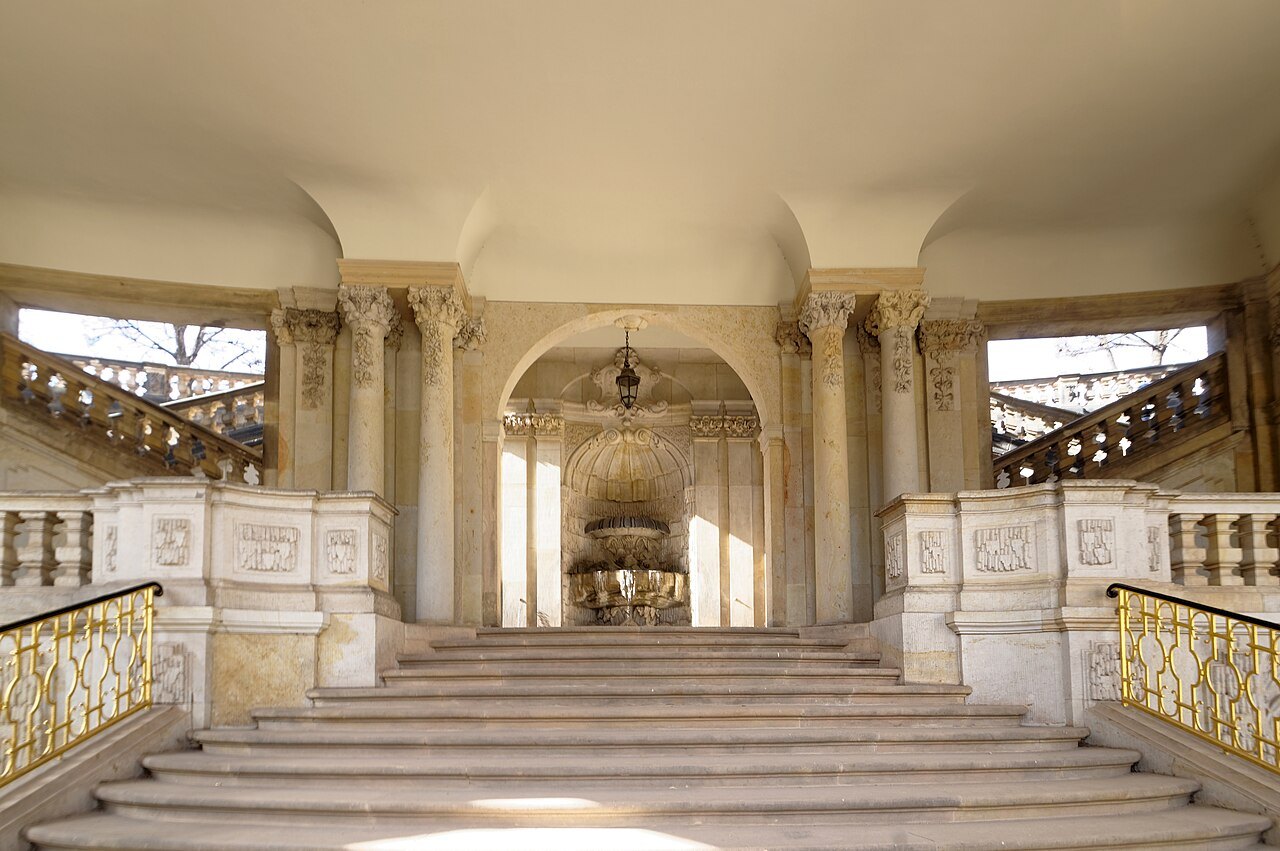
Tucked into one corner, slightly apart from the main lawn, is the Nymphenbad, a grotto-like sunken court with cascading water and sculpted nymphs set into niches. It's one of the quieter corners of the Zwinger and easy to miss if you only walk the main axis — worth the small detour, especially since it tends to draw fewer people than the courtyard's center.
The central garden itself is laid out with clipped hedges, gravel paths, and fountains that are purely decorative rather than functional in the sense of serving any of the buildings — they're there to be looked at, and in summer they're a genuinely pleasant place to sit on a bench for a few minutes between museum visits elsewhere in the city.
Note The courtyard gates can close outside the hours when the museums inside are operating, since the complex is staffed by the same institution. If you're planning to swing by specifically to see the courtyard rather than combining it with a paid museum visit, don't leave it for the very end of the day — check current arrangements with the Zwinger's own operator rather than assuming it's always walkable.
Looking up, not just across
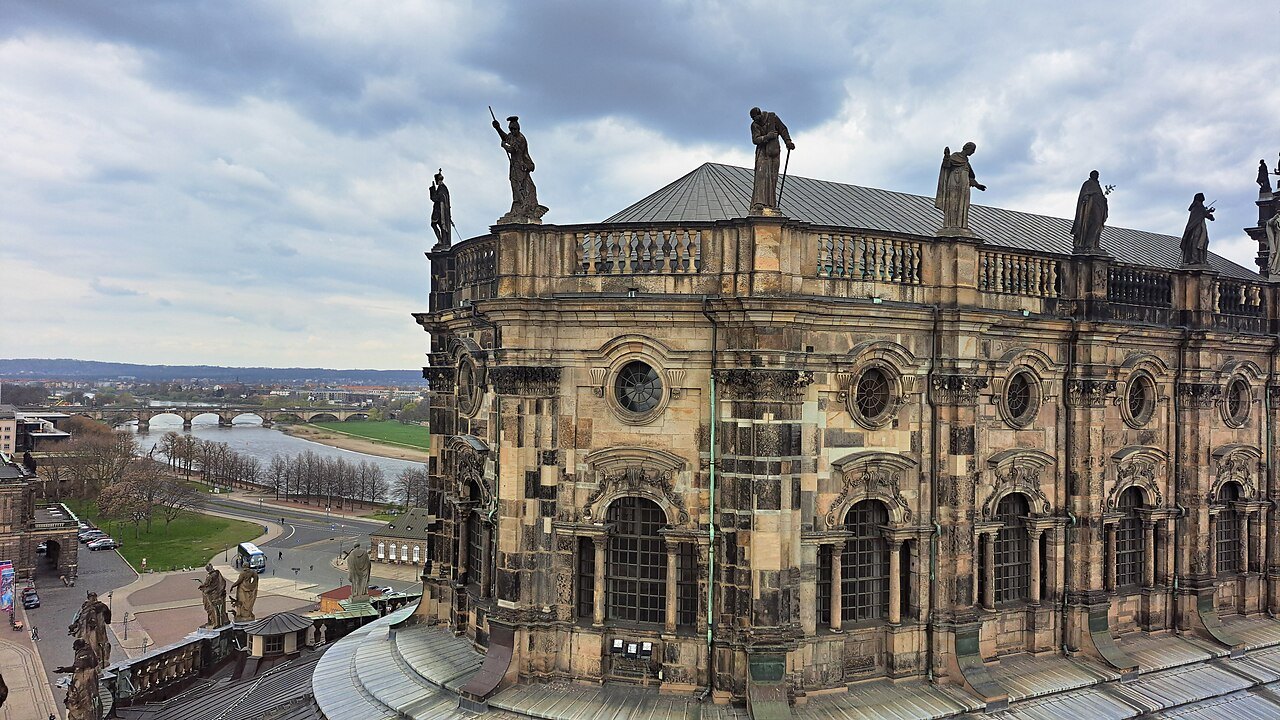
Much of the Zwinger's best material is overhead. The roofline is crowded with stone vases, trophies, and allegorical figures, and the galleries connecting the pavilions have windows and doorcases worth more than a glance. Because none of this requires entering a gallery, it's an easy stop even for travelers who have already spent their museum budget and attention on the Residenzschloss or the Albertinum elsewhere in the rebuilt historic center.
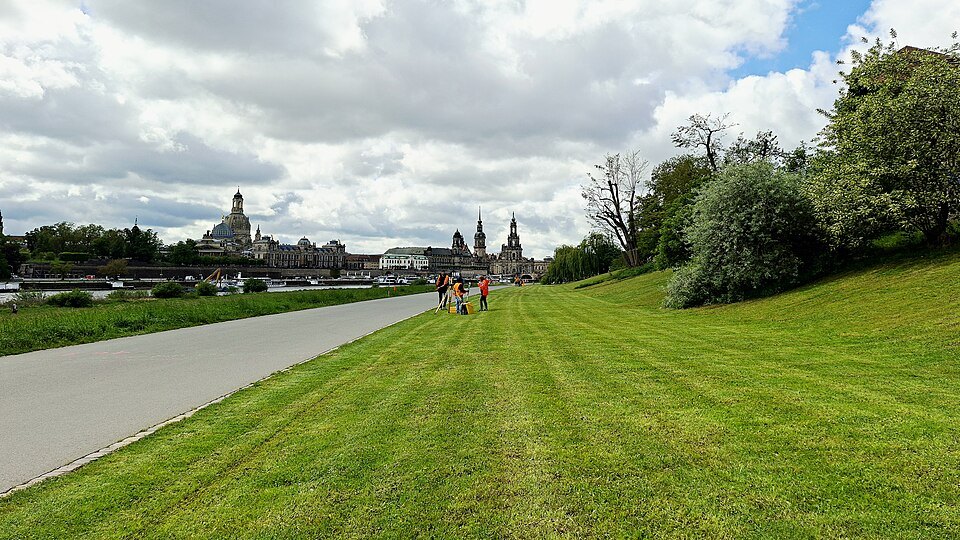
If you want context for how the whole ensemble reads from a distance, it's worth knowing that the Zwinger and its neighbors appear in some of the classic painted views of Dresden — our piece on where to stand for the Canaletto view of Dresden is as much about this stretch of the city as it is about the river side, and it's a useful way to understand why the courtyard was designed to be looked down into as much as walked through.
Combining it with the rest of your visit
Because the courtyard costs nothing to enter, it works well as a stop on the way between paid sights rather than a destination on its own. Pair it with a walk past the Semperoper and the Hofkirche, both a short stroll away, or use it as a resting point on a longer loop described in our itineraries page. If you do decide to go inside one of the museums — the Old Masters gallery is the obvious draw for most visitors — it's worth reading up on booking ahead, since the more popular collections in Dresden reward a little planning rather than turning up and queuing.
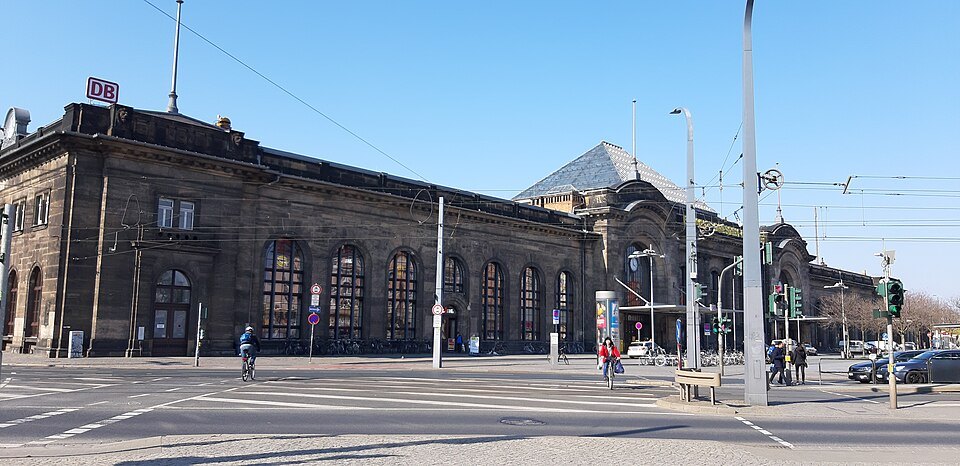
Travelers arriving by train should also glance at our notes on which Dresden station to get off at, since the Zwinger sits close enough to the old town that arriving at the right stop saves a fair bit of walking with luggage. Once you're oriented, the courtyard is reachable on foot from most of the central neighborhoods, and the getting around page covers trams and buses if you'd rather not walk the whole way.
Finally, timing matters more than most visitors expect: the courtyard is at its best with soft light rather than the flattest part of a clear midday, and a visit in shoulder season avoids the heaviest coach-tour crowds. Our when to come guide goes into this in more detail if you're still deciding which part of the year — or which part of the day — suits you best.

 Where to stand for the Canaletto view of Dresden
 Which Dresden station to get off at, and what to do with your bags