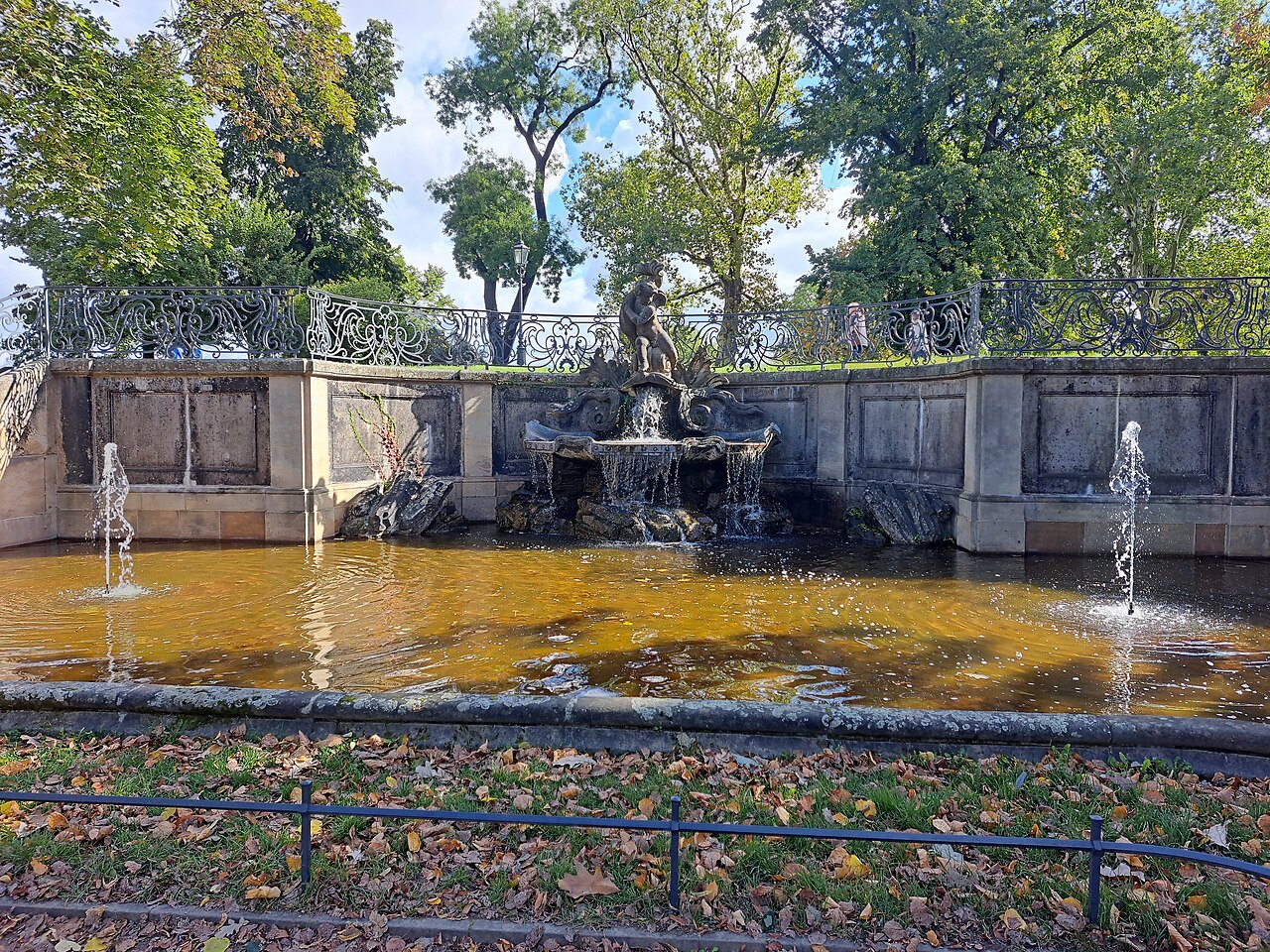
Brühl's Terrace runs along the old city fortifications above the Elbe, a raised promenade that looks out over the river toward the Neustadt bank. Visitors have called it the "Balcony of Europe" since the nineteenth century, and the name has stuck because it does something few riverside walks manage: it puts an entire skyline of domes, towers, and bridges into a single sweeping view, with nothing but water and sky in front of it.
Why "Balcony of Europe"
The nickname wasn't invented by a tourist board. It grew out of the terrace's reputation among nineteenth-century travelers, artists, and writers as a place to pause on the Grand Tour of the continent, a vantage point worth comparing to the great viewing spots of other European cities. Painters set up easels here, and the view across the Elbe toward the Neustadt became one of the most reproduced images of Dresden, well before photography existed. The Italian painter Bernardo Bellotto, known as Canaletto, worked from roughly this stretch of riverbank, and the view he recorded is still recognizable today. If you want to see exactly where he stood and how the scene compares now, the guide to finding the Canaletto view walks through it in detail.
The terrace earned its name from Heinrich von Brühl, an influential eighteenth-century minister who was given the fortification walls as a private garden and built a palace, library, and gallery along the top of them. None of those buildings survive in their original form, but the terrace itself kept the shape he gave it, and his name.
Where to stand on it
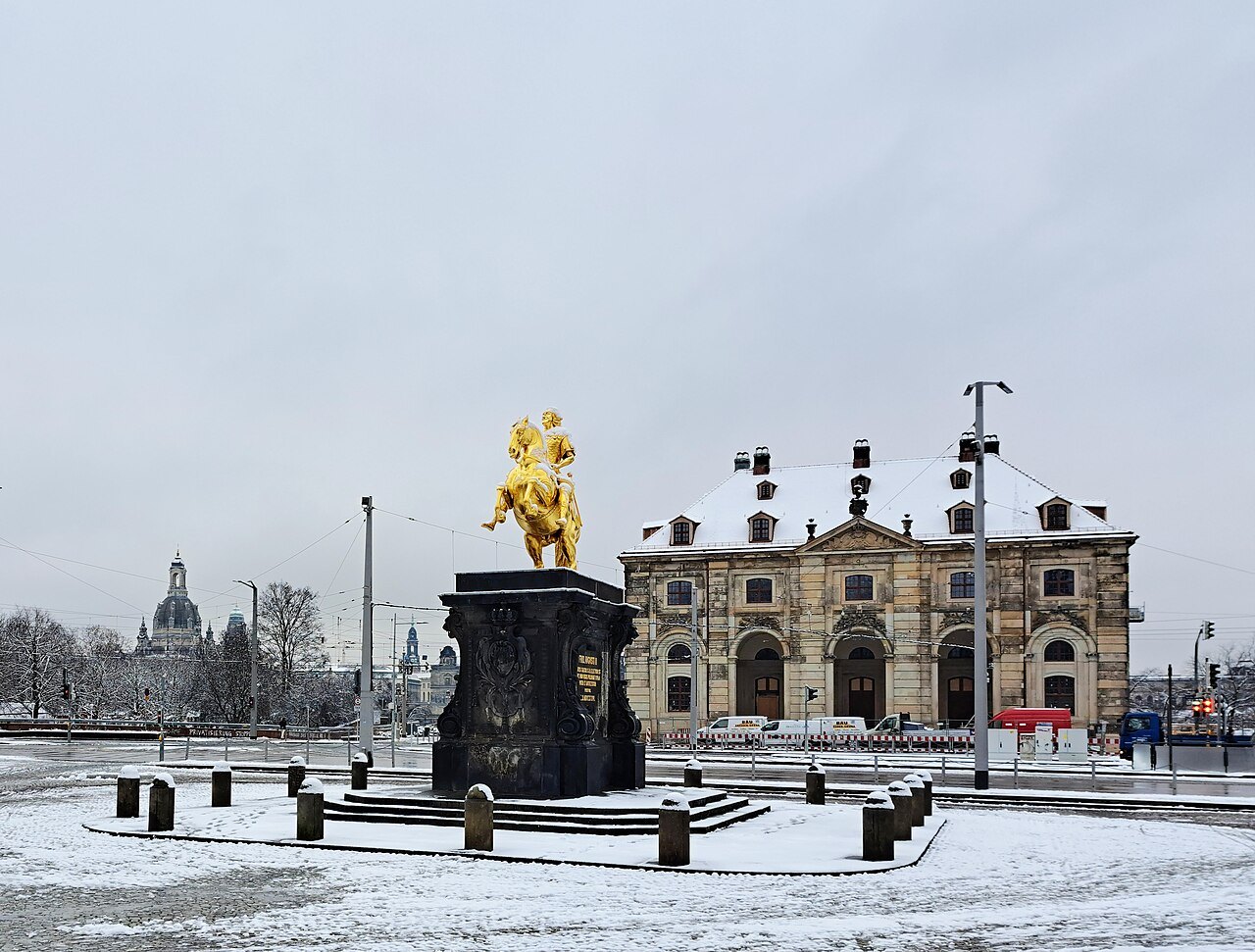
The terrace isn't a single viewpoint; it's a few hundred meters of promenade, and the view shifts noticeably as you walk along it. Near the Augustus Bridge end, you get a clean line across the water toward the Neustadt riverbank and the Golden Rider statue, visible from here even though it belongs to the far side of the river — the Golden Rider itself rewards a closer look if you cross over.
Walking east along the terrace, the view opens up to take in the domes and towers of the old city rising behind you and the river curving away in front. This central stretch, roughly opposite the old customs house on the far bank, is where most of the historic paintings and postcards were composed, and it's the easiest place to understand why the comparison to a balcony makes sense: you're elevated just enough above the water to see the whole stage at once, without being so high that the detail disappears.
Keep walking past the main viewing stretch toward the far end near the Brühl'sche Garten steps. Fewer visitors go this far, and the angle back toward the old town, with the Frauenkirche dome rising above the rooftops, is less crowded and arguably more satisfying than the busier middle section.
Note The terrace has no shade to speak of. On a clear day, especially around midday, the stone surface and open river reflect a lot of sun. If you're planning to linger for photographs, early morning or early evening light is kinder to both your eyes and your camera.
What sits on and around the terrace
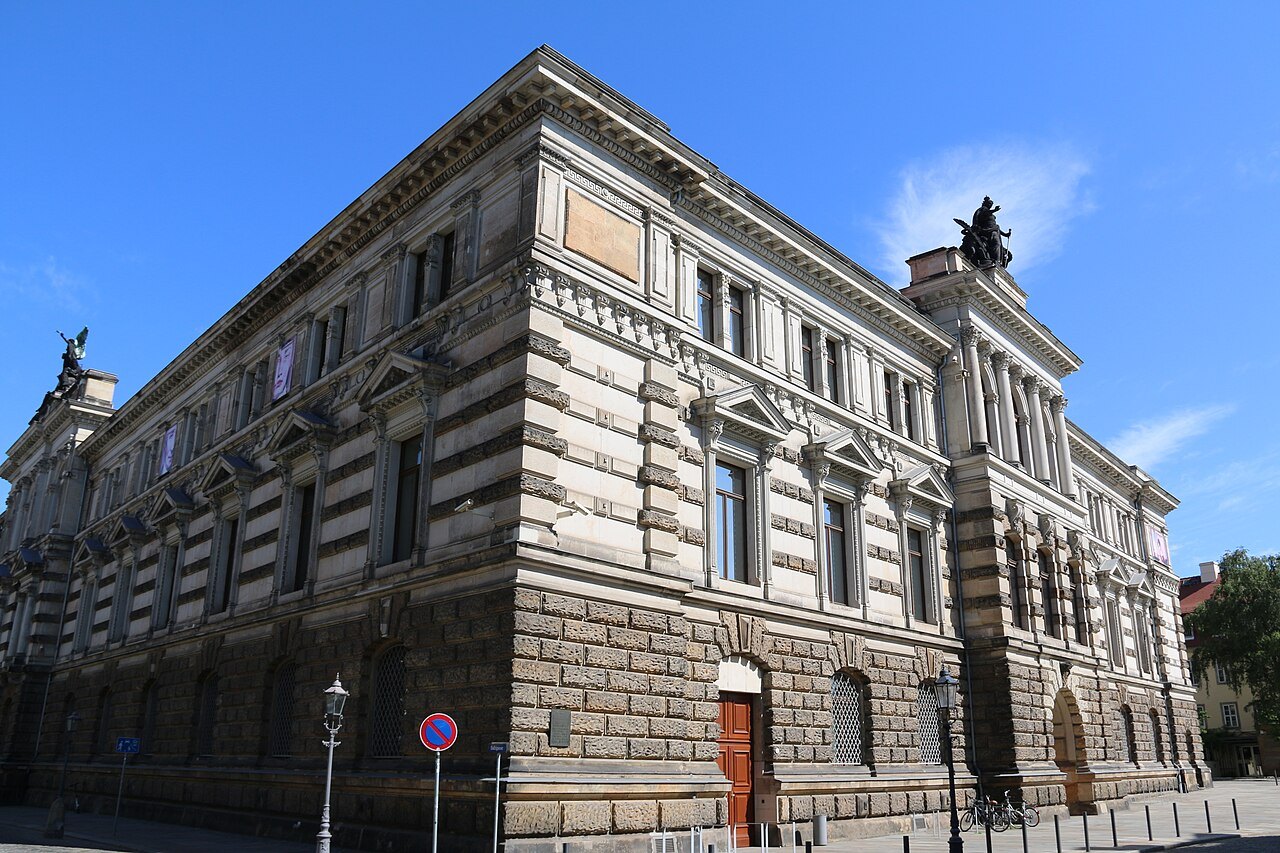
The terrace isn't just a viewing platform; it's also the roof of several buildings and the approach to others. The Albertinum rises directly behind it, housing modern and nineteenth-century art, and its riverside facade is part of what you see from below if you walk along the water's edge instead of the top of the terrace. Steps and ramps connect the two levels at several points, so you can drop down to the lower riverside path for a different, closer perspective on the water and the bridges.
At the western end, the terrace feeds into the historic core, close to the Hofkirche and the Residenzschloss, and only a short walk from the Fürstenzug, the long porcelain mural of Saxon rulers on horseback. If you haven't worked out how to read the procession, the guide to finding your way along the Fürstenzug is worth reading before or after your walk along the terrace, since the two sights sit only a couple of minutes apart.
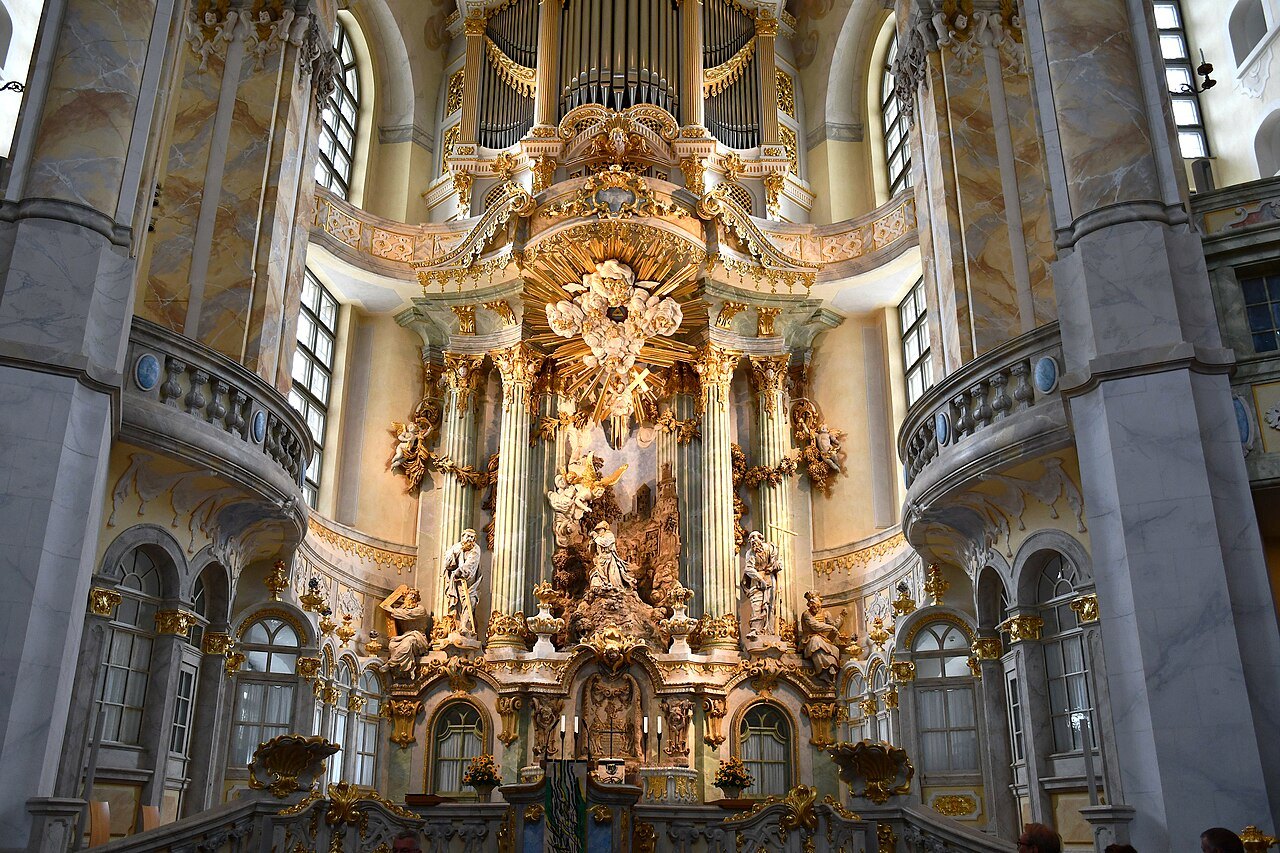
Looking across the river from the terrace, the Frauenkirche's dome is one of the most recognizable landmarks in the view, and its mottled stonework, dark original blocks mixed with pale new ones, is actually easier to appreciate from a distance than up close in the square. The piece on reading the dark and pale stones explains what you're looking at if you notice the patchwork from here.
Practical notes for visiting
The terrace is open-air and free to walk, with no barriers or tickets involved in simply being on it. It connects easily into a longer riverside walk or a loop that takes in the Zwinger and the rest of the historic core, and it works well as a start or end point for an evening stroll when museums have closed for the day. For getting here from wherever you're staying, see getting around for the tram and bus options that stop near the old town.
Because the terrace faces the river, it also gives good views of the paddle steamers and other river traffic on the Elbe, and it's a natural point to watch boats pass without needing to be on the water yourself. If you want to combine the walk with an actual river trip, check the current schedule with the steamer operator directly rather than relying on any posted sign, since timetables shift with the season.
The terrace gets busiest around midday and in the hour before sunset, when the light is best for photographs. If your schedule allows it, an early-morning visit, before the crowds and the tour groups arrive, gives you a much quieter version of the same view, and the river is often at its calmest then too. For broader thoughts on timing a Dresden visit around weather and crowds, see when to come.
However you arrive, give yourself more time than you expect. The "balcony" metaphor works because the view keeps changing in small ways as you move, and most visitors end up walking the full length of the terrace at least twice before finding the exact spot that matches their own idea of the view.
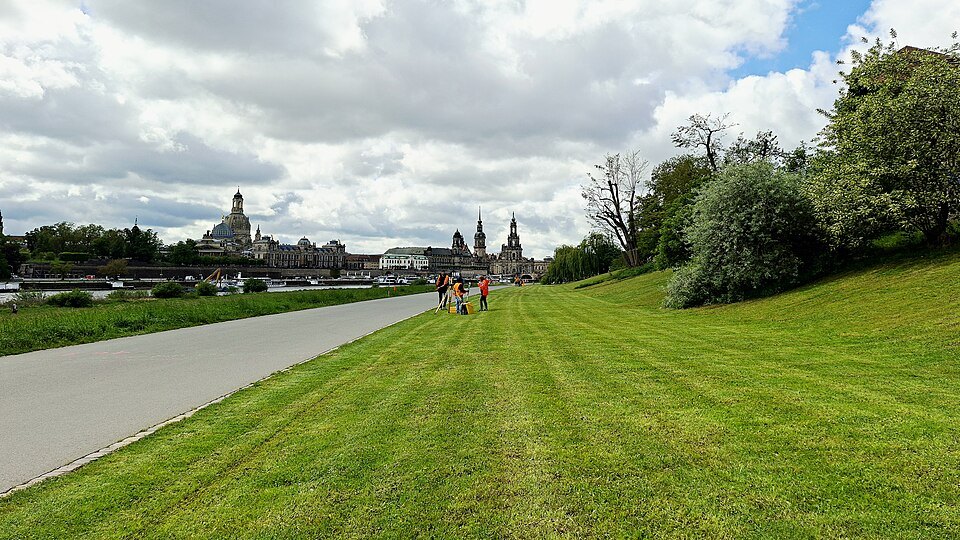 Where to stand for the Canaletto view of Dresden
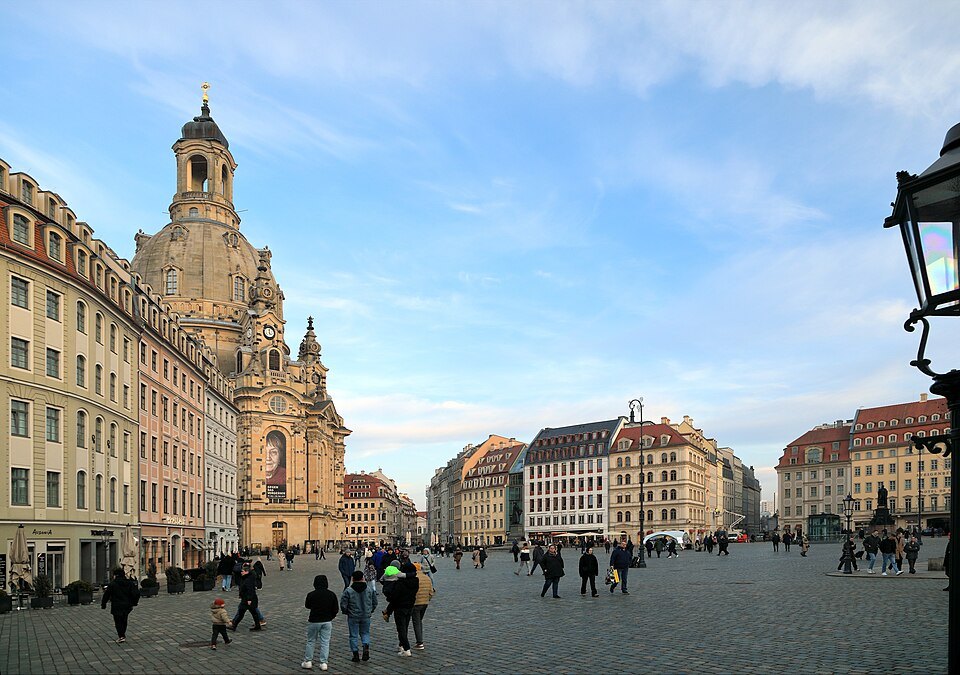 Reading the dark and pale stones of the Frauenkirche
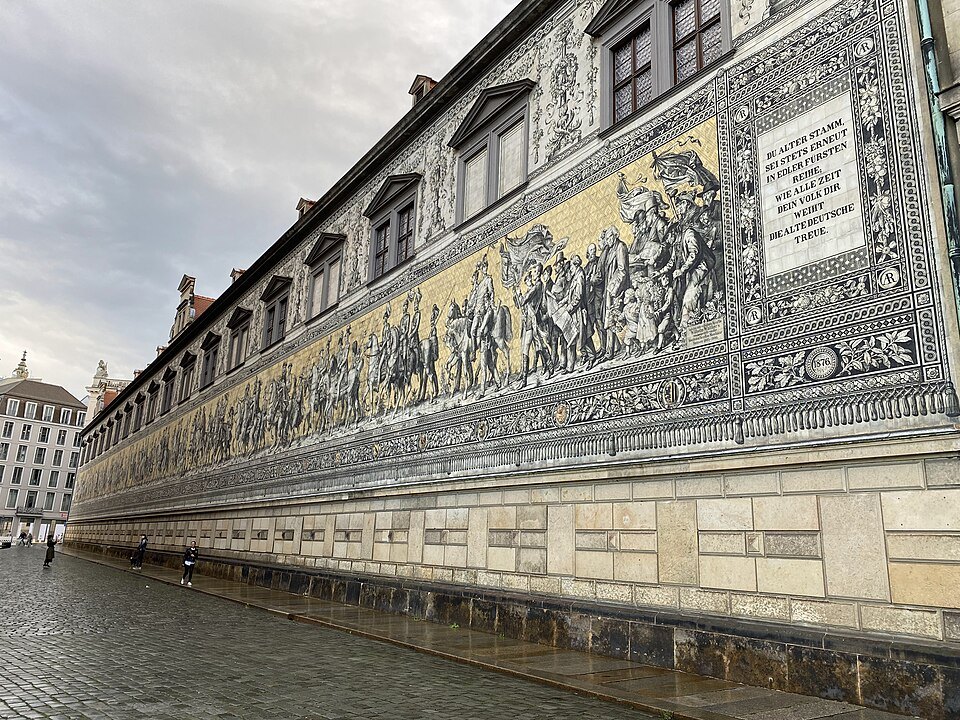 How to find your way along the hundred meters of the Fürstenzug